• Welcome to TalkWeather!
    We see you lurking around TalkWeather! Take the extra step and join us today to view attachments, see less ads and maybe even join the discussion.
    CLICK TO JOIN TALKWEATHER

Significant Tornado Events

Get a load of this dumbass

Anyway, going off topic - 2008 was a hell of a year for tornadoes, wasn't it? It's my pick for Best Tornado Year of the 2000s. It had basically everything you'd expect in a blockbuster year short of a Super Outbreak.
That year really was remarkable.
It had numerous notable events, such as Super Tuesday, followed by an incredibly active stretch in May and June that featured one of the strongest tornadoes ever recorded—the Parkersburg EF5 on May 25th.

One tornado from 2008 that I think gets overlooked is the Castalian Springs-Lafayette TN EF3* from the Super Tuesday outbreak. That one inflicted devastating damage to several communities and was the deadliest tornado of the year, resulting in 22 fatalities. Many of the fatalities were in manufactured or poorly constructed homes that were obliterated, though a few newer-constructed homes were also completely leveled. I personally think that one could’ve been rated EF4, even with the not-so-great construction practices that the structures it encountered had.

Traditional Tornado Alley went nuts that year too, with several outbreaks in the region, including one of the most prolific Plains outbreaks in recent memory (and one of my personal favorites to study) occurring on May 23rd. On top of that, several major population centers experienced significant impacts that year, and a few areas, such as Nashville and Chicago, had close calls as well. Just an all-around bonkers year it was.
 
That year really was remarkable.
It had numerous notable events, such as Super Tuesday, followed by an incredibly active stretch in May and June that featured one of the strongest tornadoes ever recorded—the Parkersburg EF5 on May 25th.

One tornado from 2008 that I think gets overlooked is the Castalian Springs-Lafayette TN EF3* from the Super Tuesday outbreak. That one inflicted devastating damage to several communities and was the deadliest tornado of the year, resulting in 22 fatalities. Many of the fatalities were in manufactured or poorly constructed homes that were obliterated, though a few newer-constructed homes were also completely leveled. I personally think that one could’ve been rated EF4, even with the not-so-great construction practices that the structures it encountered had.

Traditional Tornado Alley went nuts that year too, with several outbreaks in the region, including one of the most prolific Plains outbreaks in recent memory (and one of my personal favorites to study) occurring on May 23rd. On top of that, several major population centers experienced significant impacts that year, and a few areas, such as Nashville and Chicago, had close calls as well. Just an all-around bonkers year it was.

Yes, it's been brought up several times but May 23 was really interesting, one of the most prolific and probably intense Plains outbreaks of all time (right up there with 5/3/99 but centered further northwest), but it's hardly remembered outside of meteorological circles because (fortunately) it avoided any major tornado impacts on towns and cities. Even within meteorological circles it's sometimes overlooked, because IIRC a lot of the stuff was rain-wrapped or occurred close/to after dark. Off the top of my head I think most chasers that saw anything were on that tornado family near Quinter which included the officially strongest (EF4) of the day, and that was about it.

Another thing I forgot to mention is the 2008-2011 period occurring in my young adult years also gave me the mistaken impression that La Nina was always favorable for high tornado activity (of those four, the only "down" tornado year, 2009, was also the only El Nino year). This led to a lot of disappointment and head-scratching in some years in the later 2010s that were said to be La Nina, but much quieter for tornadoes.
 
You quoted the wrong person.

If you want to see more cringe from 19-year-old me losing my s**t during the Mayfield survey, look back on the December 2021 thread, some of my posts were flat out hilarious.
Oh, none of this comes close to the fact i actually believed the NIST Jarrell survey and was initially its slow speed meant F3 winds back in 2024. That's what you call a dumbass. Can't believe i actually respected the survey. But ever since them, this forum taught me slow movement doesn't matter. Tornadoes essentially have the same winds in all sorts as they did as if they were fast moving. The slow movement may slightly help but it's really not a major, contributing factor whatsoever and Robert Lee is a example of that not every slow mover is violent
 
Oh, none of this comes close to the fact i actually believed the NIST Jarrell survey and was initially its slow speed meant F3 winds back in 2024. That's what you call a dumbass. Can't believe i actually respected the survey. But ever since them, this forum taught me slow movement doesn't matter. Tornadoes essentially have the same winds in all sorts as they did as if they were fast moving. The slow movement may slightly help but it's really not a major, contributing factor whatsoever and Robert Lee is a example of that not every slow mover is violent
The issue with that one in particular wasn't really the survey itself, it was how people interpreted it. I'd argue the survey was correct in it's original case study - they surveyed a select few poorly-built homes, ignoring contextual damage, and came to the conclusion F3 winds were required. The one thing they could've done better is not using that to apply an F3 rating to the entire tornado, but I digress. People interpreted the survey as them saying every piece of damage from the tornado was F3, which it obviously isn't.

Also, the "stall" part of Jarrell I think is a myth; if you take the time it entered the DCE (don't have it on me at the moment) and the time it lifted and incorporate the distance between two points, you get 14-21 miles-per-hour as an average forward speed (depending on the track you use). Could it have slowed a slight amount (say, 10 mph)? Sure. But I doubt it would've slowed to 4-7 miles per hour and then rapidly sped up. If true, it would make Jarrell even more impressive.

A stupid take from me is that Grinnell was a 5 right after it happened; it's closer to around 170.
 
Apologies for the late response, but here they are in order: (These may not be perfect, I just copy and pasted from a damage points map I have)

37°35'54"N 99°17'24"W
37°35'59"N 99°17'27"W
37°36'00"N 99°17'26"W (landed in someone’s living room)
37°36'01"N 99°17'26"W
37°36'04"N 99°17'33"W
37°36'04"N 99°17'37"W
37°36'06"N 99°17'32"W (landed in the remains of the south wing of Greensburg High School)

Here are others that I know of:
37°37'15"N 99°18'36"W (Large tank that landed north of town, possibly a grain storage bin)
37°30'18"N 99°19'11"W (Oil tank that landed on someone’s farmstead south of town)

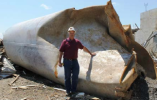
There is also this storage bin that I initially mistook for one of the tanks that originated south of town but actually came from the grain elevator. This was quite an impressive instance of damage in itself. The storage bin was reportedly fully loaded to capacity with grain, weighing around 25 tons. It was blown approximately 500 yards to the west before coming to rest in a row of completely stripped and debarked trees. The coordinates for this tank are 37°36'37"N 99°17'54"W
Here’s a photo of it as well.
View attachment 49546
Thanks! I'll look into this shortly.
 
While we're on the topic of tanks, I've been mapping out five liquid fertilizer tanks from the Vilonia tornado that were displaced to the east and northeast by the tornado.
1767576409333.png
Tank A: Displaced 3,705 feet (0.7 miles)
  • 30,000 pounds (per Tim Marshall)
  • 32.8 feet long (per Tim Marshall)
  • 16.4 feet in diamater (per Tim Marshall)
  • Empty at the time of the tornado (per owner)
    1767576565740.png1767578658755.png < Tank A
Tank B: Displaced ~1,865 feet (0.35 miles)
Tank C: Displaced ~1,823 feet (0.35 miles)
Tank D: Displaced ~1,375 feet (0.26 miles)
Tank E: Displaced ~1,709 feet (0.32 miles)

Surprised these have never been looked into outside of Marshall's survey. I cannot find a single drag mark from any of the five tanks, meaning these were possibly sustained in the air. Might reach out to someone who's good with calculating things like this specifically on the 0.70-mile tank since we have rough details of it.

There's also this one presumably near Vilonia which I found in a Facebook post, but I couldn't find where it originated/landed.
1767578129601.png
 
Last edited:
Was watching YouTube videos today of Chapman and Bennington. Which would you all choose for strength and intensity?
Assuming you're talking about Bennington, KS 2013... Chapman. Both looked very impressive on radar, sure, but damage intensity wise... it's not even close.
 
Assuming you're talking about Bennington, KS 2013... Chapman. Both looked very impressive on radar, sure, but damage intensity wise... it's not even close.
Chapman was a high 4-low 5; no comment on Bennington. I don't know much about either.
 
Chapman was a high 4-low 5; no comment on Bennington. I don't know much about either.
Chapman was definitely a 5, but that's besides the point of Kds' original comment.

Bennington was initially rated EF4 based solely on DOW measurements, then downgraded to EF3 when (officially) no violent damage was found.

But to be fair... Bennington did leave behind some violent damage. It battered a combine, debarked trees and shrubs, produced some ground scouring, and hurled and mangled a vehicle. While I think one could credibly argue for EF4 there, it's definitely not on the same level as Chapman.

Too lazy to post screenshots, but the video is here. More people don't know about this damage presumably because the video title is in German:
 
While we're on the topic of tanks, I've been mapping out five liquid fertilizer tanks from the Vilonia tornado that were displaced to the east and northeast by the tornado.
View attachment 49572
Tank A: Displaced 3,705 feet (0.7 miles)
Tank B: Displaced ~1,865 feet (0.35 miles)
Tank C: Displaced ~1,823 feet (0.35 miles)
Tank D: Displaced ~1,375 feet (0.26 miles)
Tank E: Displaced ~1,709 feet (0.32 miles)

Surprised these have never been looked into outside of Marshall's survey. I cannot find a single drag mark from any of the five tanks, meaning these were possibly sustained in the air. Might reach out to someone who's good with calculating things like this specifically on the 0.70-mile tank since we have rough details of it.

There's also this one presumably near Vilonia which I found in a Facebook post, but I couldn't find where it originated/landed.
View attachment 49574
I know I’ve had my fair share of disagreements with you, but this is legitimately excellent work. The lack of impact marks is a crucial detail that makes this even more impressive. I really hope you forward this to someone who can derive a solid calculation from this information.
 
Last edited:
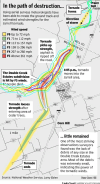
been looking very closely at jarrell and its life and path...

some strange thing about what we think of its path.

first of all lets start with what i found vs the old NWS Survey

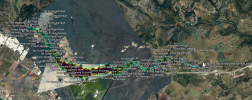
1767602625961.png
NWS currently has it as... this...

Tornado 1: very thin Landspout (F1)
Tornado 2: Very thin rope tornado (F2)
Tornado 3: dead man walking tornado (F2)
Tornado 4: Large F5 tornado (F5)

what i can see base on damage , aerial , sat and video evidence is ...

Tornado 1: very thin landspout that merges with a mesocyclone exactly where the official Tornado 1 start point is ....
Tornado 2: starts at the NWS landspout start ... but is the main jarrell tornado and not the landspout rope... there is zero gap in the 4 official tracks ... and the real separate landspout thing ... seems to have died exactly at the spot nws states it starts....
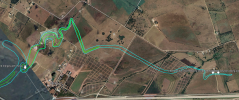
1767602827629.png

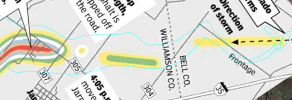
note that in this image Tornado 2 to Tornado 4's full path should be seen here ... but what we see is one tornado.

1767603157902.png
a lot of damage points were put in use as well.

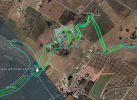
1767603243764.png

the landspout phase is very strange in terms of path.

1767603329438.png
complete mess of a path it did
1767603413465.png

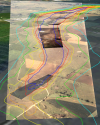
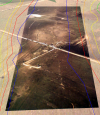
the jarrell tornado seem to have made cycloidal marks ... that are so extreme that evrey loop overlaps and blends into one.

the only thing left to hint there was ever cycloidal marks is the side of it , making the same (left / right) side trail of a normal cycloidal mark
1767603526662.png while hard to see you see there seems to be a outline of what would be a cycloidal marks but without the cycloidal shape in the middle , this is how it should look like for a very slow but very strong tornado, where the gap for each cycloidal is all merged into one.

1767603616111.png
 
part 2 for jarrell

as for the landspout phase , here are 2 spots that i could locate base on video.

1767603797451.png
the tent and building seen in this image is the same as the map , showing how far the landspout phase started

1767603853910.png


second area is this one

1767603929566.png

the buildings that are hard to see are seen here , and the sign to the left is still there to this day.

1767604103473.png

interesting thing about this point , the landspout suddenly stalls (the base part) yet the top part quickly gets pulled in by a mesocyclonic hybrid tornado , while hard to see there are momments were 2 ground circulations can be seen ... in some images you can see both funnels twirling into each other as well.

in the video its hard to get both in the same shot , but when looking you will see the landspout visible start to vanish on the right when there is a quick moving second tornado on the left side of the sign
1767604323745.png

here is a image of the 2 visible funnel and the dust swirl of the meso tornado
1767604446383.png
while hard to see the visible landspout funnel can be seen going to the right side of the image

futher away shot from this.

1767604597169.png

seems like the landspout base snap off while the landspout top merged with the second tornado becoming the F5 we all know of.

its a bit of a similar merger as el reno 2011
 
been looking very closely at jarrell and its life and path...

some strange thing about what we think of its path.

first of all lets start with what i found vs the old NWS Survey

View attachment 49581
NWS currently has it as... this...

Tornado 1: very thin Landspout (F1)
Tornado 2: Very thin rope tornado (F2)
Tornado 3: dead man walking tornado (F2)
Tornado 4: Large F5 tornado (F5)

what i can see base on damage , aerial , sat and video evidence is ...

Tornado 1: very thin landspout that merges with a mesocyclone exactly where the official Tornado 1 start point is ....
Tornado 2: starts at the NWS landspout start ... but is the main jarrell tornado and not the landspout rope... there is zero gap in the 4 official tracks ... and the real separate landspout thing ... seems to have died exactly at the spot nws states it starts....
View attachment 49582

note that in this image Tornado 2 to Tornado 4's full path should be seen here ... but what we see is one tornado.

View attachment 49583
a lot of damage points were put in use as well.

View attachment 49584

the landspout phase is very strange in terms of path.

View attachment 49585
complete mess of a path it did
View attachment 49586

the jarrell tornado seem to have made cycloidal marks ... that are so extreme that evrey loop overlaps and blends into one.

the only thing left to hint there was ever cycloidal marks is the side of it , making the same (left / right) side trail of a normal cycloidal mark
View attachment 49587 while hard to see you see there seems to be a outline of what would be a cycloidal marks but without the cycloidal shape in the middle , this is how it should look like for a very slow but very strong tornado, where the gap for each cycloidal is all merged into one.

View attachment 49588


Man solid work here sir! Some of this stuff I've never seen before. Big ups.
 
I know I’ve had my fair share of disagreements with you, but this is legitimately excellent work. The lack of impact marks is a crucial detail that makes this even more impressive. I really hope you forward this to someone who can derive a solid calculation from this information.
Because of Enderlin, I think I’m realizing just how many tornadoes hit very large tanks/train cars, with those points of damage either not being rated or just ignored overall. In this case Marshall luckily confirmed their existence, so I was able to find them on Earth pretty easily. In his survey of the event he never gives them an EF rating, just mentioning that they were displaced.
 
Regarding Chapman…..and I really hate to be that guy, I really do, but there is one thing that I noticed recently regarding the broken concrete stem wall that I just can’t stop thinking about. I was recently comparing the fracture pattern to a phenomenon I learned about on this forum called “corner pop”. Corner pop happens temperature changes cause brick veneer to expand and retract. When this happens, it can cause the stem wall to crack near the corner. Well…the Chapman house was indeed brick veneer, and when you look at images of examples of corner pop, the placement of the fracture is right near the corner like the Chapman house. While not usually a big issue or major weak point in normal conditions, I can’t help but think that might not be the case when the house is being hit by a violent tornado.

I know I know, I just ranted about people picking apart ratings without good reason. I’m still very much against it, but if it is indeed corner pop (I’m not absolutely sure that it is), this is one of those things I actually think would be a valid concern, and I do think it is something that would at least have to be considered. I still strongly believe that Chapman was an EF5, but that combined with a few other factors, I’ve become more hesitant as of recently to call it an absolute slam dunk case.
 
Last edited:
Back
Top