(Lengthy post ahead)
I’ve mentioned in a few of my older posts I made about the Greensburg tornado that, while combing through ground and aerial damage photos, I noticed multiple large steel tanks that had landed within the town. I meticulously combed through every available photo I had at the time, as well as satellite imagery, to try and determine what the origin point of these tanks were. Even after receiving hundreds more photos and getting into contact with those who surveyed the event, I was still left stumped on the matter.
Well, after reviewing numerous available sources, images, and videos, I firmly believe I’ve now uncovered where these tanks originated from. What I found is honestly still hard to believe, but after going over every other possibility more times than I can count, it seems like the following is the only plausible explanation as to what happened here.
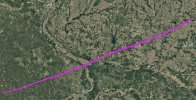
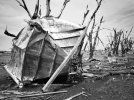
For starters, here’s some photos of the tanks that I was able to locate, along with a photo showing their locations that I plotted in Google Earth. After combing over thousands of ground and aerial photos I have in and around Greensburg, I found at least 7 tanks within the city limits.
View attachment 49496View attachment 49499View attachment 49500View attachment 49501View attachment 49502
You’ll notice that all of the tanks are similar in size and appearance, which to me suggested they likely were grouped together somewhere. As is quite clear, they are extensively mangled and crushed, with some actually being ripped open from being thrown significant distances. I was able to narrow down a few possible locations, but it was just educated guess work at that point.
Eventually I got a lead from a book I bought in which a farmer along Highway 183 described “great gouges” and oil spills in the land around his property from “oil tanks tumbling past.” There are several oil tanks and two natural gas substations in the area around the highway, but I didn’t think it was very likely at all that the tanks found in town originated there.
During my research into the event, I came across an old YouTube video posted by Dick McGowan, who had actually befriended the farmer from the book after he helped him out immediately following the tornado. In the video, him and the farmer met up a few months after in Greensburg and were driving around town. There’s a good deal of information in the video, but at one point the farmer pointed out the location where the tank in the last photo I shared had came to rest and said someone had spray-painted on the side of it “came from 7 miles south.” He went into more detail about the tanks that tumbled past his property and also mentioned the substation to the south, which had a collection of oil tanks.
Skip to 3:35 in the video to hear the point in the video mentioned above. The clip goes until 4:20.
My first thought after seeing this video was that it was locals spreading exaggerated and over-sensationalized information, as it’s not uncommon for that to happen after devastating disasters. On top of that, I honestly just didn’t believe an object of that size and weight could be carried that far—let alone at least 7 of them. Nonetheless, I continued researching to see what I could find.
After contacting some people and looking online, I learned that the tanks were almost certainly oil storage tanks. Tanks like those in the photos weigh anywhere from a little over one ton to perhaps several tons. Using satellite imagery, I noticed there is no other location impacted by the tornado that has a collection of oil tanks, other than the area along Highway 183, which is 7 miles south of town. Here’s a photo of the two natural gas substations, including the southernmost one with the oil tanks.
View attachment 49503View attachment 49504
On top of that, I found a video that pretty much confirmed to me that the tanks came from that location. In the video, the videographer is traveling south along Highway 183 and remarks about the gouges in the field, which can be seen clearly, along with black streaks indicating spilled oil. He then comes across the two substations, with the last one being the site with the collection of oil tanks. As becomes quite apparent, there are no more tanks at the site or anywhere near the area.
Skip to 4:27 and 5:19 to see the gouges, 4:35 for the first substation, and 5:23 for the substation with the tanks. Also of note, at 5:35 you can see a large oil spill near the treeline and around the 6:00 mark another (mostly intact) tank is visible which came from a separate collection of tanks south of the substations.
Both locations were impacted by the centerline of the tornado and subject to winds that were almost certainly of EF5 intensity, with extreme damage to the substations noted in other ground photos. To add to the video above, here’s a screengrab facing directly north toward the southernmost substation where the tanks were once located. (Bit of a disclaimer, there are deceased cattle visible in this photo)
View attachment 49505
I also meticulously looked over the available aerial imagery south of town after the tornado and was unable to find any sort of tanks or large objects (except 1, which could be a topic for later) anywhere in the rural areas affected by the tornado. This further adds on to the possibility that the missing tanks were blown all the way to Greensburg and not deposited in nearby creeks, etc.
To wrap this very long post up, it is worth mentioning that to my knowledge this is an extremely anomalous feat of damage in documented tornado history. A tornado transporting several, likely multi-ton tanks (that were full at the time) upwards of 7 miles is still hard to believe, and an indication of exceptional intensity in my opinion. It’s also worth mentioning that this is technically still my personal speculation and unofficial findings, as nothing has been definitively confirmed by any official sources to my knowledge, and I’m using available evidence I’ve located to come to this conclusion.