• Welcome to TalkWeather!
    We see you lurking around TalkWeather! Take the extra step and join us today to view attachments, see less ads and maybe even join the discussion.
    CLICK TO JOIN TALKWEATHER

Significant Tornado Events

Hi everyone,

I noticed some discussions were being brought up about some of my analysis on the Rochelle, IL EF4. I'd be glad to share more about my analysis of the event and why I believe from a structural standpoint, Rochelle does not fall into the EF5 criteria.

As ColdFront noted, it does seem to be a recurring event where people paraphrase my analysis without the detailed information that verifies my conclusions. I did also see some discussion on the Holly Springs tornado which I do not know much about, but I do have important observations to share with some of you regarding the structural flaws in the swept slab-on-grade home. I'll share my observations on those after I finish writing this message if you are interested (and if I'm not burnt out after writing this message for over an hour).

To begin, while I am most known for my cycloidal analysis formulas and methodology, my first major project was strictly focused on the Rochelle tornado. I ended up spending essentially a full year focused on an analysis of the lifespan of the tornado and damage path. A while ago I created this playlist containing many unseen videos of the tornado. I made a short synced video of the tornado's lifecycle around the Skare Park region here as well. Much of my research of the event was included in a video I helped produce with High Risk Chris here.

I won't be able to include all of the residences I surveyed as I spent an absurd amount of time documenting the entire event and I don't have time to share everything. I will focus on the residence at 10386 E Kuehl Court in Skare Park as it is typically the most discussed residence of the event and most commonly used to argue EF5 intensity.

Firstly, I understand the argument of not being able to confidently analyze a residence due to the lack of images. However, with this particular residence (as well as the swept residence next to it), I was able to find multiple other images of the residence and foundation. For the residence at 10386 E Kuehl Ct, I was able to find enough images of the residence to confidently remodel the foundation for a better analysis of the event. I spent multiple weeks analyzing and modeling the foundation of the home including any sill plates, anchor bolts, nuts, washers, siding, studs, and any other major observations of the foundation so I could confidently observe all angles of the foundation to best determine the structural integrity of the residence from a forensic analysis perspective.

View attachment 49280
With this to help in the forensic analysis of the residence, I was able to write a seven page paper of the residence observing five different failures occurring at the residence. I presented my work to Mechanical Engineer Ethan Moriarty who verified my observations and conclusions. I was able to identify these five major failures at this residence:

(1) Failure of walkout basement walls due to numerous windows leading to the collapse of the backside of the structure.

(2) Failure of wall to floor joist connections allowing the home to slide off the foundation.

(3) Failure of support beams inside the foundation that allowed for the floor joist to collapse inward into the basement.

(4) Failure of the concrete walkway due to brick veneer and wooden-framed walls failing and sliding the concrete to the southeast.

(5) Failure of reinforced concrete walls along the eastern side of the foundation potentially aided by high-speed projectiles.

In short, I observed many structural flaws within this residence that kept it from receiving an EF5 rating in my survey. If you would like to read my paper, I'd be glad to share it with all of you. I just have to edit and format it for clarity and readability purposes.

Now to speak on some specific parts of this residence I noticed some of you talking about as I was writing. I noticed many of you pointing out how the lack of nuts and washers on a bolt may represent the tornado's intensity rather than a lack of care in the design of the home. However, the reason these bolts did not have nuts or washers is because there was no reason for them to have any. Why? Due to poor planning and construction, these bolts were placed incorrectly and were not even on a sill plate.

View attachment 49281
Now regarding the moved walkway.

Using the 3D model, we can gather exact dimensions for the sidewalk rather than assuming some. This means our answer will more accurately resemble what actually happened. Note in the above image how the moved sidewalk is actually above the gravel sill plates rather than embedded into the dirt. Upon failure of the exterior walls and floor joist, these large chunks of the structure rammed directly into the sidewalk. This caused the sidewalk to be dragged across the gravel and ultimately push the concrete slabs to the south into the dirt.

But what if the wind was the sole force acting on the slab? Using exact geometries and the drag force equation, we can determine the wind velocity required to overcome the force due to friction acting on the slab. Since I calculated this a while back, I do not have the paper on me. If you'd like, I can go back and find it. This number I calculated was also verified by Ethan Moriarty. This calculation assumes the only force acting on the slab is a wind force acting on the exposed surface area to the left side of the sidewalk. This does not include the exposed surface area on top of the slab experiencing a force due to friction from the wind force. But what does this mean? This means the calculated result is not assuming every wind force. Thus, the resulting wind speed is going to be higher than the actual wind speed. The math states an instantaneous wind gust of 213 mph is required to overcome the force due to friction on this slab. However, due to the previously mentioned additional surface area on top of the slab experiencing a friction force from the wind; the actual required wind speed would be less than 213 mph. The failure of the floor joist, sub flooring, and exterior walls would all have impacted this slab in some way. With these two factors in mind, it can be confirmed that the wind speed required for this slab to have moved would not have required instantaneous wind gusts of 200 mph or higher. Does this mean winds over 200 mph didn't exist here? No. Did wind speeds over 200 mph occur <2in above a high friction surface? Also no. Therefore, this cannot be argued as an EF5 contextual indicator.

What about this home can be argued as EF5? Unknown to everyone online, including me for a while, this residence actually has a sheared concrete wall. Is this EF5? Well, there is not a EF scale DI for this so you may be able to argue this as an EF5 contextual indicator. However, there is an IF scale DI that applies to reinforced concrete walls. Analysis of this aspect is a bit of a gray area, so I will leave it up to you guys to determine your own opinions provided the information given.

The sheared reinforced concrete wall is 20 cm thick (8 in). The height of the wall on the side exposed to the wind is greater than 8 times its with (greater than 120 cm tall or 5.33 ft). The reinforced concrete wall is partially supported by soil on the side facing away from the wind an unknown amount. It is to be argued whether or not this wall falls under sturdiness class C or D, and if this wall falls under DoD1 or DoD2. Neither case results in an IF5 rating, the maximum rating this DI can be awarded according to the IF scale is IF4. Note: the IF scale estimates instantaneous wind gusts rather than the EF scale's 3s wind gusts.
View attachment 49283

If you have any questions, I'd be glad to answer them to clear any confusion up. Please note there is way more analysis I've done on Rochelle than I've shared. Due to time management purposes, I'll finish this post here and answer any questions about any other EF5 candidates from Rochelle. Also note, cycloid analysis suggests EF4 for the entirety of the path of the tornado. However, this is a whole other ordeal.

Thank you all,
Saltical
Let me start by saying I apologize for being so harsh towards you initially. I actually enjoyed reading your first couple posts on here, and hope you keep up the awesome contributions.

While I'm not sure how I feel about the claim that "winds of less than 213 mph were required to shift the concrete walkway", I actually agree that a snapped concrete stemwall is not automatically indicative of EF5 intensity. A very similar thing happened to a home swept away by the 2002 La Plata tornado, which imo was a mid-range F4, MAYBE high-end F4 at a stretch.

Same thing goes for the bending and/or snapping of anchor bolts... the Pembroke EF4, which was appropriately rated imo, bent anchor bolts at the residences it swept away.

My approach to determining tornado intensity is heavily context-based and perhaps more liberal than many of my fellow weather weenies, but with heavy doses of skepticism where necessary. I don't have a degree in meteorology or engineering... or any college degree for that matter, but you actually publishing your work to AMS is a great thing.

Why do people trust my opinion? Idk... I'm very passionate about this stuff, have been researching it for years and try my best to have a solid understanding of tornado damage and construction practices... or maybe people just like that I smell like cosmoline and Hoppes No. 9.
 
Wow! I feel like @Saltical Wx ‘s post flew under the radar yesterday. This was extremely detailed analysis and I really appreciate you taking the time to drop it in here. I second TH, I hope you stick around and keep contributing. Or even just drop in when time allows. I love these types of posts.

Hi everyone,

I noticed some discussions were being brought up about some of my analysis on the Rochelle, IL EF4.
 
Wow, I just read Saltical’s breakdown of Rochelle. Now THAT is the first truly thoughtful, thorough, and convincing counter argument to Rochelle not being an EF5 candidate that I have found. That goes FAR beyond the brief paraphrasing explanations and parroting I have read here so far. There was clearly so much more at play here than what has been articulated on this forum regarding the issues associated with that subdivision and the damage that occurred there. I now know it essentially comes down to a cascade of structural flaws that do add up and raise genuine concerns that go far beyond a few missing washers.

The three big revelations that are making me rethink my stance on this whole thing are these:

1. Evidence of debris impacts playing a role in the movement of the concrete walkway.

2.) Remember when I said one of the main things that would change my mind was if there was a structural issue with the floors and their attachment to the foundations? Looks like that was indeed the case.

3.) Perhaps the biggest one is bolts being rendered useless due to improper installation, and confirmation that the construction crew indeed didn’t install washers, complete with an actual reason as to why they failed to do so. That’s huge.

As I said, I was open to changing my mind on Rochelle as long as the counterpoint evidence was detailed and compelling. Now I have exactly that. As passionate and opinionated as I am, when someone makes a point that is more compelling than mine, I concede. I don’t have any issues with finding out I’m wrong about something, and I actually welcome it, because that’s how people learn. Despite what many may think, I honestly always approach this kind of thing with an open mind. The problem is that it took until now for there to be a truly detailed breakdown that genuinely makes a logical case for EF4 instead of EF5 in Rochelle.

It’s weird to be saying this after so many years, but farewell Rochelle from the EF5 candidate list. You were a source of many interesting (and heated) conversations.
 
It’s weird to be saying this after so many years, but farewell Rochelle from the EF5 candidate list. You were a source of many interesting (and heated) conversations.
At risk of re-igniting the Rochelle Wars, the part of the Saltical survey posted here explicitly only covered the sidewalk house. IIRC, there were other EF5 candidate homes. That said, the information shared in the survey was remarkable and effectively disqualified the tornado's signature DI and damage feat (the sidewalk), so there's that.

@Saltical Wx, you mentioned that the cyclodials suggested EF4 for the entire Rochelle tornado, but...did you assess any home as actually meeting the EF5 threshold?
 
At risk of re-igniting the Rochelle Wars, the part of the Saltical survey posted here explicitly only covered the sidewalk house. IIRC, there were other EF5 candidate homes. That said, the information shared in the survey was remarkable and effectively disqualified the tornado's signature DI and damage feat (the sidewalk), so there's that.

@Saltical Wx, you mentioned that the cyclodials suggested EF4 for the entire Rochelle tornado, but...did you assess any home as actually meeting the EF5 threshold?
Given the same construction crew was likely responsible for building the remaining homes in that subdivision, unfortunately it’s doubtful that the incompetence (specifically the bolt installation errors) was limited to just that one home.

Fair point though, and I admittedly would like some confirmation on that before I can fully put this to bed.
 
Given the same construction crew was likely responsible for building the remaining homes in that subdivision, unfortunately it’s doubtful that the incompetence (specifically the bolt installation errors) was limited to just that one home.

Fair point though, and I admittedly would like some confirmation on that before I can fully put this to bed.
I feel like Saltical has way more understanding on Rochelle than i do to be honest and i'm sorry for being condescending yesterday.
 
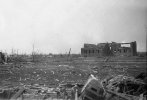
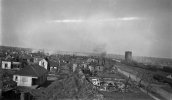
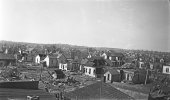
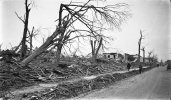
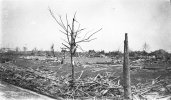
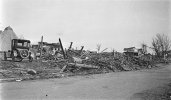
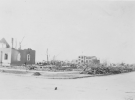
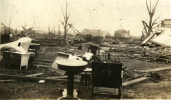
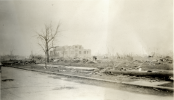
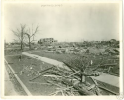
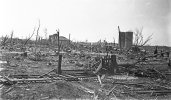
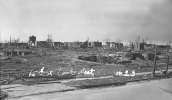
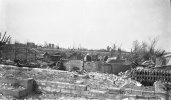
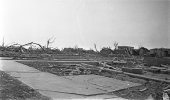
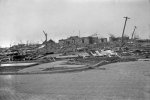
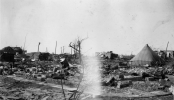
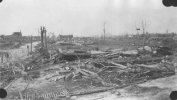
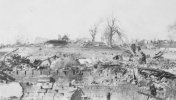
Now all the fuss has been cleared up, I thought I would get the thread going again by sharing some photos from Murphysboro Jackson County Historical Society, these are just a handful out of over 800 for murphysboro. (this is tri-state 1925).
1766933102820.jpeg
1766933131873.jpeg
1766933147050.jpeg
1766933160299.jpeg
1766933168930.jpeg
1766933180187.jpeg
1766933267732.png1766933239457.png
1766933320435.png
1766933351565.png
The devastation near Longfellow especially on the west side was extreme. There are many more photos so if anyone has any specific requests I will see what I can do.
 
Now all the fuss has been cleared up, I thought I would get the thread going again by sharing some photos from Murphysboro Jackson County Historical Society, these are just a handful out of over 800 for murphysboro. (this is tri-state 1925).
View attachment 49368
View attachment 49369
View attachment 49370
View attachment 49371
View attachment 49372
View attachment 49373
View attachment 49375View attachment 49374
View attachment 49376
View attachment 49377
The devastation near Longfellow especially on the west side was extreme. There are many more photos so if anyone has any specific requests I will see what I can do.
A very long article about tri state was made, its on wordpress. It has every known existing photo about Tri State and its very well described. Heres the link:
 
Last edited:
Now all the fuss has been cleared up, I thought I would get the thread going again by sharing some photos from Murphysboro Jackson County Historical Society, these are just a handful out of over 800 for murphysboro. (this is tri-state 1925).
View attachment 49368
View attachment 49369
View attachment 49370
View attachment 49371
View attachment 49372
View attachment 49373
View attachment 49375View attachment 49374
View attachment 49376
View attachment 49377
The devastation near Longfellow especially on the west side was extreme. There are many more photos so if anyone has any specific requests I will see what I can do.
I’ve only seen a handful of up-close photos showing homes that were reduced to empty foundations, with the ones you shared certainly being among the highest quality and most notable I’ve come across. Your research really solidified (at least for me) that Tri-State is one of the most violent tornadoes ever recorded — just impressive stuff. Great work altogether, man.
 
I’ve only seen a handful of up-close photos showing homes that were reduced to empty foundations, with the ones you shared certainly being among the highest quality and most notable I’ve come across. Your research really solidified (at least for me) that Tri-State is one of the most violent tornadoes ever recorded — just impressive stuff. Great work altogether, man.
I appreciate it thank you. There are a lot of photos showing foundations but they are not really the sort of thing that are shared commonly I find.

1766961576180.jpeg
1766961585735.jpeg
1766961592862.jpeg
1766961628310.jpeg
1766961634022.jpeg
1766961728631.png
1766961753682.jpeg
1766961767848.jpeg
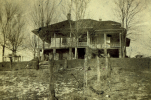
Several brick masonry homes were actually completely reduced to their foundations, something that very few tornadoes have ever achieved and no modern EF5 has done...though that is also due to how rare they are now in the US. Here below is a two story estate just outside of murphysboro belonging to Mae Henson Davitz at 506 South 26th Street. This massive house had hip roofing, a solid masonry and concrete ground floor, and heavy log bearing top story addition with exterior wooden sheathing. Log structures act as mass wall buildings in a similar way to masonry. It was reduced to its basement walls and the car was crushed and blown into the basement.

Fortunately nobody was home...
1766962165545.png
1766962211294.png
 
Given the same construction crew was likely responsible for building the remaining homes in that subdivision, unfortunately it’s doubtful that the incompetence (specifically the bolt installation errors) was limited to just that one home.

Fair point though, and I admittedly would like some confirmation on that before I can fully put this to bed.
Possibly the same crew but equally maybe not. I've seen whole subdivisions built by 2-3 crews from the same big contractor and those where a bunch of contractors only got a few houses each. What I think could best be said about this is poor techniques were tolerated with one they're likely similar in all. Same developer, same contractor, same inspector(s), same problems regardless of crews.
 
When I hear the term “concrete scouring” I’m picturing something that is entirely separate from something like Hackleburg’s storm cellar feat, which I do find extremely impressive nonetheless. I’m picturing something like the concrete being genuinely worn down and eroded, specifically the surface of it, not ripped up from a roadway or anything like that. I do think El Reno ‘11’s “trenched home” is extremely impressive as well, but again, I don’t know if that damage applies to what I’m picturing, unless I have the wrong idea of what concrete scouring entails.
Yes this. "Scouring"implies abrasive removal of or digging into a substance. Lifted, blown away, displaced, or removed would be better words.

When we think of slabs or sidewalks (and to some degree stem walls) also think of the large surface area which winds can work on. In smaller chunks not hard to move but blowing away an entire intact house slab would be mindboggling to me. Displacing it or shifting it maybe. Sidewalks would be comparatively easy.

Communicating only works when everyone understands the meaning of the message. There are already words with exact meanings for nearly everything, so best to learn and use them to better get your message across. In scientific communities that's a prerequisite.
 
Let me add on to Rochelle:

@Saltical Wx pretty convincingly debunked the infamous "moved walkway" residence (10386 E Kuehl Ct). Another interesting thing I noted about it is that the wooden basement stairs actually survived:
413791


With that said, while I do agree that the portion of the walkway closest to the house was hit by large pieces of debris from it (hence why it got broken into pieces), I'm still skeptical that the same thing happened to the other portion closest to the driveway. If it was also broken like the section closer to the home, that would be one thing, but it looks to have actually been shifted laterally:
Concrete_Walkway_Moved_By_The_2015_Rochelle%E2%80%93Fairdale_tornado.jpg


Another note is that the residence which got wind-rowed to hell is NOT 10386 Kuehl Ct, but rather the neighboring home, 10408. Still think it's an EF5 candidate... my only issue with it is that a vehicle was thrown into the basement, albeit not with such force that it broke the stemwall (like East Pilger 2014). It's up for debate how much the car really contributed to the home's destruction.
413809


Regarding 10430 E Kuehl, the subfloor obviously pancaked mostly intact into the basement, so that one's pretty self-explanatory.

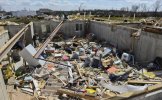
What about Richard Rd? Let's start with 4908 and 4870 S Richard. The first one was swept off its subfloor, which remained bolted in place. The second one was swept completely away, exposing the basement. However, there are some issues I'd like to point out. Even ignoring the collateral damage issue where it's beyond obvious that the first home was essentially thrown into the second one, the debris pattern is also rather unimpressive, with it mostly being left in a large pile right next to the foundation. Also, the scouring path passed just to the right of the residences, indicating the tornado's inner damage core barely missed them. My verdict here: EF4.
Rochelle-EF5-damage-basement.JPG
Rochelle-EF5-damage-closeaerial.JPG
413745


4807 S Richard is, imo, where things get interesting. Home was swept completely away except for a relatively small section of the subfloor that collapsed into the basement. Inner core passed directly over the house, indicated by the sheer amount of scoured grass plastered everywhere. While a fair amount of debris remained nearby, a lot of it was wind-rowed away as well. A few shrubs in the immediate vicinity of the house survived, but most were shredded.
Rochelle-EF5-damage-home2.JPG
413777

rochelle-likely-doesnt-deserve-ef5-captions-on-images-v0-nladkxjhmguc1.png

My verdict: EF5 candidate.

Finally, regarding 4824 S Richard, a large part of the subfloor remained bolted in place, in addition to a large pile of debris being left on and around it. Ran out of photos due to the 10 image limit per post, but I think EF4 is fine there too.

Simple map I made of the entire area, with the homes labeled. Purple indicates EF5 candidate homes, while red indicates EF4.
Rochelle-EF5-damage-aerial.jpg

To conclude... Rochelle is a very, very borderline case. Top-end EF4 isn't an egregious call by any stretch of the imagination, and I'm leaving it on the fence for others to decide. But if I had to pick a side, I'd probably side with a low-end EF5 rating.
 
4807 Richard Drive was always the one that I thought had the best shot at EF5. I know it’s usually not good to assume, but knowing what we know now about the construction crew royally screwing up the anchor bolt installation at the home Saltical did a deep dive on, I find it unlikely that this problem was limited to just one house.

Also I can see that I confused 4908/4870 as and 10408/10386 as being the same location in the photos I posted. But my concerns are the same at both locations, as it does look 10408 also sustained collateral damage from the neighboring house, unless I’m mistaken about the trajectory of the debris scatter path from the neighboring house.
 
Last edited:
4807 Richard Drive was always the one that I thought had the best shot at EF5. I know it’s usually not good to assume, but knowing what we know now about the construction crew royally screwing up the anchor bolt installation at the home Saltical did a deep dive on, I find it unlikely that this problem was limited to just one house.

Also I can see that I confused 4908/4870 as and 10408/10386 as being the same location in the photos I posted. But my concerns are the same at both locations, as it does look 10408 also sustained collateral damage from the neighboring house, unless I’m mistaken about the trajectory of the debris scatter path from the neighboring house.
4807 Richard Dr was built by a different construction company, JMC Construction Inc. The home Saltical did an analysis on was built by Brian Grainger Construction Inc. I find it unlikely that two different construction companies would have made the exact same error.

Admittedly, 10408 E Kuehl was also built by Brian Grainger Construction, so it could have had the same problem as 10386. Regarding the debris pattern, it looks to me like some of the debris from 10386 could have impacted 10408, but it looks more like it was thrown into a nearby pile to me. I could be wrong though.
 
Last edited:
4807 Richard Dr was built by a different construction company, JMC Construction Inc. The home Saltical did an analysis on was built by Brian Grainger Construction Inc. I find it unlikely that two different construction companies would have made the exact same error.

Admittedly, 10408 E Kuehl was also built by Brian Grainger Construction, so it could have had the same problem as 10386. Regarding the debris pattern, it looks to me like some of the debris from 10386 could have impacted 10408, but it looks more like it was thrown into a nearby pile to me. I could be wrong though.
Holy crap how did you find that out? Just when I thought this was settled, clearly it’s not. So basically, Saltical did not do a deep dive on the strongest EF5 candidate in the subdivision. We only have a deep dive on the house with the shifting sidewalk.

I jumped the gun by saying this was put to bed, as it clearly isn’t. Exceptional work.
 
Last edited:
Back
Top