• Welcome to TalkWeather!
    We see you lurking around TalkWeather! Take the extra step and join us today to view attachments, see less ads and maybe even join the discussion.
    CLICK TO JOIN TALKWEATHER

Significant Tornado Events

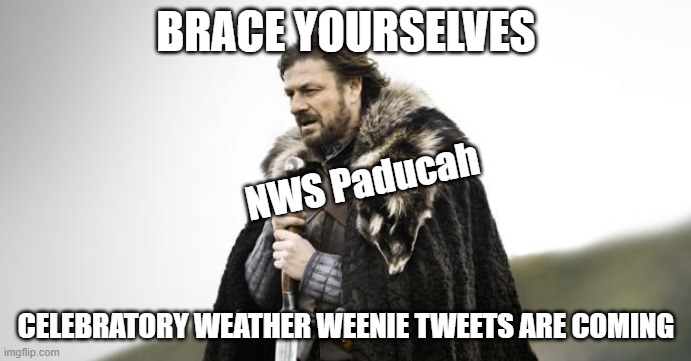
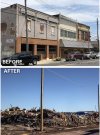
They won't. If it did get upgraded to EF5, this would happen:
ag3emh.jpg
Twitter would be unbearable to read that day if it happened lol.

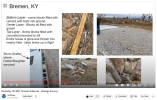
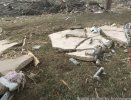
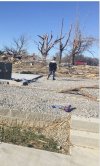
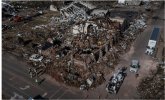
Anyway this might be a weird opinion, but excluding Vilonia ( because we all know it was an EF5 ) Mayfield is by far the one I want to see upgraded to EF5 the most but contextually wise it’s literally so obvious ( Especially in Bremen, SW Mayfield, and around the UK research facility ) that it was of that caliber. I mean, those images from Bremen truly speak for themselves.
 
Anyway this might be a weird opinion, but excluding Vilonia ( because we all know it was an EF5 ) Mayfield is by far the one I want to see upgraded to EF5 the most but contextually wise it’s literally so obvious ( Especially in Bremen, SW Mayfield, and around the UK research facility ) that it was of that caliber. I mean, those images from Bremen truly speak for themselves.
Mayfield's definitely on my list (if upgraded it would be the first EF5 I ever personally tracked), but not at the front. Goldsby, Tuscaloosa, Chapman, etc. are all ahead.
 
Twitter would be unbearable to read that day if it happened lol.

Anyway this might be a weird opinion, but excluding Vilonia ( because we all know it was an EF5 ) Mayfield is by far the one I want to see upgraded to EF5 the most but contextually wise it’s literally so obvious ( Especially in Bremen, SW Mayfield, and around the UK research facility ) that it was of that caliber. I mean, those images from Bremen truly speak for themselves.
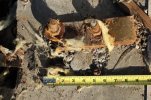
I agree. That and I think Chickasaw and goldsby are on that level too. The damage to the Bremen home makes me wonder if something similar happened in guin, and that was where the “whole house slabs swept away” came from.
 
Mayfield's definitely on my list (if upgraded it would be the first EF5 I ever personally tracked), but not at the front. Goldsby, Tuscaloosa, Chapman, etc. are all ahead.
I’d say contextually wise, Mayfield is on the same tier as those mentioned. It’s just not as clear cut structurally wise. Mayfield behind Chickasha/Goldsby/Chapman for me.
 
I’d say contextually wise, Mayfield is on the same tier as those mentioned. It’s just not as clear cut structurally wise. Mayfield behind Chickasha/Goldsby/Chapman for me.
Basically my exact argument. It's ahead of Rochelle (still a contender, but VERY borderline), behind the other tornadoes listed.

And for the record if anyone was wondering what the first EF5 I personally tracked was, the answer is "Some future tornado" because I was literally asleep for Enderlin.
 
Basically my exact argument. It's ahead of Rochelle (still a contender, but VERY borderline), behind the other tornadoes listed.

And for the record if anyone was wondering what the first EF5 I personally tracked was, the answer is "Some future tornado" because I was literally asleep for Enderlin.
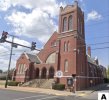
I’m just praying we can get the church looked at for a potential upgrade to an EF5 rating.
 
My list of EF5s ranked by confidence would probably be:

1. Goldsby, OK
2. Vilonia, AR
3. Mayfield, KY
4. Tuscaloosa, AL
5. Ringgold, GA
6. Barnesville, GA
7. Chapman, KS
8. Greenfield, IA
9. Washington, IL
10. Louisville, MS
11. Rochelle-Fairdale, IL
12. Matador, TX
13. Rolling Fork, MS
14. Chickasha, OK

Honorable mentions: Van Buren, Ar; Flat Rock, AL; Cullman, AL; Lake Martin, AL

Completely unintentional, but my top 10 are from 9 different states, which really puts into perspective how widespread this low-balling is.
 
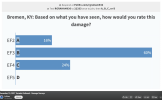
In regards to the Bremen home, in 2022 at the NWS Central Spring Symposium the Paducah and Louisville WFOs gave a presentation about it. They asked the audience what they'd rate it. This was their answers:
1767064924643.png

1767064822052.png


The NWS Central Spring Symposium is an annual event hosted by the National Weather Service's Central Region, focusing on advancing severe weather forecasting, integrating new science into operations, and fostering collaboration between researchers (NOAA/NSSL), field forecasters, and partners for a "Weather-Ready Nation," featuring discussions on experimental tools, data, and decision support for improved public safety.

I think it's safe to say these surveying practices have become cultural at this point.
 
In regards to the Bremen home, in 2022 at the NWS Central Spring Symposium the Paducah and Louisville WFOs gave a presentation about it. They asked the audience what they'd rate it. This was their answers:
View attachment 49461

View attachment 49460


I think it's safe to say these surveying practices have become cultural at this point.
16% EF2….these people are just on a whole different planet.

With confirmation that I misinterpreted Tim Marshall’s conclusion about the church (he didn’t actually rate it 170 MPH), and further corroborating evidence that it’s a strong EF5 candidate like I’ve suspected for a while now, I no longer feel that Mayfield cannot be upgraded to EF5 based on structural damage. The church is the key damage point for that particular tornado, and I feel confident enough to say an upgrade to EF5 makes sense at this stage. I know I raised a lot of fuss about Mayfield’s current rating being ok, but I’ve amended my view on it now. It’s crazy to think how if the Mayfield tornado had occurred in Europe where surveyors are better versed in brick masonry construction, we’d be looking at an IF5. Surveyor here in the states probably need a course on masonry construction considering how rare it is here, and how easy it is to miss an EF5 DI when it’s not common knowledge how incredibly sturdy that type of construction is.
 
Last edited:
Interesting to read all this stuff given how Enderlin was rated EF5 solely for the train car damage; based on that logic Tuscaloosa should've been rated EF5 based on this damage alone.
they both did the exact same damage to the train car , enderlin and tuscaloosa should have the same rating , both tornadoes did this to train cars that weighed over 30+ tones
 
It's not just the railcars with Tuscaloosa, one of the main damage points that has been brought up in recent years is the railroad bridge over Hurricane Creek, where one of the trestles was thrown 100 ft. up a hill.


@Equus actually shared his copy a while back:

This is a really interesting read and a good connecting piece for the shift in mindset between the F scale and EF scale. Got to page 4 or 5 last night.
 
I've been thinking, on the subject of busts - what are some Super Outbreaks that never were? Basically, events where model guidance and (usually) the SPC seriously suggested a Super Outbreak or similar event as a good possibility or even a probable outcome, but then flies in the ointment prevented them from reaching their ceiling. Not every Super Outbreak That Never Was had to bust entirely, they just failed (with one exception that is listed here) to reach Super Outbreak status.

Events I am aware of that meet the criteria:
April 27, 2011 (the northern risk)
May 20, 2019
March 17, 2021
March 25, 2021 (maybe?)
May 25, 2024 (maybe?)
March 14, 2025
March 15, 2025

Am I missing any?
 
I've been thinking, on the subject of busts - what are some Super Outbreaks that never were? Basically, events where model guidance and (usually) the SPC seriously suggested a Super Outbreak or similar event as a good possibility or even a probable outcome, but then flies in the ointment prevented them from reaching their ceiling. Not every Super Outbreak That Never Was had to Forecasted Convective Amplification Deficiency entirely, they just failed (with one exception that is listed here) to reach Super Outbreak status.

Events I am aware of that meet the criteria:
April 27, 2011 (the northern risk)
May 20, 2019
March 17, 2021
March 25, 2021 (maybe?)
May 25, 2024 (maybe?)
March 14, 2025
March 15, 2025

Am I missing any?
May 6, 2024 was forecasted to be a nightmarish day for Oklahoma. This was the day of the Barnsdall tornado that happened after dark.
 
Last edited:
Not sure if that one was expected to hit SUPER Outbreak status, so I didn't include it. But I could be mistaken!
Oops, didn’t see that part you included. Yeah, I don’t think they expected it to hit super outbreak status, but it definitely didn’t hit the caliber of outbreak it was panned out to be. Which thankfully was a very good thing! Alas, we still had a destructive tornado cause fatalities and forever may those victims rest in peace.
 
I'm not too sure about the March of '21 events being hyped as potential super outbreaks because I didn't follow weather very closely back then. So admittedly, I don't know about those two events.

Outside of those two, though, none of the events listed there outside of 4/27/11 were genuinely expected to be super outbreaks (and 4/27/11 was only expected to be a super outbreak on the day-of based on how that day was beginning to pan out), and IMO only two were considered to have potential to hit the ceiling of a super outbreak, which were 3/15/25 and 5/20/19. Every other outbreak was definitely not seen as a potential super outbreak contender. The only times I consider that to be so is when you have veteran meteorologists calling for comparisons to other extremely high end events in forecasts, like how James Spann began ringing alarm bells pretty far out in advance of 3/15 this year. You simply don't see that very often.

Days like 4/27/11 still potentially could have had flies in the ointment that only would have become apparent on the day of. When the satellite presentation of an extreme event became clear in the morning hours of that day, meteorologists really began going hard on the alarms. A great example of this is on the 100 API radio show with Jim Stefkovich.

However, days like 5/20/19 and 3/15/25 were talked about as being potential super outbreaks, but as those events began to unfold, it became very clear that they were not going to hit the ceiling. I don't know if 5/20 was being talked about as a super outbreak up until it lined out, but I do know for a fact that when we woke up and saw the messy satellite presentation on 3/15 we knew it wasn't going to hit the ceiling. Not that it didn't verify as a high risk, it just wasn't what it could have been.
 
Last edited:
I'm not too sure about the March of '21 events being hyped as potential super outbreaks because I didn't follow weather very closely back then. So admittedly, I don't know about those two events.

Outside of those two, though, none of the events listed there outside of 4/27/11 were genuinely expected to be super outbreaks (and 4/27/11 was only expected to be a super outbreak on the day-of based on how that day was beginning to pan out), and IMO only two were considered to have potential to hit the ceiling of a super outbreak, which were 3/15/25 and 5/20/19. Every other outbreak was definitely not seen as a potential super outbreak contender. The only times I consider that to be so is when you have veteran meteorologists calling for comparisons to other extremely high end events in forecasts, like how James Spann began ringing alarm bells pretty far out in advance of 3/15 this year. You simply don't see that very often.

Days like 4/27/11 still potentially could have had flies in the ointment that only would have become apparent on the day of. When the satellite presentation of an extreme event became clear in the morning hours of that day, meteorologists really began going hard on the alarms. A great example of this is on the 100 API radio show with Jim Stefkovich.

However, days like 5/20/19 and 3/15/25 were talked about as being potential super outbreaks, but as those events began to unfold, it became very clear that they were not going to hit the ceiling. I don't know if 5/20 was being talked about as a super outbreak up until it lined out, but I do know for a fact that when we woke up and saw the messy satellite presentation on 3/15 we knew it wasn't going to hit the ceiling. Not that it didn't verify as a high risk, it just wasn't what it could have been.
IIRC the hype for 3/17/21 specifically was sky high, especially when the 45% went out. 3/25/21 got a lot of hype too.
 
Outside of those two, though, none of the events listed there outside of 4/27/11 were genuinely expected to be super outbreaks (and 4/27/11 was only expected to be a super outbreak on the day-of based on how that day was beginning to pan out), and IMO only two were considered to have potential to hit the ceiling of a super outbreak, which were 3/15/25 and 5/20/19. Every other outbreak was definitely not seen as a potential super outbreak contender. The only times I consider that to be so is when you have veteran meteorologists calling for comparisons to other extremely high end events in forecasts, like how James Spann began ringing alarm bells pretty far out in advance of 3/15 this year. You simply don't see that very often.


Days like 4/27/11 still potentially could have had flies in the ointment that only would have become apparent on the day of. When the satellite presentation of an extreme event became clear in the morning hours of that day, meteorologists really began going hard on the alarms. A great example of this is on the 100 API radio show with Jim Stefkovich.
Agreed on the lead up to 3/15 and 5/20 standing head and shoulders above the rest.

Yes, those other days had potential, but any time there is a high risk, you’re bound to get WX Twitter hyping it into a super outbreak. Even with a 45% hatched.

My own rule of thumb now is that you can’t really designate something a super outbreak until it’s well underway. However, I think that was different for 4/27.

Regarding 4/27, I’m firmly of the opinion that meteorologists realized they were staring at a likely generational event days in advance. Not just a run of the mill high risk. Now, in some cases they didn’t sound the extreme alarm bells until the day of, but I think the community as a whole knew what was coming. A week out, you had a meteorologist on another forum make a downright chilling comment now in hindsight.

I’m paraphrasing, but it was essentially: “On Wednesday(4/27/11), the models are showing a 100+ knot isotach completely overlapping the warm sector right at peak heating. The only other time I can recall seeing that is 4/3/74 and Palm Sunday 65. This has a massive amount of potential.”

A few other anecdotes all before the late morning of 4/27 I believe support this:

1. Jason Simpson (ABC 33/40) stating he couldn’t believe some of the shear numbers being shown for the next day when he viewed them the night of 4/26

2. Richard Jacks (WVTM Met and member of this forum) leading off the evening news with weather, stating how serious the system was on his Monday newscast, 2 days in advance.

3. Fred Gossage’s infamous post on here the night of 4/26 stating 4/27 was the most dangerous set up he had ever seen for the state of Alabama.

4. In Chris Darden’s (Huntsville MIC at the time) TornadoTalk article about 4/27, stating someone asked him a few days before the event if Wednesday would be like 1974. He said he had laughed off when asked that previously but this time felt different.

5. Matt laubhan (Mississippi, WTVA) stating he was in the shower the morning of and thinking was there any way that this event doesn’t verify what all the models were showing. Then coming to the conclusion that there’s just no scenario where this event doesn’t verify and relaying that to his boss.

Now, I believe if you were to track a super outbreak through the lead up and to the event, it would be very similar to what we saw with 3/15 and 5/20/19.
 
Last edited:
Back
Top