• Welcome to TalkWeather!
    We see you lurking around TalkWeather! Take the extra step and join us today to view attachments, see less ads and maybe even join the discussion.
    CLICK TO JOIN TALKWEATHER

Significant Tornado Events

Also still waiting on the specific construction issues that would supposedly take Rochelle off the EF5 candidate list. I can’t just take the vague explanation of “there were structural flaws” and call that sufficient reasoning. That could mean soooo many different things.

I think he might be using Nick Kras' analysis as a basis. Let's break each house he covered down.
Therein is one of the underlying reasons for some of the blow ups on this site. Before anyone gets their jimmies rustled, this is not a shot at any particular user or Nick or Saltical. Admittedly, I acknowledge my own significant role in those blow ups and made sure I apologized for the completely unfair ad hominem attacks I levied at both of those guys. Again, that was completely out of bounds on my part. I sincerely mean that.

Now to my main point. I am not a damage expert. I’ve always been more interested in the meteorological aspect of tornados. I do know some aspects of damage analysis. It seems like a reoccurring event on this site that precedes the blow up goes something like this:

1. User sees someone else’s damage analysis
2. User posts that someone else’s opinion on this site without the detailed context
3. User proceeds to dig their heels in when challenged by other users
4. Rinse repeat

It’s like we are playing a game of EF scale telephone sometimes. One of the best examples above is what happened with Saltical’s formula. You had a user say his analysis showed that Robinson IL was stronger than Smithville. When called out, the proxy user dug their heels in. Turns out, Saltical never said that or framed it that way. The original user took his analysis out of context and framed it completely wrong. When challenged, they demurred.

The issue is this creates a tainted first impression of the original author, through zero fault of their own. I’m guilty of this with Saltical. Again, he never stated that and that user misrepresented his findings.

It’s just a good idea when presenting someone else’s opinion to simply defer to them when challenged, or even a “here is a direct link to their analysis.” There’s no harm in not knowing everything.

I personally subscribe to a lot of the damage analysis opinions of Buckeye and TH. Again, I don’t know everything about damage analysis, but I’ve been on here long enough to know they represent a very sensible judgement of the EF scale and damage. What I wouldn’t do is take their opinions and parrot them against challengers without tagging them or digging in Just wanted to add that to the conversation.
 
Last edited:
From what i could remember, apparently the Kuehl Court home (200 mph one) lacked of washers and nuts in some of the bolts. Nothing too violent on contextuals aside from displacement of concrete sidewalk while the tree in front of the home is still standing and unscathed.
Yeah the statement that there wasn’t much violent contextual evidence besides the sidewalk is simply not true. Grass scouring occurred in the Deer Creek Subdivision, and homes actually had their lawns scoured. It is especially evident in some of the aerials and local news pics. After years and years of poring over these events, I can confidently say that scouring of lawn grass is one of the most reliable indicators of a very high end event. I’ve never seen it near homes that weren’t completely obliterated, except for in the scour-prone counties of western Oklahoma. In addition, there was wind-rowing of debris in this area as well, especially near the railroad tracks as the tornado exited the neighborhood. Both of these contextuals are clearly visible in that one well-known aerial photo of Deer Creek that has been posted many times.

Regarding the bolts missing washers, I am aware of that, but from what I recall, it was some of the bolts missing their washers, and I don’t recall any home missing washers on every bolt. Think about that for a minute. If a framing crew is out there building the house, does it really make sense that the person responsible for that walked around the foundation perimeter going “Oh let’s put a washer here, let’s skip this one, let’s skip this one too, let’s put another washer here…”?
It’s possible I guess, but given the inconsistency, my gut feeling is that some of these bolts lost their washers during the destruction of the house, rather than a few being absent at random to begin with.

I was genuinely open to seeing if there was legitimate reasoning behind this, but I’m not seeing this as legitimate reasoning. The claim of a lack of impressive contextuals is just simply false, and it’s debatable as to whether the missing washers was a screw up by the framing crew, or a result of the tornado itself.
 
Last edited:
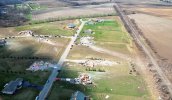
Here’s what I’m talking about. Very clear grass scouring and wind rowing. The best EF5 candidate homes are actually in the upper left portion in the first pic. I will admit that in the second pic there is a collateral damage issue (you can see that the neighboring home was removed from its floor and smashed into the other home), but the grass scouring at the bottom of the frame is impressive.
IMG_1078.jpeg
IMG_1079.jpeg
 
Here’s what I’m talking about. Very clear grass scouring and wind rowing. The best EF5 candidate homes are actually in the upper left portion in the first pic. I will admit that in the second pic there is a collateral damage issue (you can see that the neighboring home was removed from its floor and smashed into the other home), but the grass scouring at the bottom of the frame is impressive.
View attachment 49278
View attachment 49279
I believe it should have gotten Ef5. Another thing that stands out to me is the use of 200mph ratings. I hate when buildings get the rating of 200mph Ef4, because to me that just seems like a building the surveyor just, for some reason, refused to give it Ef5. Like, is 1 mph really doing much difference? Some houses in Moore were rated Ef5 201, and in my opinion, looked just like these ones.
 
re: Rochelle.

To add, I've stopped assuming that "a few missing nuts and washers" automatically equals a construction flaw and thus a downgrade. I'd imagine that in a lot of cases, they were stripped off by the tornado rather than missing to begin with.

The exception is where *every* anchor bolt is missing nuts and washers, even where sill plates remain (Deer Dr in Mayflower 2014, and Des Arc 3/14/25). It's fair to assume a construction error in those cases.
 
Rochelle, vilonia, mayfield, Chickasaw, goldsby, and possibly rolling fork are tornadoes I think are Ef5. I believe that they were rated incorrectly and should be upgraded.
 
Oh I remember that house; it’s one of the cleanest sweeps I’ve ever seen. I agree the tornado almost certainly peaked around that area, but my issue is that it was clearly an old unanchored block foundation home like you mentioned. Contextually impressive, but way too structurally frail to be considered for an EF5 rating. Now if we saw this kind of context at the other more well-built slab foundation home, then we’d be talking. But in reality It’s one of those cases where the two crucial components for an EF5 rating (construction and context) are present, but fail to overlap at a single location.

So in a nutshell, while I don’t disagree that EF5 intensity was probably reached, I maintain that there’s no singular clear cut damage point that could actually be rated EF5. When it comes to the term “EF5 candidate”, to me that means a tornado that produced damage that meets the actual EF5 criteria and could have conceivably rated as such, but wasn’t. I don’t see how Holly Springs would fit into that category.
Fair assessment.

High-end EF4 may very well be fine for Holly Springs given the poor construction quality of many structures in rural Mississippi. By far my biggest gripe is, again, the quality of the survey itself. When you leave folks second-guessing as to a tornado's true intensity, or whether or not it deserved [insert EF rating here], you've done something horribly wrong.

It's not science, it's laziness. Thanks to yours truly, NWS Memphis.
 
Fair assessment.

High-end EF4 may very well be fine for Holly Springs given the poor construction quality of many structures in rural Mississippi. By far my biggest gripe is, again, the quality of the survey itself. When you leave folks second-guessing as to a tornado's true intensity, or whether or not it deserved [insert EF rating here], you've done something horribly wrong.

It's not science, it's laziness. Thanks to yours truly, NWS Memphis.
So...would it then join the "asterisk club" with Marion, Cisco, Mayfield, etc.?
 
Fair assessment.

High-end EF4 may very well be fine for Holly Springs given the poor construction quality of many structures in rural Mississippi. By far my biggest gripe is, again, the quality of the survey itself. When you leave folks second-guessing as to a tornado's true intensity, or whether or not it deserved [insert EF rating here], you've done something horribly wrong.

It's not science, it's laziness. Thanks to yours truly, NWS Memphis.
That’s my biggest gripe too. The MEG survey team has year after year fallen short. They not only underrate, but also frequently miss damage points, and sometimes miss entire path segments. The best we could hope for is a change in staffing like what happened at NWS Little Rock and Peachtree City. The change in survey quality was dramatic at both offices, even though Peachtree City got a little too bullish.
 
So...would it then join the "asterisk club" with Marion, Cisco, Mayfield, etc.?
I honestly still think there was enough to rate it EF5, since all the violent contextual hallmarks were there, and multiple rural slab homes were leveled or swept away. However, I'd potentially change my stance if we knew for sure that none of them were well constructed.
 
So...would it then join the "asterisk club" with Marion, Cisco, Mayfield, etc.?
Why is Marion on that list? The main controversy with that one is the possibility of it actually being rated to high, not too low.

On the other hand, I could eventually see Mayfield being upgraded some time in the future, especially given LaDue’s recent presentation and some of the features of the proposed EF scale update that will supposedly roll out in a few years.
 
Last edited:
I think it's safe to say that there is something very systematically wrong going on with damage surveys done by MEG - it's a repeated trend that has been happening since at least 2011, probably even further back if I'm not aware of more botched surveys happening before then by them. The amount of missing portions of damage from many tornadoes across different outbreaks is evidence enough of this. I used to think that New Wren's bad rating was because of the overworked nature of the surveyors and the amount of tornadoes, but after I found out it was done by MEG, I immediately began to think otherwise. The size of the outbreak didn't stop other monster tornadoes from that day from getting the ratings they deserved, or, at least, close to the ratings they deserved - even if their surveys weren't that great in general (Hackleburg and Smithville).
 
Why is Marion on that list? The main controversy with that one is the possibility of it actually being rated to high, not too low.

On the other hand, I could eventually see an Mayfield being upgraded some time in the future, especially given LaDue’s recent presentation and some of the features of the proposed EF scale update that will supposedly roll out in a few years.
I've said it before and I'll say it again, but I'm highly skeptical that the Marion tornado deserved an F5 rating, let alone that it was "the strongest of the 2000s".

I'll gladly eat crow if someone can prove otherwise, but almost every argument I've seen that it should have been rated F5 instead of F4 is along the lines of "This guy said he knew a guy who read this other guy's post that it did this to farm equipment".
 
Lol! I forgot there are two unrelated tornadoes that hit towns named Marion (ND in 2004 and IL in 2025) that have rating controversies!

My post was referring to the 2004 tornado. Definitely violent, sure, but I think its reputation is overhyped by internet rumors.

The 2025 tornado I think was rated slightly too high, though not egregiously. Mid EF4 (180-185mph range) would probably work there.
 
Hi everyone,

I noticed some discussions were being brought up about some of my analysis on the Rochelle, IL EF4. I'd be glad to share more about my analysis of the event and why I believe from a structural standpoint, Rochelle does not fall into the EF5 criteria.

As ColdFront noted, it does seem to be a recurring event where people paraphrase my analysis without the detailed information that verifies my conclusions. I did also see some discussion on the Holly Springs tornado which I do not know much about, but I do have important observations to share with some of you regarding the structural flaws in the swept slab-on-grade home. I'll share my observations on those after I finish writing this message if you are interested (and if I'm not burnt out after writing this message for over an hour).

To begin, while I am most known for my cycloidal analysis formulas and methodology, my first major project was strictly focused on the Rochelle tornado. I ended up spending essentially a full year focused on an analysis of the lifespan of the tornado and damage path. A while ago I created this playlist containing many unseen videos of the tornado. I made a short synced video of the tornado's lifecycle around the Skare Park region here as well. Much of my research of the event was included in a video I helped produce with High Risk Chris here.

I won't be able to include all of the residences I surveyed as I spent an absurd amount of time documenting the entire event and I don't have time to share everything. I will focus on the residence at 10386 E Kuehl Court in Skare Park as it is typically the most discussed residence of the event and most commonly used to argue EF5 intensity.

Firstly, I understand the argument of not being able to confidently analyze a residence due to the lack of images. However, with this particular residence (as well as the swept residence next to it), I was able to find multiple other images of the residence and foundation. For the residence at 10386 E Kuehl Ct, I was able to find enough images of the residence to confidently remodel the foundation for a better analysis of the event. I spent multiple weeks analyzing and modeling the foundation of the home including any sill plates, anchor bolts, nuts, washers, siding, studs, and any other major observations of the foundation so I could confidently observe all angles of the foundation to best determine the structural integrity of the residence from a forensic analysis perspective.

SidewalkV9SalticalWX.png.webp
With this to help in the forensic analysis of the residence, I was able to write a seven page paper of the residence observing five different failures occurring at the residence. I presented my work to Mechanical Engineer Ethan Moriarty who verified my observations and conclusions. I was able to identify these five major failures at this residence:

(1) Failure of walkout basement walls due to numerous windows leading to the collapse of the backside of the structure.

(2) Failure of wall to floor joist connections allowing the home to slide off the foundation.

(3) Failure of support beams inside the foundation that allowed for the floor joist to collapse inward into the basement.

(4) Failure of the concrete walkway due to brick veneer and wooden-framed walls failing and sliding the concrete to the southeast.

(5) Failure of reinforced concrete walls along the eastern side of the foundation potentially aided by high-speed projectiles.

In short, I observed many structural flaws within this residence that kept it from receiving an EF5 rating in my survey. If you would like to read my paper, I'd be glad to share it with all of you. I just have to edit and format it for clarity and readability purposes.

Now to speak on some specific parts of this residence I noticed some of you talking about as I was writing. I noticed many of you pointing out how the lack of nuts and washers on a bolt may represent the tornado's intensity rather than a lack of care in the design of the home. However, the reason these bolts did not have nuts or washers is because there was no reason for them to have any. Why? Due to poor planning and construction, these bolts were placed incorrectly and were not even on a sill plate.
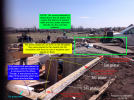
SalticalWX10386EKuehlCt.png
Now regarding the moved walkway.

Using the 3D model, we can gather exact dimensions for the sidewalk rather than assuming some. This means our answer will more accurately resemble what actually happened. Note in the above image how the moved sidewalk is actually above the gravel sill plates rather than embedded into the dirt. Upon failure of the exterior walls and floor joist, these large chunks of the structure rammed directly into the sidewalk. This caused the sidewalk to be dragged across the gravel and ultimately push the concrete slabs to the south into the dirt.

But what if the wind was the sole force acting on the slab? Using exact geometries and the drag force equation, we can determine the wind velocity required to overcome the force due to friction acting on the slab. Since I calculated this a while back, I do not have the paper on me. If you'd like, I can go back and find it. This number I calculated was also verified by Ethan Moriarty. This calculation assumes the only force acting on the slab is a wind force acting on the exposed surface area to the left side of the sidewalk. This does not include the exposed surface area on top of the slab experiencing a force due to friction from the wind force. But what does this mean? This means the calculated result is not assuming every wind force. Thus, the resulting wind speed is going to be higher than the actual wind speed. The math states an instantaneous wind gust of 213 mph is required to overcome the force due to friction on this slab. However, due to the previously mentioned additional surface area on top of the slab experiencing a friction force from the wind; the actual required wind speed would be less than 213 mph. The failure of the floor joist, sub flooring, and exterior walls would all have impacted this slab in some way. With these two factors in mind, it can be confirmed that the wind speed required for this slab to have moved would not have required instantaneous wind gusts of 200 mph or higher. Does this mean winds over 200 mph didn't exist here? No. Did wind speeds over 200 mph occur <2in above a high friction surface? Also no. Therefore, this cannot be argued as an EF5 contextual indicator.

What about this home can be argued as EF5? Unknown to everyone online, including me for a while, this residence actually has a sheared concrete wall. Is this EF5? Well, there is not a EF scale DI for this so you may be able to argue this as an EF5 contextual indicator. However, there is an IF scale DI that applies to reinforced concrete walls. Analysis of this aspect is a bit of a gray area, so I will leave it up to you guys to determine your own opinions provided the information given.

The sheared reinforced concrete wall is 20 cm thick (8 in). The height of the wall on the side exposed to the wind is greater than 8 times its with (greater than 120 cm tall or 5.33 ft). The reinforced concrete wall is partially supported by soil on the side facing away from the wind an unknown amount. It is to be argued whether or not this wall falls under sturdiness class C or D, and if this wall falls under DoD1 or DoD2. Neither case results in an IF5 rating, the maximum rating this DI can be awarded according to the IF scale is IF4. Note: the IF scale estimates instantaneous wind gusts rather than the EF scale's 3s wind gusts.
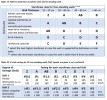
1766786009280.png

If you have any questions, I'd be glad to answer them to clear any confusion up. Please note there is way more analysis I've done on Rochelle than I've shared. Due to time management purposes, I'll finish this post here and answer any questions about any other EF5 candidates from Rochelle. Also note, cycloid analysis suggests EF4 for the entirety of the path of the tornado. However, this is a whole other ordeal.

Thank you all,
Saltical
 
I think it's safe to say that there is something very systematically wrong
I would argue this extends to their office as a whole. While I would consider myself conservative when it comes to forecasting tornado outbreaks, MEG makes me look liberal.

One only needs to find some of the previous severe weather event threads on here where every other NWS office around MEG would be starting to sound the alarm on a possible event coming up, with MEG basically shrugging their shoulders.

Not only that, they played it too conservative in my opinion on 4/27/11. While JAN, BMX, and HUN were correctly handing out tornado emergencies like candy in a generational parameter space, MEG couldn’t even muster a TOR-E for Smithville. I understand there’s a criteria that has to be met, but I think with the radar presentation and environment that day, the correct play was to be more liberal.
 
Yeah that’s my bad. Marion 2004 indeed had some very impressive contextuals that go far beyond rumors about tossed farm machinery, including grass scoured to bare soil with underlying topsoil removed, cars stripped down to their frames and wrapped around debarked trees, and it basically was a predecessor to Rainsville considering what it did that anchored safe. The TornadoTalk article was quite compelling when it was public.

Sorry for the confusion there.
 
Back
Top