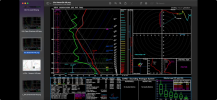
From Trey’s case study on the 3/14 outbreak, a RAP proximity sounding taken near the Fifty-Six Arkansas long track EF4. Very
rare environment those storms were in that night.
View attachment 46515
Also didn’t realize a cold front/psuedo dry-line was the main boundary initiator that night for the supercells. There was a small temperature gradient on both sides, so the forcing was more subtle. Kind of like the cold front on Palm Sunday 1965 and 5/31/85. I always thought it was a straight up dryline the night of the 14th.
I was ping ponging back and forth with each model run from nothing burger to high end outbreak. Moisture issues, lead wave placement, mixing etc. I distinctly remember
@Clancy and
@JPWX being insistent throughout the week leading up to that Friday that the synoptics were just so overwhelming there was bound to be some kind of tornado outbreak somewhere. They nailed it.
I’m always interested in these case studies because it seems like your higher end outbreaks take instances that would easily stifle any other outbreak and just push them aside. 4/3/74 had a large MCS move through the outbreak areas not even 4 hours before initiation time and had decently overcast skies over the norther portion. 4/27/11 and it’s two morning rounds. 5/3/99 with a cirrus canopy and dual dryline structure. I would laugh if you told me an area with high 30s to mid 50s dew points the late morning/early afternoon of an event later had
multiple, high end discrete supercells rolling through it. That’s exactly what happened in Northern Arkansas/Southern Missouri on 3/14.