
Another overlooked tornado from that outbreak was the long track Bethel Springs TN EF3. Tracked for almost 90 miles and was caught on Tennessee Valley Weather’s camera network live while @Fred Gossage and team covered the event.
Follow along with the video below to see how to install our site as a web app on your home screen.
Note: This feature may not be available in some browsers.

I remember seeing that live on Ryan hall stream and the coverage. Most fatal of the outbreak too I believe.Another overlooked tornado from that outbreak was the long track Bethel Springs TN EF3. Tracked for almost 90 miles and was caught on Tennessee Valley Weather’s camera network live while @Fred Gossage and team covered the event.
View attachment 46603
Always thought it was overlooked also, given that it tracked so long and took 9 lives.I remember seeing that live on Ryan hall stream and the coverage. Most fatal of the outbreak too I believe.

I strongly believe this tornado, Robinson/Sullivan, Keota, Wynne, and Covington were all capable of producing EF4+ damage and Keota honestly probably had EF5 potential at some point. The wedge that occurred before it I am sure had violent potential due to the ridiculous motion on it. It truly was an outbreak to remember and a lot of cities that day got extremely lucky that some of the tornadoes didn’t impact them at peak strength.Another overlooked tornado from that outbreak was the long track Bethel Springs TN EF3. Tracked for almost 90 miles and was caught on Tennessee Valley Weather’s camera network live while @Fred Gossage and team covered the event.
View attachment 46603
Keota footage and pics still wow meI strongly believe this tornado, Robinson/Sullivan, Keota, Wynne, and Covington were all capable of producing EF4+ damage and Keota honestly probably had EF5 potential at some point. The wedge that occurred before it I am sure had violent potential due to the ridiculous motion on it. It truly was an outbreak to remember and a lot of cities that day got extremely lucky that some of the tornadoes didn’t impact them at peak strength.
Stronger than Smithville? I’d love to hear about these cycloidal measurements suggesting this. I’ve always leaned a bit towards the side that cycloidal measurements seem to overrate intensity.
The cycloidal measurements consist of a range of formulas found by SalticalWX, that can be used to determine instantaneous gusts, 3 sec volumetric gusts, tornado width, as well as reconstructing the tornadoes windfield. If you are referring to Fujita's cycloidal measurements, yes, they do overrate intensity. the 350mph cycloidal that got Goessel F5 were calculated to be around 210mph for a 3 second gust by Saltical. he found Robinson had 241mph tangential velocities, where as Smithville had 196 - 238 i believe (median of 217, although this was a little before Smithville's peak in intensity). he calculated a 3 second volumetric gust of 251mph for Robinson. Robinson was moving faster and had a similar/faster rotational velocity, so i find it pretty unlikely Smithville was stronger, even at peak intensity. If you are curious about the validity of his formulas, the tangential velocity is essentially a direct measurement, and the 3 second gust formulas align perfectly with the EF scale + DOW measurements in nearly every case. i personally believe cycloidals are the single best way to measure tornadoes intensity.I think saying stronger than Smithville may be a bit much in my opinion…
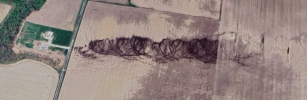
I can’t lie, those are some of the most impressive cyclodials I have ever seen.The cycloidal measurements consist of a range of formulas found by SalticalWX, that can be used to determine instantaneous gusts, 3 sec volumetric gusts, tornado width, as well as reconstructing the tornadoes windfield. If you are referring to Fujita's cycloidal measurements, yes, they do overrate intensity. the 350mph cycloidal that got Goessel F5 were calculated to be around 210mph for a 3 second gust by Saltical. he found Robinson had 241mph tangential velocities, where as Smithville had 196 - 238 i believe (median of 217, although this was a little before Smithville's peak in intensity). he calculated a 3 second volumetric gust of 251mph for Robinson. Robinson was moving faster and had a similar/faster rotational velocity, so i find it pretty unlikely Smithville was stronger, even at peak intensity. If you are curious about the validity of his formulas, the tangential velocity is essentially a direct measurement, and the 3 second gust formulas align perfectly with the EF scale + DOW measurements in nearly every case. i personally believe cycloidals are the single best way to measure tornadoes intensity.
below are the cycloidals that were calculated to have these winds, although i believe cycloidals at several other points in the track also suggest EF5 intensity
View attachment 46614
I'm gonna have to see some evidence to back up these analyses, which so far I haven't found amongst his six tweets or one youtube video. If it's not public it doesn't count.The cycloidal measurements consist of a range of formulas found by SalticalWX, that can be used to determine instantaneous gusts, 3 sec volumetric gusts, tornado width, as well as reconstructing the tornadoes windfield. If you are referring to Fujita's cycloidal measurements, yes, they do overrate intensity. the 350mph cycloidal that got Goessel F5 were calculated to be around 210mph for a 3 second gust by Saltical. he found Robinson had 241mph tangential velocities, where as Smithville had 196 - 238 i believe (median of 217, although this was a little before Smithville's peak in intensity). he calculated a 3 second volumetric gust of 251mph for Robinson. Robinson was moving faster and had a similar/faster rotational velocity, so i find it pretty unlikely Smithville was stronger, even at peak intensity. If you are curious about the validity of his formulas, the tangential velocity is essentially a direct measurement, and the 3 second gust formulas align perfectly with the EF scale + DOW measurements in nearly every case. i personally believe cycloidals are the single best way to measure tornadoes intensity.
below are the cycloidals that were calculated to have these winds, although i believe cycloidals at several other points in the track also suggest EF5 intensity

In addition to this, I must say that such measurements suggesting Smithville is weaker than this tornado may point more to the fact that the measurement itself may not be entirely accurate. Damage doesn’t lie, and is the ultimate indicator of how intense a tornado truly was at the surface level. Nothing in Robinson-Sullivan came even close to the extraordinary violence Smithville produced, and that’s simply a fact. The forest damage Smithville did was probably the most violent forestry damage we’ve ever seen, or at least, close to it. While the above imagery of the tree damage easily points to an EF4+ tornado, Smithville was still an order of magnitude above that, I’d say.I'm gonna have to see some evidence to back up these analyses, which so far I haven't found amongst his six tweets or one youtube video. If it's not public it doesn't count.
Fujita's formula is very much just geometry. I've not seen many examples, but the ones I have seen (more than the n=1 mentioned here) produced low speeds more or less in line with the EF scale.
Smithville is arguably one of the top 5 most violent tornadoes we have ever seen. No questions asked. My big 5 include:In addition to this, I must say that such measurements suggesting Smithville is weaker than this tornado may point more to the fact that the measurement itself may not be entirely accurate. Damage doesn’t lie, and is the ultimate indicator of how intense a tornado truly was at the surface level. Nothing in Robinson-Sullivan came even close to the extraordinary violence Smithville produced, and that’s simply a fact. The forest damage Smithville did was probably the most violent forestry damage we’ve ever seen, or at least, close to it. While the above imagery of the tree damage easily points to an EF4+ tornado, Smithville was still an order of magnitude above that, I’d say.
Just wanted to say I've appreciated your past expositions on this subject.The cycloidal measurements consist of a range of formulas found by SalticalWX, that can be used to determine instantaneous gusts, 3 sec volumetric gusts, tornado width, as well as reconstructing the tornadoes windfield. If you are referring to Fujita's cycloidal measurements, yes, they do overrate intensity. the 350mph cycloidal that got Goessel F5 were calculated to be around 210mph for a 3 second gust by Saltical. he found Robinson had 241mph tangential velocities, where as Smithville had 196 - 238 i believe (median of 217, although this was a little before Smithville's peak in intensity). he calculated a 3 second volumetric gust of 251mph for Robinson. Robinson was moving faster and had a similar/faster rotational velocity, so i find it pretty unlikely Smithville was stronger, even at peak intensity. If you are curious about the validity of his formulas, the tangential velocity is essentially a direct measurement, and the 3 second gust formulas align perfectly with the EF scale + DOW measurements in nearly every case. i personally believe cycloidals are the single best way to measure tornadoes intensity.
below are the cycloidals that were calculated to have these winds, although i believe cycloidals at several other points in the track also suggest EF5 intensity
View attachment 46614
most of the stuff he has said about it is spread between a few discord servers, although he is writing a paper about it.I'm gonna have to see some evidence to back up these analyses, which so far I haven't found amongst his six tweets or one youtube video. If it's not public it doesn't count.
The measurement itself its accurate, the only part that makes the measurements somewhat hard to compare is the fact Robinson's occurred at peak intensity, while Smithville's were slightly before peak intensity.In addition to this, I must say that such measurements suggesting Smithville is weaker than this tornado may point more to the fact that the measurement itself may not be entirely accurate. Damage doesn’t lie, and is the ultimate indicator of how intense a tornado truly was at the surface level. Nothing in Robinson-Sullivan came even close to the extraordinary violence Smithville produced, and that’s simply a fact. The forest damage Smithville did was probably the most violent forestry damage we’ve ever seen, or at least, close to it. While the above imagery of the tree damage easily points to an EF4+ tornado, Smithville was still an order of magnitude above that, I’d say.


i think the reason Smithville might appear more impressive was because its suction vortices were stronger and were the main makers of the EF5 damage , cycloidal marks measures the parent tornado and not the suction vortices.In addition to this, I must say that such measurements suggesting Smithville is weaker than this tornado may point more to the fact that the measurement itself may not be entirely accurate. Damage doesn’t lie, and is the ultimate indicator of how intense a tornado truly was at the surface level. Nothing in Robinson-Sullivan came even close to the extraordinary violence Smithville produced, and that’s simply a fact. The forest damage Smithville did was probably the most violent forestry damage we’ve ever seen, or at least, close to it. While the above imagery of the tree damage easily points to an EF4+ tornado, Smithville was still an order of magnitude above that, I’d say.
As in an academic, peer reviewed paper? What kind of background does he have?most of the stuff he has said about it is spread between a few discord servers, although he is writing a paper about it.
"If it's not public it doesn't count". I don't have Discord for multiple reasons. You could do worse than to copy the information either here or into a PM.most of the stuff he has said about it is spread between a few discord servers, although he is writing a paper about it.
Ground deposition markings don't require suction vortices.i think the reason Smithville might appear more impressive was because its suction vortices were stronger and were the main makers of the EF5 damage , cycloidal marks measures the parent tornado and not the suction vortices.
i think a way to test this out is with el reno 2013 , as we know the parent tornado had EF4 winds but the suction vortex were the ones doing the 290+ mph winds.
el reno 2013 will likely come out as 170 to 190 mph using the cycloidal calculation.
It focuses mainly on the nature of the marks themselves rather than intensity calculations, but you want to start with this thesis: Correlating simulated surface marks with near-surface tornado structureDoes anyone have a good paper on cycloidal markings and intensity calculations?
yes, an academic peer reviewed paper. he doesn't have much of a background, so i understand the skepticism, but all the results ive seen seem to align perfectly with the EF scale (his 3 sec wind gust estimates always match nearby EF scale damage).As in an academic, peer reviewed paper? What kind of background does he have?
I’m not trying to come across as dismissive, but I really tend to take any “amateur/wx community based” tornado calculations with a huge grain of salt. Especially amongst discord. I tend to give some credence to Ethan Moriarty, but not carte blanche, since he has an academic background in engineering. I just do not agree with any sort of conclusion that Robinson was stronger than Smithville, especially based on an unproven, scientifically untested calculation.
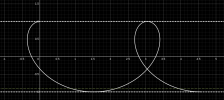
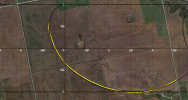
His work also aligns with mobile radar. While El Reno didn't have any calculable cycloidals, it did have ground markings that resemble the beginning of a cycloidal. I believe he worked backwards with the translation speed and tangential velocity on mobile radar to create what a cycloidal would have looked like if el reno produced one. this hypothetical cycloidal nearly perfectly aligned with the ground marking. (see below)el reno 2013 will likely come out as 170 to 190 mph using the cycloidal calculation.

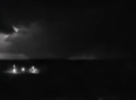
Is there a photo of the tornado on the live cameras? Might be able to use them for something.Another overlooked tornado from that outbreak was the long track Bethel Springs TN EF3. Tracked for almost 90 miles and was caught on Tennessee Valley Weather’s camera network live while @Fred Gossage and team covered the event.
View attachment 46603