• Welcome to TalkWeather!
    We see you lurking around TalkWeather! Take the extra step and join us today to view attachments, see less ads and maybe even join the discussion.
    CLICK TO JOIN TALKWEATHER

Severe Weather 2026

To be fair Honest. , each run on models not really impressing as it once was . See if it trends back more potent .
Which just bolsters the point that @eep and @WeathermanLeprechaun made. People on WxTwitter tweeting scary looking maps and “here it comes!!” comments this far out does nothing but introduce uncertainty to people who may not understand those model runs.

Some of us that are here for the meteorological side understand that almost always these high end set ups being depicted 6-7 days out fall on their face as we get closer. @Clancy does a really good job of showing images of the model runs, but also providing excellent non-hype commentary. You don’t see that on most of WxTwitter. Others that are here just to keep up with possible forecasts in their area could get confused by WxTwitter hype. I’m not saying these model runs won’t shift back, but this is a prime example why most TV Mets don’t start commentating on a set up until 2-3 days out and really sounding the alarm until a day out.
 
Last edited:
..THURSDAY/DAY 4 AND FRIDAY/DAY 5

AT MID-LEVELS, A SHORTWAVE TROUGH IS FORECAST TO MOVE THROUGH THE
MID MISSISSIPPI VALLEY ON THURSDAY AS FLOW REMAINS SOUTHWESTERLY
ACROSS THE SOUTH-CENTRAL U.S. AN UPPER-LEVEL SYSTEM WILL BE LOCATED
IN THE DESERT SOUTHWEST. AT THE SURFACE, MOISTURE ADVECTION IS
FORECAST ACROSS THE SOUTHERN PLAINS, WHERE SURFACE DEWPOINTS WILL BE
MOSTLY IN THE 50S AND 60S F BY AFTERNOON. AS SURFACE TEMPERATURES
WARM DURING THE DAY, AN AXIS OF MODERATE INSTABILITY IS FORECAST TO
DEVELOP TO THE EAST OF A DRYLINE FROM WEST-CENTRAL TEXAS
NORTH-NORTHEASTWARD INTO THE EASTERN TEXAS PANHANDLE AND WESTERN
OKLAHOMA. ALONG THIS AXIS OF INSTABILITY, MODERATE DEEP-LAYER IS
FORECAST, ALONG WITH STEEP MID-LEVEL LAPSE RATES. THIS WILL LIKELY
SUPPORT A SEVERE THREAT DURING THE AFTERNOON AND EVENING. SUPERCELLS
WITH LARGE HAIL, DAMAGING WIND GUSTS AND A TORNADO THREAT WILL BE
POSSIBLE.

ON FRIDAY, MID-LEVEL SOUTHWESTERLY FLOW WILL STRENGTHEN ACROSS PARTS
OF THE SOUTHERN AND CENTRAL PLAINS, AS A MID-LEVEL JET EJECTS
NORTHEASTWARD INTO THE CENTRAL U.S. AT THE SURFACE, A MOIST AIRMASS
WITH MODERATE INSTABILITY IS FORECAST TO BE IN PLACE BY AFTERNOON
FROM NORTH-CENTRAL TEXAS NORTH-NORTHEASTWARD INTO THE LOWER MISSOURI
VALLEY. MODEL FORECASTS ARE IN AGREEMENT THAT SCATTERED
THUNDERSTORMS WILL DEVELOP ACROSS THIS UNSTABLE AIRMASS DURING THE
AFTERNOON AND EVENING. MODERATE DEEP-LAYER SHEAR AND STEEP MID-LEVEL
LAPSE RATES SHOULD BE FAVORABLE FOR SUPERCELLS WITH LARGE HAIL. WIND
DAMAGE AND TORNADOES WILL ALSO BE POSSIBLE WITH SUPERCELLS AND
BOWING LINE SEGMENTS. SOME SOLUTIONS SUGGEST THAT THE THREAT WILL
PERSIST INTO THE OVERNIGHT PERIOD AS A LOW-LEVEL JET RAMPS UP ACROSS
THE REGION.
 
March 9th-10th still raising some eyebrows for me for somewhere in the southeast.
There's the thread for the sequence
 
Very interested in the 11th - 12th period across the SE. GFS and ECMWF both show a compact shortwave ejecting NE across the SE/mid-MS valley region. Moisture doesn't seem to be an issue. A big questions will be how amplified the SE ridge is. A more amplified ridge will result in the trough shearing out to the NE and bulk shear vectors being more parallel to the boundary layer. If the SE ridge can remain more muted then I could see the possibility of something more significant. Obviously it's ~9-10 days out, so lots will change.
 
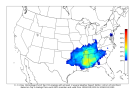
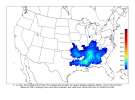
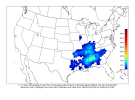
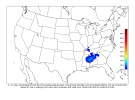
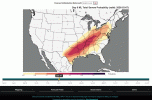
CIPS is really keyed-in on the period 3/10-3/13 or so. These are some really strong values for CIPS standards, especially at this range. However, I'd caution that the run-to-run consistency is still way too low to get too zoned-in on a particular time frame, and synoptic details still a bit too murky. Clearly, though, potential is definitely there, and it looks probable that March will continue to be active even behind this time period.
1772485155030.png1772485161683.png1772485180567.png1772485185307.png20260302.gif
 
It's probably worth noting we currently have a TNI value of +1.2, which is the highest I've seen since I started keeping track. Values over 1 are correlated with stronger severe weather activity. It's surprisingly extremely difficult to find a decent historic chart of TNI values.
 
It's probably worth noting we currently have a TNI value of +1.2, which is the highest I've seen since I started keeping track. Values over 1 are correlated with stronger severe weather activity. It's surprisingly extremely difficult to find a decent historic chart of TNI values.
I would expect that, especially with us entering an El Nino shortly.


I think last year in March, specifically around the week of 3/14-3/15 outbreak sequence, we had a peak TNI of +2.5 per Fred.
 
I would expect that, especially with us entering an El Nino shortly.


I think last year in March, specifically around the week of 3/14-3/15 outbreak sequence, we had a peak TNI of +2.5 per Fred.
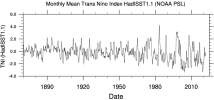
I think the last time it got above 1 was Spring 2024. It usually peaks either right before or after the main El Nino event. 2023-2024 was a weak El Nino, so it never got very high above 1 as a running average. The last peak before that was 2015-2016. Here's a barely helpful chart I found with historical numbers.

1772499324528.png
 
I think the last time it got above 1 was Spring 2024. It usually peaks either right before or after the main El Nino event. 2023-2024 was a weak El Nino, so it never got very high above 1 as a running average. The last peak before that was 2015-2016. Here's a barely helpful chart I found with historical numbers.

View attachment 50894
I think it may be differences in calculations or how the different sources online (Lee, NOAA) average it out.

The TNI method SK Lee originally used for their research on its correlation to higher frequency tornadic events were specifically stated that a decaying La Niña or entering an El Niño phase yielded a positive TNI.

I can almost guarantee you the TNI was over 1 for all of March 2025.

Fred’s post:
https://talkweather.com/threads/severe-weather-2025.2298/post-149603
 
I think it may be differences in calculations or how the different sources online (Lee, NOAA) average it out.

The TNI method SK Lee originally used for their research on its correlation to higher frequency tornadic events were specifically stated that a decaying La Niña or entering an El Niño phase yielded a positive TNI.

I can almost guarantee you the TNI was over 1 for all of March 2025.

Fred’s post:
https://talkweather.com/threads/severe-weather-2025.2298/post-149603

Thank you for finding that comment! I wasn't having any luck. Really interesting stuff.
 
I think the last time it got above 1 was Spring 2024. It usually peaks either right before or after the main El Nino event. 2023-2024 was a weak El Nino, so it never got very high above 1 as a running average. The last peak before that was 2015-2016. Here's a barely helpful chart I found with historical numbers.

View attachment 50894
I will say, that spring 2024 is a good call out because late April through May were bonkers.
 
You bet. Also wasn’t saying your chart was incorrect either, I think it’s simply just how the different parties were calculating and averaging it over specific time periods.
Yep for sure, I mixed up the 1 month running average with individual daily values not realizing they were separate things. I'm glad to know they are now. One interesting thing about the 1 month average chart is it almost looks like 2011 peaked twice, which could help explain why that year sustained so much intensity. It also appears that years where the value is high and going up are usually more intense than years where it's high but descending.
 
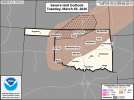
Cute little CIG1 for hail in northern OK this evening:
1772567999263.png
 
Back
Top