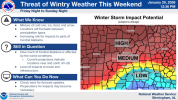
I've assembled some things I've had jotted down for family members from some time ago. There's plenty of guidance for preparing for winter storms and power outages out there but sometimes it doesn't get at the practical realities of people in real situations, and is often too vague. Below is some basic info on readying your pantry/home for this weekend.
1. Food Safety and Basic Preparation
A fridge provides about 4 hours' safety (unopened), while a freezer provides 24 to 48 hours' safety (unopened). Purchase fridge thermometers if you want to track your fridge's internal temperature. Food outside is generally okay if the ambient temperature is at or below your normal fridge's temperature, usually around 40 degrees F. Fill up gas tanks if you're able. Charge your power banks before the storm. Please use generators outside and away from windows. Make sure you have multiple ways of contacting others and/or emergency services. If you have neighbors, make sure those with chronic illnesses or those who are elderly have arrangements for safety in case of a power outage and prolonged cold.
2. Foodstuffs
Have some good non-refrigerated food options at hand, take your pick based on what you like, and what is palatable to you and your family. Below are just a few options that I personally like to have when I'm able to.
-Crackers and shelf-stable breads
-Peanut butter
-Shelf-stable cheeses and meats like salami
-Nuts, trail mix
-Shelf-stable milk
-Canned soups
-Canned fruits
-Canned meats
-Canned beans
-Canned corn
-Canned veggies like green beans
-Salad dressings
-Dry goods like pasta, ready rice, instant oats
(Note: make sure you have a way to boil water without power if you plan on using dry goods)
3. Additional tips
If you're shopping before a storm, buy things that are shelf stable, not milk and eggs. Eat cold things first, as they perish the quickest, starting with your refrigerated goods. You can fill a cooler with ice/snow to keep some things cold. Don't forget your pets. Make sure their food and medicines are taken care of. As far as keeping warm goes, you have a number of options. Bundling up and using blankets are a basic but effective means of conserving body heat, but they shouldn't be solely relied on. Have a way of actually producing heat if you can, whether it's hand-warmers (there's the good old-fashioned ferrous oxide ones, as well as electric ones that have become popular), a space heater, or even a good old fire. Obviously, have some lights on hand - lanterns and flashlights are good, a flashlight will do when you're just sitting around but lanterns are much nicer.