• Welcome to TalkWeather!
    We see you lurking around TalkWeather! Take the extra step and join us today to view attachments, see less ads and maybe even join the discussion.
    CLICK TO JOIN TALKWEATHER

Enhanced Fujita Ratings Debate Thread

Alright, that gives me some reasons to lay back a bit on it deserving EF5 for sure based on that. Not as strong of an advocate as I was, well appreciated! I think you can make an argument but there may be too much variables in Enid's case. Would you say Enid has stronger basis than Enderlin given the math?
There is definitely a stronger basis solely because more than one method of wind measurement was used, but then again I’ve been able to point out issues with two of the methods used already and it’s been like a day so I really don’t know. I do want to see a more in-depth treefall study done though; if Enid was EF5 anywhere it was almost certainly over that treeline.
 
Alright, that gives me some reasons to lay back a bit on it deserving EF5 for sure based on that. Not as strong of an advocate as I was, well appreciated! I think you can make an argument but there may be too much variables in Enid's case. Would you say Enid has stronger basis than Enderlin given the math?
There is definitely a stronger basis solely because more than one method of wind measurement was used, but then again I’ve been able to point out issues with two of the methods used already and it’s been like a day so I really don’t know. I do want to see a more in-depth treefall study done though; if Enid was EF5 anywhere it was almost certainly over that treeline.
 
There is definitely a stronger basis solely because more than one method of wind measurement was used, but then again I’ve been able to point out issues with two of the methods used already and it’s been like a day so I really don’t know. I do want to see a more in-depth treefall study done though; if Enid was EF5 anywhere it was almost certainly over that treeline.
I just noticed who you are lmao, your user change threw me off. Yeah, i agree. I don't see the need main basis for EF5 solely on that RV, but i see it on that treeline. Enid had very strong contextual evidence for EF5.

Also heads u your message duplicated
 
In my mind, Enderlin's calculations put it far enough above the EF5 threshold (even enough to register as a 5 on the original F scale) to ensure confidence that it reached over the 200 mark, even if perhaps the 260 estimate is overdone.
I didn't believe the 265 at all. People misinterpret Enderlin still, their most confident calculation was in the 220-230 range so if those calculations are to be taken face first, it's similar to the Enid math too. They're really not that far apart in nature, but as @Eoline mentions, Enderlin had a lot of assumptions to the extent of math I just learned about
 
I just noticed who you are lmao, your user change threw me off. Yeah, i agree. I don't see the need main basis for EF5 solely on that RV, but i see it on that treeline. Enid had very strong contextual evidence for EF5.

Also heads u your message duplicated
I forgot to mention that lol, yea
 
In my mind, Enderlin's calculations put it far enough above the EF5 threshold (even enough to register as a 5 on the original F scale) to ensure confidence that it reached over the 200 mark, even if perhaps the 260 estimate is overdone.
This is precisely why, in spite of there being some oversimplifications that do likely exaggerate the final numbers' magnitudes, that Enderlin is still solidly EF5. You could have some factor not being taken into account that would reduce the windspeed by 10% (which is a very significant disparity) - but 10% of ~230+ mph does not take it below the threshold. You can run thousands of Monte Carlo simulations on the thrown object in Enderlin's case, and I would be mindblown if the number of runs yielding sub-EF5 intensity fell within three standard deviations (or sigma values - for reference, three sigmas is within 99.7%). In fact, I wouldn't be surprised in the slightest if literally zero model runs displayed sub-EF5 level winds moving that object in that manner.

Enid, on the other hand, displayed not only a much lower median windspeed value, but given the range of values on the median, absolutely had multiple runs that yielded sub-EF5 intensity in its modeling and calculations, and likely more than enough runs to exceed a threshold defined by the sigma values. If this is the reason why they held back granting Enid an EF5 rating, this is entirely reasonable, from both a physical and statistical standpoint.

Big reminder though, I am discussing things that I am completely assuming based on my knowledge as to how decisions are made in academia. If this really isn't the reason why they kept Enid from receiving the EF5 rating, then I'm quite frankly a little dumbfounded on the decision to maintain EF4 for it, given the supporting data and evidence.

EDIT: This is also not me saying Enid was an EF4 strength tornado, I'm certain it reached EF5 intensity. The issue is you need the data to statistically speak for itself.
 
Last edited:
This is precisely why, in spite of there being some oversimplifications that do likely exaggerate the final numbers' magnitudes, that Enderlin is still solidly EF5. You could have some factor not being taken into account that would reduce the windspeed by 10% (which is a very significant disparity) - but 10% of ~230+ mph does not take it below the threshold. You can run thousands of Monte Carlo simulations on the thrown object in Enderlin's case, and I would be mindblown if the number of runs yielding sub-EF5 intensity fell within three standard deviations (or sigma values). In fact, I wouldn't be surprised in the slightest if literally zero model runs displayed sub-EF5 level winds moving that object in that manner.

Enid, on the other hand, displayed not only a much lower median windspeed value, but given the range of values on the median, absolutely had multiple runs that yielded sub-EF5 intensity in its modeling and calculations, and likely more than enough runs to exceed a threshold defined by the sigma values. If this is the reason why they held back granting Enid an EF5 rating, this is entirely reasonable, from both a physical and statistical standpoint.

Big reminder though, I am discussing things that I am completely assuming based on my knowledge as to how decisions are made in academia. If this really isn't the reason why they kept Enid from receiving the EF5 rating, then I'm quite frankly a little dumbfounded on the decision to maintain EF4 for it, given the supporting data and evidence.
Agree. It's just wrong to say that Enderlin wasn't a EF5. The environment solidly correlates with a high end environment of a EF4-EF5. Sandpapered trees, the train itself. I don't think it peaked around 260 mph, but do think it was in a 210-230 range at mininum. As for Enid, i am a bit more hesitantly now and can understand the partial reasoning, maybe why not. I still think though it may deserve it
 
I don't think the issue lies with NWS Norman regarding this, at all. I think it's moreso the different standards + viewpoints conflicting with different offices and that's why non traditional DIs are such a controversy. They're not the norm when it comes to different offices, and i don't know how many offices would agree on using non traditional DIs for a upgrade. I think i consider Enid a EF5 in my own book after all of this but it definitely does bring more question. Does the Enderlin precedent hurt the scale or does it aid it?
Worth also noting that Norman was not involved in anything mentioned in the report including adding the potential EF5 strength sentence and that they do not support inclusion of the paragraph to the report.
 
Worth also noting that Norman was not involved in anything mentioned in the report including adding the potential EF5 strength sentence and that they do not support inclusion of the paragraph to the report.
Oh, im aware. Like many have said, i think Norman tried to push as far as they could to get the rating but they got turned down. They've had experiences with such situations before (Piedmont 2011)
 
Oh, im aware. Like many have said, i think Norman tried to push as far as they could to get the rating but they got turned down. They've had experiences with such situations before (Piedmont 2011)
No, I mean they legitimately have no idea why it was added to the report as none of the studies involved them. I’m not sure they were aware a discussion about it was even going on. At least that’s what people inside are saying.
 
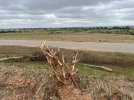
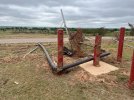
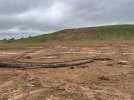
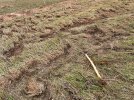
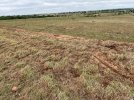
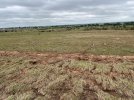
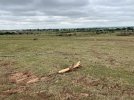
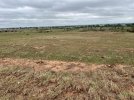
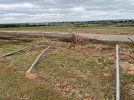
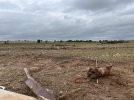
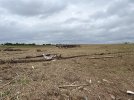
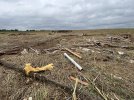
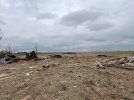
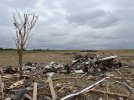
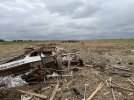
With this discussion regarding Enid’s rating, I think now is the appropriate time to finally share some of the images I captured of the damage from the tornado 2 days afterward. I’ll mainly be focusing on the stretch from South 16th Street (the road just east of the Enid landfill) and then of course Southgate Road.

This might be two posts, so bear with me. First and foremost, as an enthusiast who’s been looking at high-end tornado damage very heavily for nearly a decade now and feel I’m relatively knowledgeable in this sort of thing, I absolutely believe this was an EF5 strength tornado.

I vividly remember following the track and once I got to the stretch of damage I mentioned above the first thing that came into my mind was “This is an EF5.” Now, I didn’t expect it to get that rating because structurally it doesn’t warrant that rating. Contextually however, I felt all the evidence was there that clearly pointed to EF5 intensity being attained.

Now with the studies that have been conducted finding legitimate indicators that could warrant an upgrade to EF5, along with the overwhelming contextual evidence, my only question now is why not rate it such? To me it just doesn’t really make sense and is almost refuting the evidence that is there.

That concludes my rant on the matter, so here’s photos I have from South 16th Street.

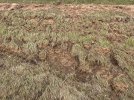
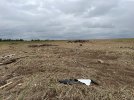
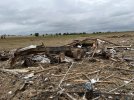
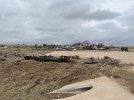
IMG_4922.jpegIMG_4916.jpegIMG_4929.jpegIMG_4908.jpegIMG_4904.jpegIMG_4909.jpegIMG_4931.jpegIMG_4906.jpegIMG_4912.jpegIMG_4920.jpeg

I also must add that I didn’t go and photograph the extreme tree damage off in the distance east of the road, as I’m not gonna lie there was a lot of traffic on the road and wasn’t sure if that was private property. In hindsight, I do wish I did because from what I could see even from afar it was truly upper-echelon damage. Even small shrubs were completely stripped in similar fashion to the shrub I photographed above.
 
With this discussion regarding Enid’s rating, I think now is the appropriate time to finally share some of the images I captured of the damage from the tornado 2 days afterward. I’ll mainly be focusing on the stretch from South 16th Street (the road just east of the Enid landfill) and then of course Southgate Road.

This might be two posts, so bear with me. First and foremost, as an enthusiast who’s been looking at high-end tornado damage very heavily for nearly a decade now and feel I’m relatively knowledgeable in this sort of thing, I absolutely believe this was an EF5 strength tornado.

I vividly remember following the track and once I got to the stretch of damage I mentioned above the first thing that came into my mind was “This is an EF5.” Now, I didn’t expect it to get that rating because structurally it doesn’t warrant that rating. Contextually however, I felt all the evidence was there that clearly pointed to EF5 intensity being attained.

Now with the studies that have been conducted finding legitimate indicators that could warrant an upgrade to EF5, along with the overwhelming contextual evidence, my only question now is why not rate it such? To me it just doesn’t really make sense and is almost refuting the evidence that is there.

That concludes my rant on the matter, so here’s photos I have from South 16th Street.

View attachment 54354View attachment 54355View attachment 54356View attachment 54357View attachment 54358View attachment 54359View attachment 54360View attachment 54361View attachment 54362View attachment 54364

I also must add that I didn’t go and photograph the extreme tree damage off in the distance east of the road, as I’m not gonna lie there was a lot of traffic on the road and wasn’t sure if that was private property. In hindsight, I do wish I did because from what I could see even from afar it was truly upper-echelon damage. Even small shrubs were completely stripped in similar fashion to the shrub I photographed above.
Dude, wow. This was by far the strongest Oklahoma tornado since Moore 2013. Absolutely a contextual EF5 in all the ways possible. before I created my account and I lurked on here for two years, I remember learning from people like @buckeye05 that when you see that type of reddish/just brownish landscape combined with high end damage, you know it was a upper echelon tornado. Enid ticks those boxes completely. Excellent documentation.
 
Dude, wow. This was by far the strongest Oklahoma tornado since Moore 2013. Absolutely a contextual EF5 in all the ways possible. before I created my account and I lurked on here for two years, I remember learning from people like @buckeye05 that when you see that type of reddish/just brownish landscape combined with high end damage, you know it was a upper echelon tornado. Enid ticks those boxes completely. Excellent documentation.
That’s what I thought of whenever I was there in the worst affected areas. The severity of ground scouring especially along Southgate Road where the ground was literally gouged out in multiple spots made me think of Moore ‘13. It was almost overwhelming just the violence of damage in spots, and I can’t see anyone with any sort of knowledge of tornado damage looking at that and not thinking EF5 intensity. Now with the studies to back it up with actual indicators used to determine EF5 intensity was reached, I just don’t get how you can’t rate it that.
 
That’s what I thought of whenever I was there in the worst affected areas. The severity of ground scouring especially along Southgate Road where the ground was literally gouged out in multiple spots made me think of Moore ‘13. It was almost overwhelming just the violence of damage in spots, and I can’t see anyone with any sort of knowledge of tornado damage looking at that and not thinking EF5 intensity. Now with the studies to back it up with actual indicators used to determine EF5 intensity was reached, I just don’t get how you can’t rate it that.
I count this one as the 2nd (unofficial) EF5 that I watched happen live honestly. That footage Amanda Benton got WHILE the tornado was over Southgate Road was extraordinarily similar to any infamous KFOR coverage from the 1990s/2010s, and this thing was almost identical to Moore '13 in evolution too. It started off as a strong tornado, rapidly developed a debris cloud so high it enveloped the whole tornado and unleashed absolute violence on whatever it hit in its core.


1:44:36. I don't think people realize just how violent this thing actually got during its life.
 
Last edited:
Back
Top