• Welcome to TalkWeather!
    We see you lurking around TalkWeather! Take the extra step and join us today to view attachments, see less ads and maybe even join the discussion.
    CLICK TO JOIN TALKWEATHER

Enhanced Fujita Ratings Debate Thread

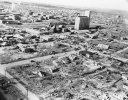
Also I absolutely agree that New Richmond definitely deserves to be brought up in the “most violent of all time” conversation. People have compared the damage intensity to Joplin or Moore, but I would go as far as to say New Richmond was possibly even more extreme than both of those. I don’t think I’ve ever seen an entire residential area of a town completely get erased out of existence to the degree shown in the panoramic pic. Sure certain tornadoes have swept away subdivisions, but entire large residential neighborhoods being swept away? That’s pretty much unheard of (though Joplin, Flint, and Tri-State 1925 did come close in some areas).
Absolutely agree. The panoramic photo is the best way to get a scale and sense of just how insane the damage was. I always start on the right side of the image, then pan left which shows you how progressively worse the damage got. You can’t even tell what kind of structures were on the left side of the image.

Even one of the closer historical tornadoes to this that I remember being really impressed by, the 1947 Glazer/Higgins/Woodward tornado, didn’t quite reach this level of complete destruction even though that tornado is still considered to be among the most violent tornadoes ever
 

Attachments

  • IMG_6634.jpeg
    IMG_6634.jpeg
    289.1 KB · Views: 17
  • IMG_6635.webp
    IMG_6635.webp
    144.4 KB · Views: 17
  • IMG_6636.png
    IMG_6636.png
    231.3 KB · Views: 17
Those train cars were a different, lighter model than the ones from Enderlin. Regardless, Enderlin-type calculations of the wind speed needed to throw the Barnsley train cars were indeed still done by Moriarty, and they came out in the EF2 range. It was a totally different situation than Enderlin.
The entire "tornadoes throw things" field really needs more research done before we start assigning definite wind speeds to these objects; even Enderlin's calculations have holes. Vortex dynamics are inherently complex so understanding how these objects get lofted is a lot more than just a calculation.
 
The entire "tornadoes throw things" field really needs more research done before we start assigning definite wind speeds to these objects; even Enderlin's calculations have holes. Vortex dynamics are inherently complex so understanding how these objects get lofted is a lot more than just a calculation.
It’s not really just that though. Calculating wind forces on air born objects with any realm of pin-point accuracy simply isn’t possible, even in a straight line wind setting, because once air makes contact with literally anything, it’s no longer a linear flow.
You have to account for every square centimeter of surface area of the air born object where the wind is blowing on, which absolutely does not experience the exact amount of force the next square centimeter experiences. the thing is though the physics of that changes with every little change in the objects orientation as it flies through the air.
Lifting force, drag force, pushing/pulling, friction, ect, all of these forces change widely every microsecond on an object in high velocity wind.
This field definitely has plenty room for improvement, but the best they can do is general approximation, perhaps using standardized vortex simulations/mathematical aggregates, similar to how they handle tree fall to determine windspeeds. (Apples to oranges I know)
 
Last edited:
It’s not really just that though. Calculating wind forces on air born objects with any realm of accuracy simply isn’t possible, even in a straight line wind setting, because once air makes contact with literally anything, it’s no longer a linear flow.
You have to account for every square centimeter of surface area of the air born object where the wind is blowing on, which absolutely does not experience the exact amount of force the next square centimeter experiences. the thing is though the physics of that changes with every little change in the objects orientation as it flies through the air.
Lifting force, drag force, pushing/pulling, friction, ect, all of these forces change widely every microsecond on an object in high velocity wind.
This field definitely has plenty room for improvement, but the best they can do is general approximation, perhaps using standardized vortex simulations/mathematical aggregates, similar to how they handle tree fall to determine windspeeds. (Apples to oranges I know)
Yes, that's what I mean. With current technology we cannot to a highly-accurate degree gather the wind speeds, even in a small range, needed to loft objects like these because we a) don't know the exact trajectory because our models currently do not fully account for everything and b) exact wind dynamics. If these cannot be resolved to a small range and that's not even including other issues such as swirl ratio assumption, why are we rating these objects to begin with? I get this is a controversial take and out-of-place for the more liberal nature of this forum but I hope y'all can at least see where I'm coming from.
 
Yes, that's what I mean. With current technology we cannot to a highly-accurate degree gather the wind speeds, even in a small range, needed to loft objects like these because we a) don't know the exact trajectory because our models currently do not fully account for everything and b) exact wind dynamics. If these cannot be resolved to a small range and that's not even including other issues such as swirl ratio assumption, why are we rating these objects to begin with? I get this is a controversial take and out-of-place for the more liberal nature of this forum but I hope y'all can at least see where I'm coming from.
I mean sure, it has caveats, but what you are saying isn’t as significant as you are making it out to be. Of course yes, hangups like the swirl ratio issue do exist, but in cases like Enderlin, even with that being true, from what I understand it was determined that it was highly unlikely that that EF5 winds didn’t occur where the train car was thrown. That was clearly a higher confidence scenario, and the fact that it made it through all the layers of red tape within the NWS until approved for an EF5 upgrade demonstrates this quite clearly.

So yes I acknowledge the caveats of object movement based ratings, but in instances where a lofted object DI is being used to fill in gaps in situations where structural damage isn’t telling the whole story, I’m all for them. We simply have to have alternative routes besides the strict engineering analysis approach if we want the issue of underrated tornadoes to be resolved, period. Besides, pretty much every existing DI and facet of EF Scale science is imperfect and has caveats and uncertainties to some degree, but we still use them because it’s the best we have right now. If we are only looking to consider perfect, infallible DIs that entail zero doubt or margin for error, then we’d have no DIs or ways to rate tornadoes at all. So even if Enderlin and Enid aren’t technically 100% provable as EF5s given these caveats, the designation of “highly likely EF5” extrapolated from these newer methods is still enough for an upgrade given the already inexact nature of survey science. For example, anchor bolted houses can fail below 200 MPH due to a variety of factors. Does that mean we should downgrade Greensburg, Parkersburg, Moore, etc just because there is a potential scenario where EF5 winds didn’t slab the bolted homes? Of course not. My point is if you are looking for a DI that offers 100% infallible proof of a certain intensity, you are looking for something that doesn’t exist. In the end it’s about going with the most reasonable conclusion, and assigning a rating that is by all indications appropriate, even if 100% certainty can’t be reached.

As an aside, you seemed pretty ok with the idea when it comes to things like the Vilonia tank, and I’m pretty sure you had a problem with Enid not being upgraded last time I checked. What changed? It kinda seems like you are easily swayed by discord discourse and flip flop between positions depending on what online community you are participating in more at the time. Correct me if I’m wrong about that though.
 
Last edited:
Yes, that's what I mean. With current technology we cannot to a highly-accurate degree gather the wind speeds, even in a small range, needed to loft objects like these because we a) don't know the exact trajectory because our models currently do not fully account for everything and b) exact wind dynamics. If these cannot be resolved to a small range and that's not even including other issues such as swirl ratio assumption, why are we rating these objects to begin with? I get this is a controversial take and out-of-place for the more liberal nature of this forum but I hope y'all can at least see where I'm coming from.

You can apply this to literally any aspect of tornado damage, though. The uncertainty is kind of the whole point. That's exactly why surveyers should use several different types of evidence to arrive at a "best guess". The only thing excluding lofted objects does is make the final rating less certain.

"If these cannot be resolved to a small range and that's not even including other issues such as swirl ratio assumption, why are we rating these objects to begin with?"

The entire issue with current tornado ratings is pretending we can resolve tornado winds to a small scale. What is wrong with more broad ranges instead of exact estimates? Chasing the ladder is exactly what has caused ratings to gradually get more inaccurate over time. We're trying to find a way to consistently categorize tornadoes. That is the goal.

Lastly, it's extremely frustrating how many times I've had to explain this to you, and you've ignored it every time. The Northern Tornado Project's lofted objects study used computer simulations to model winds of literally every type, direction, and swirl ratio. The individual objects were tested against thousands of types of simulated winds, and the final results were mapped to a probability curve. Your issues with lofted objects are not unique, and it is explicitly dealt with and covered in their studies. Your entire argument is based on incorrect assumptions, and you are spreading misinformation by continuing to make it after being corrected several times.

We may not know the exact wind speeds and wind types required to consistently loft certain objects. But we can certainly determine a baseline with 95% certainty. For example, we can say with virtually 100% certainty that Enderlin's train car couldn't have ended up where it did with sub 200 mph winds. Whether the actual exact winds required were 220 or 260 for that tornado's exact wind field is an entirely different question.
 
Last edited:
The logic of thrown objects having inaccurate calculations due to factors that are not being taken into account can just as easily be applied to home DIs or other official DIs on the scale already, so I think it's just not a great way to try to invalidate them (not saying @Eoline is fully invalidating the calc, but this is a topic I see online quite often).

I also think it's a fairly dangerous train of thought to believe that this is taking Ethan Moriarty's calculations as "gospel" despite there being substantial evidence from Monte Carlo simulations from reputable papers displaying >99% of model runs displaying EF5 intensity and being well in agreement with said calculations.

The bottom line is that the train car throw / grain bin tipping done by Enderlin is just as valid as a DI as any (validly) rated EF5 home is, and I strongly believe that given the support from figures such as Marshall and LaDue on this very topic, who can be very conservative in their approach.
 
Also, just a word of warning for anyone even subconsciously trying to align themselves with the “more conservative and skeptical = better” crowd, I am here to tell you that this approach is not going to pay off for you in the future. It’s pretty much the way of the old guard, and while it’s still the status quo, the tide is clearly turning. There are a lot of young brilliant minds who can see the ongoing problems with overly conservative surveying practices. My buddy who just moved to get his masters degree in the field recently told me that almost all his classmates are very passionate about survey science and EF Scale reform, and they very much intend to do something about the current mindset and approach. Young, newly graduated meteorologists are the people who are really going to enact these changes.

So currently aligning yourself with what is basically an internal skeptics society within the online meteorological community isn’t going to get you anywhere or bring you any closer to the truth, and it’s not going to be a good look in hindsight 20 years from now once these newer survey practices and techniques are fully in place and normalized.
 
It kinda seems like you are easily swayed by discord discourse and flip flop between positions depending on what online community you are participating in more at the time.
In what way is this relevant to anything I've said or even appropriate to bring up in a civil discussion?

Not at all. This is an opinion that I have held for quite a while. As usual I cannot discuss it much here without immediately being responded to with hostile comments. Yay! I'll be moving on to hopefully more friendly parts of the Internet now (hopefully deleting your account also deletes all of your posts; I'll be taking my 4/27 stuff with me if so) where people aren't inherently jerks.
 
Last edited:
In what way is this relevant to anything I've said or even appropriate to bring up in a civil discussion?

Not at all. This is an opinion that I have held for quite a while. As usual I cannot discuss it much here lol.
Ok then I’m wrong there. Doesn’t mean I’m not being civil though, and it’s perfectly appropriate to bring up given the conflicting messages you are sending out here.

And go ahead, leave a laughing emoji, it doesn’t make you right and it doesn’t make my statement about the future invalid. I’m basing this off of a real world recent conversation with a very reputable person in the field of study, combined with ongoing momentum and recent developments. If you were involved in or privy to the conversation I had with him about 12 days ago, you definitely wouldn’t be laughing or dismissing anything, I’ll tell you that much. Plus you’re acting like this forum is suppressing you from speaking your truth or something, when in reality you’re just being checked for being overly dismissive and not presenting a well-argued point, and there’s two other comments below mine to back that sentiment up.
 
Open hostility isn't welcome in this, or any conversation here, and I can agree with that. But, no one is being genuinely hostile here. I think it's a little sensitive to get up and leave after receiving criticism of an opinion that has been repeatedly shown to have logical flaws in it for a while now, which is a significant part of the reason why @buckeye05, @Grand Poo Bah, and others are fairly quick to get heated about these topics. It's a sentiment that has been previously voiced in this thread multiple times and not just by you, but it's also been explained to have been logically inconsistent multiple times as well. But again, there isn't any genuine hostility here. That would be more in-line with calling each other stupid or intentionally misrepresenting an argument.

I'd like to think that I am very quick to call out when I think people on this forum are out of line in an argument, even when many individuals new to the forum suddenly appear and voice opinions that are not popular in the slightest (i.e. that random night a bunch of people downplaying Smithville's damage showed up; IMO the forum reacted in a very negative way that night), and personally I don't think anyone has been out of line here at all.
 
Yeah nobody here is being hostile or uncivil. I have had my viewpoints ripped apart more times than I count when I first joined this site and others, especially when I was younger. My takes certainly aren’t always valid, and I can promise you that yours aren’t always going to be either, and sometimes this is how we find that out. That’s all there is to it.
 
In what way is this relevant to anything I've said or even appropriate to bring up in a civil discussion?

Not at all. This is an opinion that I have held for quite a while. As usual I cannot discuss it much here without immediately being responded to with hostile comments. Yay! I'll be moving on to hopefully more friendly parts of the Internet now (hopefully deleting your account also deletes all of your posts; I'll be taking my 4/27 stuff with me if so) where people aren't inherently jerks.

I'll go ahead and apologize if I seemed hostile. You're a valuable contributor to this forum, and I don't want you to feel unwelcome. This is a "debate" thread after all, and it would get awful boring without dissenting opinions.

You've shared your lofted objects opinion multiple times and even when presented with information that directly contradicts it, you haven't changed your argument, or presented counter points. It's especially frustrating because there's an entire community of people who share this viewpoint. It was the popular opinion for a long time, and it's why lofted objects aren't currently considered in tornado ratings (outside of Enderlin).

I personally believe lofted objects studies are one of the most promising areas of tornado science, which is why I'm so quick to defend the science being done. The methodology of the Northern Tornado Project's lofted objects study was extremely thorough, and quite groundbreaking. I don't like seeing contrarians with influence being so quick to dismiss it with arguments that aren't even applicable. I think the hostility you're perceiving is more pointed towards them than you.
 
Last edited:
Also, just a word of warning for anyone even subconsciously trying to align themselves with the “more conservative and skeptical = better” crowd, I am here to tell you that this approach is not going to pay off for you in the future. It’s pretty much the way of the old guard, and while it’s still the status quo, the tide is clearly turning. There are a lot of young brilliant minds who can see the ongoing problems with overly conservative surveying practices. My buddy who just moved to get his masters degree in the field recently told me that almost all his classmates are very passionate about survey science and EF Scale reform, and they very much intend to do something about the current mindset and approach. Young, newly graduated meteorologists are the people who are really going to enact these changes.

So currently aligning yourself with what is basically an internal skeptics society within the online meteorological community isn’t going to get you anywhere or bring you any closer to the truth, and it’s not going to be a good look in hindsight 20 years from now once these newer survey practices and techniques are fully in place and normalized.
If this is true, then I can’t help but be genuinely excited regarding the upcoming revaluation of the EF scale.
I really do hope that the era of blatant under rating comes to an end permanently, and that we go back to mixed engineering /contextual based standards like it was during the first few years of the old EF scale, as that’s when it peaked in accuracy imo.

More importantly, when the new scale eventually gets implemented, along with the apparent wave of young new talent in this field, that tornado survey methods will be upheld to a unified standard. That way, there won’t be anymore “well MEG is doing the survey so this obviously violent tornado will be slapped with an EF3 rating” and “oh! well since Norman is doing this survey, we can expect highly detailed resolution DAT maps and descriptions detailing why they went with the rating they did”.

My hope is that regardless of the what weather office a violent tornado occurs in, that well funded and consistently in-depth damage survey will be ubiquitous, and that there’s a multitude of methods of assigning a rating.
 
Last edited:
If this is true, then I can’t help but be genuinely excited regarding the upcoming revaluation of the EF scale.
I really do hope that the era of blatant under rating comes to an end permanently, and that we go back to mixed engineering /contextual based standards like it was during the first few years of the old EF scale, as that’s when it peaked in accuracy imo.

More importantly, when the new scale eventually gets implemented, along with the apparent wave of young new talent in this field, that tornado survey methods will be upheld to a unified standard. That way, there won’t be anymore “well MEG is doing the survey so this obviously violent tornado will be slapped with an EF3 rating” and “oh! well since Norman is doing this survey, we can expect highly detailed resolution DAT maps and descriptions detailing why they went with the rating they did”.

My hope is that regardless of the what weather office a violent tornado occurs in, that well funded and consistently in-depth damage survey will be ubiquitous, and that there’s a multitude of methods of assigning a rating.
While I definitely can’t guarantee perfectly uniform survey practices, I can 100% confirm that there is a wave of soon to be masters degree graduates who are far more interested in damage surveying than previous generations, and are very forward thinking about EF Scale science. Sure there’s always going to be doubters and naysayers on certain corners of the internet, and some of them may be in academic circles too, but what’s important is that we have enough smart people who want to make big changes, and they’re about to graduate. The conversation I had recently with a friend who’s in a met master’s program was mind blowing. I can’t give too much detail, but I found out my friend is in a class full of young people who actually understand what violent contextuals look like, who actually can recognize when tornadoes go underrated, have incredibly detailed knowledge of past tornado events and surveys all the way down to specific DIs, and they genuinely want to change things after they graduate. I was also able to get some real deal insider info and news regarding things going on behind the scenes in the EF Scale world, and it’s all promising stuff.

Good things are happening, and that’s all I can say for now. This is why I am so adamant that while the “be as conservative and nit picky as possible” approach may make you seem reputable now in certain circles, it’s not going to be a good look in the future.
 
Back
Top