• Welcome to TalkWeather!
    We see you lurking around TalkWeather! Take the extra step and join us today to view attachments, see less ads and maybe even join the discussion.
    CLICK TO JOIN TALKWEATHER

Significant Tornado Events

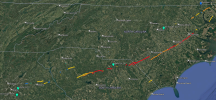
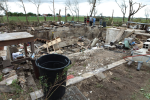
Over the course of the past few weeks, I've been working to map out the "Carolinas" tornado outbreak of March 28, 1984, using damage reports and satellite imagery. Despite being quite an oddity in terms of its location and intensity, the tornado outbreak has largely fallen into obscurity over the years. In turn, details about the tornadoes and the damage they left behind are scarce. I have gathered a few photos of tornadic damage from the event through newspaper and other sources, although few tell of the worst damage from the outbreak. I've observed that this forum has a sort of knack for discovering niche photos of tornadoes and their damages, so I was wondering if anyone was willing to help me in discovering any new media of the event. Thanks!1780017313546.png
 
Last edited:
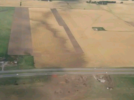
First true aerial photo of the Flint Beecher tornado, really highlights just how narrow it was.
The fact that such a high death toll all came from a single trip of houses is something I can’t imagine happening again today.
I would say that the only comparable modern day example is Joplin, but that was a giant wedge that went through an entire town.

The full width was about half a mile wide, the intense core was what was really narrow.
 
Disregard; appears to be an undocumented tornado NW of Greeneville, TN. I've sent it to MRX as a friend of mine was able to find associated damage.
Okay so apparently NWS offices across the country are currently under some sort of order not to change any historical tornado records. From MRX:
Our team has completed a preliminary review of the materials you provided. Given the recent interest in historical events, there is a rather high bar and need for clear and compelling evidence to request changes. More broadly, the NWS is currently operating under a strict internal national moratorium regarding any additions, deletions, or modifications to historical tornado track databases. Because of this policy, local weather forecast offices are temporarily restricted from officially altering historical records.
I'm quite confused but meh, not a huge deal.
 
Last edited:
any of you guys have any questions or queries on the May 24, 2011 Piedmont, OK EF5? i'm hoping to test my knowledge here and maybe help some of you fellas out
I actually do have some questions I’ve been wanting to ask for a while.

They’re regarding so called “trenched house”. Where was it located? Why is it missing from the DAT? How well was it constructed? What was it rated?

I can find next to no official information on this particular residence, despite it’s infamous reputation in online circles.
 
I actually do have some questions I’ve been wanting to ask for a while.

They’re regarding so called “trenched house”. Where was it located? Why is it missing from the DAT? How well was it constructed? What was it rated?

I can find next to no official information on this particular residence, despite it’s infamous reputation in online circles.
this home belonged to the Chronister family just off Highway 81. This was a home belonging to the same family.1780854657763.png


While I'm not 100% sure on what happened to the trenched home, i assume it was just badly scoured and mudblasted. It was located just east of Highway 81. There is no rating to my knowledge and I really don't know why its missing from DAT, but I've read that surveyors say it was likely EF5 strength above this residence.
1780855217751.png1780855223309.png1780855236966.png
Just a few photos I have. I have to be careful with what I send since a lot of photos are private for whatever reason. Any more questions?
 
this home belonged to the Chronister family just off Highway 81. This was a home belonging to the same family.View attachment 53149


While I'm not 100% sure on what happened to the trenched home, i assume it was just badly scoured and mudblasted. It was located just east of Highway 81. There is no rating to my knowledge and I really don't know why its missing from DAT, but I've read that surveyors say it was likely EF5 strength above this residence.
View attachment 53151View attachment 53152View attachment 53153
Just a few photos I have. I have to be careful with what I send since a lot of photos are private for whatever reason. Any more questions?
Has the specific windspeed needed to overturn the Cactus oil rig ever actually been calculated?
 
Has the specific windspeed needed to overturn the Cactus oil rig ever actually been calculated?
not to my knowledge. i feel its way too mathematically complex to get a windspeed off of that. there are different objects at Cactus 117 that could get a calculation done, like the 150 ton winch tossed or multi-ton cargo containers being lofted. i don't think we'll ever get an actual wind estimate of the rig.
 
This is going to be my last post on TW for a good while, and to round it off of course I'm going to talk about 4/27/2011 because why in the world would I not:

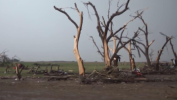
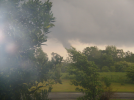
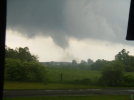
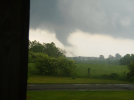
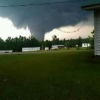
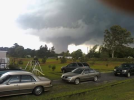
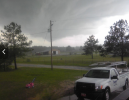
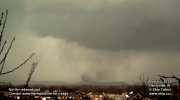
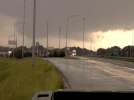
The Cordova, AL EF4 actually appears to be multiple different tornadoes, all probably violent, that were lumped in as one in the official survey; a few people off-forum have brought this up over the last few months and looking into it I really can't argue. Here's a photo set by Don Guthrie showing what I think is the main Cordova tornado (the one that hit town) touching down near Parrish - this is separate to the one that was borderline causing EF5 damage while a stovepipe near New Lexington:
1781345450033.png1781345484771.png1781345507903.png
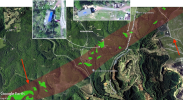
GeoDESY backs up the fact it lifted:
1781345706013.png
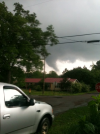
It would've been impossible for the tornado to shift into the imagery gap while producing no apparent treefall of any sort so I think it's very, very likely this is a cycle of some kind. And if all this wasn't enough, I think this solidifies it, we have another angle of it while it was first touching down near Parrish:
1781345801131.png
This is not the look of an EF3 tornado about to go into a town; this looks either like a very unhealthy tornado about to die off or one that touched down moments before the video was taken.

To round it off it's worth bringing up The Coleman/Peters video; while I do think the tornado is down the entire time there it had already cycled by the time the video was taken and thus it doesn't appear to lift in the video. This lines up with the GeoDESY gap.

Little bonus: This is what the New Lexington EF5 looked like:
1781345846629.png1781345930697.png
Friend of mine (Tijn) managed to geolocate this and confirmed this is both "Cordova" and whille it was doing borderline EF5-level vegetation damage.


The downside? Cordova's track length is cut almost in half. The upside? With this finding the violent tornado count might be pushed further up into the realm of what actually happened that day. Worth noting that there's a third possible cycle within the track that I haven't looked into yet and can't confirm nor deny.
 
Last edited:
This is going to be my last post on TW for a good while, and to round it off of course I'm going to talk about 4/27/2011 because why in the world would I not:

The Cordova, AL EF4 actually appears to be multiple different tornadoes, all probably violent, that were lumped in as one in the official survey; a few people off-forum have brought this up over the last few months and looking into it I really can't argue. Here's a photo set by Don Guthrie showing what I think is the main Cordova tornado (the one that hit town) touching down near Parrish - this is separate to the one that was borderline causing EF5 damage while a stovepipe near New Lexington:
View attachment 53375View attachment 53376View attachment 53377
GeoDESY backs up the fact it lifted:
View attachment 53378
It would've been impossible for the tornado to shift into the imagery gap while producing no apparent treefall of any sort so I think it's very, very likely this is a cycle of some kind. And if all this wasn't enough, I think this solidifies it, we have another angle of it while it was first touching down near Parrish:
View attachment 53379
This is not the look of an EF3 tornado about to go into a town; this looks either like a very unhealthy tornado about to die off or one that touched down moments before the video was taken.

To round it off it's worth bringing up The Coleman/Peters video; while I do think the tornado is down the entire time there it had already cycled by the time the video was taken and thus it doesn't appear to lift in the video. This lines up with the GeoDESY gap.

Little bonus: This is what the New Lexington EF5 looked like:
View attachment 53380View attachment 53381
Friend of mine (Tijn) managed to geolocate this and confirmed this is both "Cordova" and whille it was doing borderline EF5-level vegetation damage.


The downside? Cordova's track length is cut almost in half. The upside? With this finding the violent tornado count might be pushed further up into the realm of what actually happened that day. Worth noting that there's a third possible cycle within the track that I haven't looked into yet and can't confirm nor deny.
cullman , hackleburg , smithville also were multiple tornadoes.

some dont look like gaps like smithville but if it was one tornado it would of moved over 120+ mph at one point, so its clear it got replaced by a new one that drop over the end of the old tornado
 
cullman , hackleburg , smithville also were multiple tornadoes.

some dont look like gaps like smithville but if it was one tornado it would of moved over 120+ mph at one point, so its clear it got replaced by a new one that drop over the end of the old tornado
Smithville's is generally disproveable; the 120 mph estimate uses quite-bad radar data and there's very obvious treefall within the said "gap". I have a more-detailed explanation at TRX but if anything it was a weird vortex pattern.
 
cullman , hackleburg , smithville also were multiple tornadoes.

some dont look like gaps like smithville but if it was one tornado it would of moved over 120+ mph at one point, so its clear it got replaced by a new one that drop over the end of the old tornado
I just don't believe the Smithville stuff. The gap and for a vortex to suddenly accelerate that fast is extremely odd. There was treefall like people said above me, it was just more subtle. I would have to guess shear interfered with the vortex briefly before it gained enough intensity again to become a EF3-EF4 entering NW AL.
 
It would've been impossible for the tornado to shift into the imagery gap while producing no apparent treefall of any sort
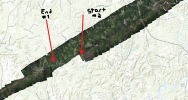
The Google Earth imagery shows patches of treefall and minor structure damage in the gap (the red arrows denote your start and end):

Parrishtorimg.png

I'd also note that some long-lasting tornadoes do display marked and sometimes rapid changes in their appearance, like Henryville.
 
Last edited:
The Google Earth imagery shows patches of treefall and minor structure damage in the gap (the red arrows denote your start and end):

View attachment 53771

I'd also note that some long-lasting tornadoes do display marked and sometimes rapid changes in their appearance, like Henryville.
It had visibly lifted in this area (in a lot of 4/27 tors they suffered a vortex breakdown from the highly-sheared enviornment and appeared to uncondense and rapidly weaken; this to me looks a lot more like a cycle than that):1782049352683.png
I'd have to analyze the tree damage closer but right now I'll say it being RfD-induced winds is not off the table if there was a rapid handoff (the key is convergence in treefall; this is how Smithville's gap can be disproven and how a few areas where 4/27 tors were extremely weak (Eoline being one) still have the tornado down). The radar data is too bad to say; it probably happened between scans if it did.
 
Last edited:
Back
Top