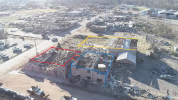
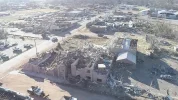
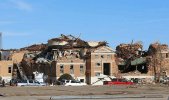
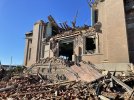
It has been brought up in this thread before that the 2011 Tuscaloosa tornado likely reached EF5 intensity in the rural areas between Tuscaloosa and Birmingham, and one of the sites along the path that most interests me is the coalyard in the western suburbs of Birmingham where two rail cars were hurled from the tracks.
I found a research article that focuses on the damage that occurred there, with a couple diagrams showing the direction the empty coal cars were displaced. The railcars, which weighed about 35-36 tons (70,000-72,000 lbs) each, were displaced 60 m (about 196 feet) and 120 m (just shy of 400 feet), respectively.
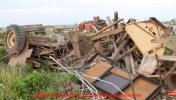
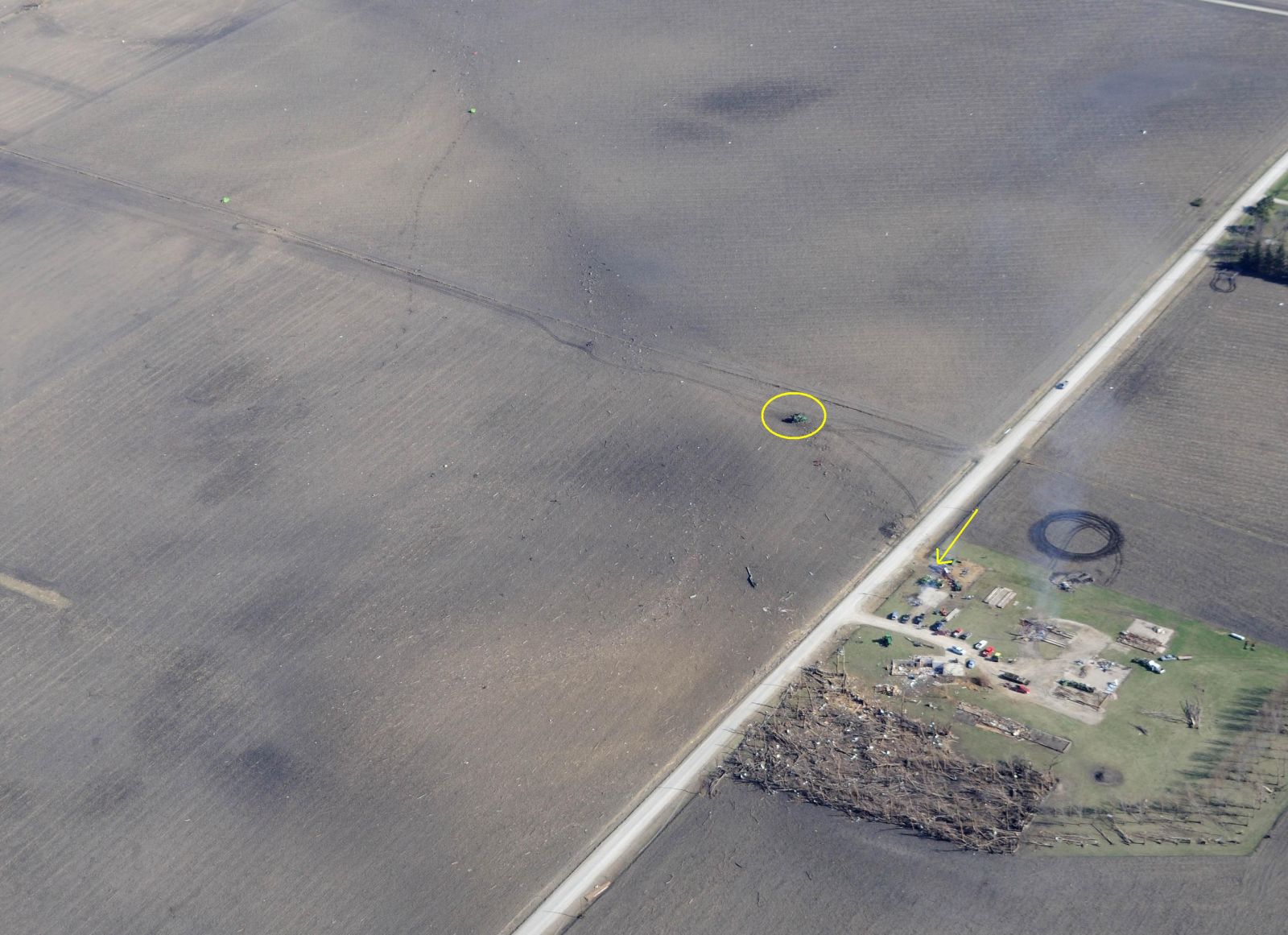
It was of the author's opinion that the cars were more probably rolled rather than tossed, but I don't agree with this assessment - survivor accounts stated the railcars were carried through the air in a single toss, and we can also look at another tornado for comparison. The April 9, 2011 Pocahontas, IA EF4 destroyed a farmstead and rolled/bounced a combine several hundred feet in the process. Note the impact marks along the combine's track where it made ground contact several times during the tornado; similar impact marks are not to be seen in the Tuscaloosa railyard.
In all fairness, the author of the article didn't completely dismiss the idea that the railcars were tossed, either.
The article also includes a calculation which ascertains mid to high end EF3 winds may been enough to toss the railcars, though this seems very iffy to me as well - to be fair again, they do include a disclaimer that this is only a very rough estimate. I'm not sure if other engineers have weighed in on what kind of winds may have been necessary to toss the railcars.
Earlier along the path in the Holt-Peterson area northeast of Tuscaloosa the tornado destroyed a rail bridge, hurling a 37-ton (74,000 lb) truss 100 feet up a hill. I have heard that engineers (not sure who) ran a calculation on that bridge, and determined winds exceeding 200 mph would have been necessary for the tornado to destroy the bridge in that fashion.
Perhaps most interesting is the question mark in the first diagram, where it is speculated a
third railcar may have been hurled by the tornado, possibly deposited in a deep ravine nearby or simply thrown far enough to never be seen again. However, according to NWS BMX no railcars were reported missing after the storm's passage, and it's likely there was simply no railcar in that spot to begin with.
Oh, and by the way, the paper analyzing the damage at the railyard can be found
here - while I don't necessarily agree with everything it presents, it's still an interesting read.