• Welcome to TalkWeather!
    We see you lurking around TalkWeather! Take the extra step and join us today to view attachments, see less ads and maybe even join the discussion.
    CLICK TO JOIN TALKWEATHER

Significant Tornado Events

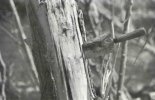
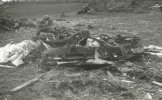
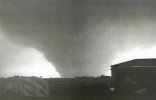
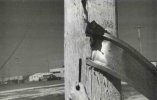
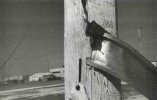
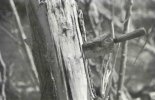
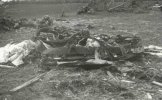
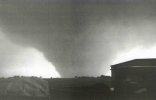
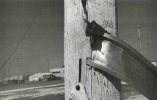
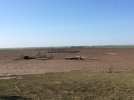
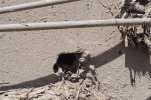
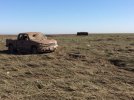
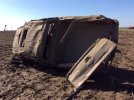
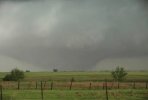
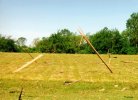
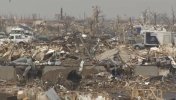
Happy Thanksgiving! I already know of the vehicle frame picture. But I just found these NWS pictures of the April 26, 1991 Andover, Kansas F5.
First picture: Metal lodged into a pole at McConnel AFB.
2nd Picture: Garden Spade and tack shoved into young tree trunk.
3rd Picture: The aforementioned vehicle frame tossed up to 3/4 mile NE of the mobile home park.
4th Picture: Winfield, Kansas F4 tornado.
 

Attachments

  • Screenshot_20251127_144849_Drive.jpg
    Screenshot_20251127_144849_Drive.jpg
    77.8 KB · Views: 0
  • Screenshot_20251127_145018_Drive.jpg
    Screenshot_20251127_145018_Drive.jpg
    106.7 KB · Views: 0
  • Screenshot_20251127_145342_Drive.jpg
    Screenshot_20251127_145342_Drive.jpg
    61.6 KB · Views: 0
  • Screenshot_20251127_145411_Drive.jpg
    Screenshot_20251127_145411_Drive.jpg
    118.6 KB · Views: 0
  • Screenshot_20251127_144609_Drive.jpg
    Screenshot_20251127_144609_Drive.jpg
    87.2 KB · Views: 0
  • Screenshot_20251127_144609_Drive.jpg
    Screenshot_20251127_144609_Drive.jpg
    87.2 KB · Views: 0
  • Screenshot_20251127_144849_Drive.jpg
    Screenshot_20251127_144849_Drive.jpg
    77.8 KB · Views: 0
  • Screenshot_20251127_145018_Drive.jpg
    Screenshot_20251127_145018_Drive.jpg
    106.7 KB · Views: 0
  • Screenshot_20251127_145342_Drive.jpg
    Screenshot_20251127_145342_Drive.jpg
    61.6 KB · Views: 0
  • Screenshot_20251127_144609_Drive.jpg
    Screenshot_20251127_144609_Drive.jpg
    87.2 KB · Views: 0
Happy Thanksgiving! I already know of the vehicle frame picture. But I just found these NWS pictures of the April 26, 1991 Andover, Kansas F5.
First picture: Metal lodged into a pole at McConnel AFB.
2nd Picture: Garden Spade and tack shoved into young tree trunk.
3rd Picture: The aforementioned vehicle frame tossed up to 3/4 mile NE of the mobile home park.
4th Picture: Winfield, Kansas F4 tornado.
I’ve never seen that last photo, cool! Something about black-and-white wedge photos always fascinates me.
 
Happy Thanksgiving! I already know of the vehicle frame picture. But I just found these NWS pictures of the April 26, 1991 Andover, Kansas F5.
First picture: Metal lodged into a pole at McConnel AFB.
2nd Picture: Garden Spade and tack shoved into young tree trunk.
3rd Picture: The aforementioned vehicle frame tossed up to 3/4 mile NE of the mobile home park.
4th Picture: Winfield, Kansas F4 tornado.
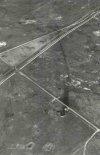
Sorry about the multitudes of same pictures. No idea what happened with that . The aerial shot is also of the Winfield, Kansas F4 tornado from the same outbreak. A oil tank was rolled 1/2 mile, leaking oil throughout the journey.
 
Happy Thanksgiving! I already know of the vehicle frame picture. But I just found these NWS pictures of the April 26, 1991 Andover, Kansas F5.
First picture: Metal lodged into a pole at McConnel AFB.
2nd Picture: Garden Spade and tack shoved into young tree trunk.
3rd Picture: The aforementioned vehicle frame tossed up to 3/4 mile NE of the mobile home park.
4th Picture: Winfield, Kansas F4 tornado.
Brilliant finds! Would you by any chance be "weathermanofthenorth" from YouTube? If so, i enjoyed your scary tornado compilations!
 
I found this interesting bit of damage a while back, but I just remembered it. During the May 24, 2016 tornado outbreak in Kansas, a EF-3 tracked to the south of Sayre. Along Ridge road, the core of the vortex passed just west of a Manufactured home. The occupants sook shelter in their partly above-ground reinforced storm shelter. A irrigation pivot was shredded, and in the process, a piece of irrigation pipe struck the wall, penetrating it. It impacted rebar in the wall, preventing a full intrusion. However, a male was injured when pieces of concrete blew inward. 2 pickups on the property were also lofted and rolled a fairly long distance. But interestingly enough, with pretty minimal damage.
 

Attachments

  • 9BVNHUk0_1464187880621.jpg
    9BVNHUk0_1464187880621.jpg
    182.4 KB · Views: 0
  • IMGP1017.jpg
    IMGP1017.jpg
    154.9 KB · Views: 0
  • 9BVNHUk0_1464187050978.jpg
    9BVNHUk0_1464187050978.jpg
    269.3 KB · Views: 0
  • 9BVNHUk0_1464187263535.jpg
    9BVNHUk0_1464187263535.jpg
    255.8 KB · Views: 0
Brilliant finds! Would you by any chance be "weathermanofthenorth" from YouTube? If so, i enjoyed your scary tornado compilations!
Yes, that is me! I lost motivation in posting, which is why videos have been pretty few and far in between. I gotta get back on that saddle though, I have a lot of chases to share, and I am thinking of going down the damage analysis path.
 
Alright, write-up incoming:

In the afternoon through evening hours of November 7, 2025, two extremely violent tornadoes would be spawned by a cyclic supercell in the state of Parana, Brazil.

Rio F4 (Retiro-Rio Bonito do Iguacu-Lagoa Seca)
This large tornado first touched down west of Rio das Cobras ("River of Snakes"), where damage that I've marked as "possible" is visible on Sentinel-2 L2A satellite imagery taken on November 10. It sped to the east, inflicting relatively minor damage to trees while appearing to wobble slightly. A short distance east the tornado produced sporadic damage (possible multi-vortex) as it dipped south, before moving back to the east. Tree dmaage is visible from this point onwards on Sentinel-2 imagery I've overlayed. As the tornado entered Rio Bonito it inflicted heavy damage to a grove of trees:
View attachment 49041
East of here the tornado crossed Highway 158, where I geolocated a rather chaotic video of damaged structures with the tornado in the background. It appears to have ran parallel to this highway before turning east into town, where it almost immediately reached F3+ intensity. A home on the town's west side was damaged with debris craters being observed in a field a very short distance southwest. An elementary was hit along Avenue XV de Novembro, which is where I think it began to gain in intensity. It almost certainly reached F4 intensity along R. 7 de Novembre, where a home was swept off its foundation and two large concrete garages suffered damage. I could write a whole essay about what happened just in town, but to put it simply, several points of F4 damage are noted. I do not think it reached F5 intensity in town.
View attachment 49043

After leaving town is where things get interesting - I note significant-to-violent tree damage spanning a large swath for a considerable distance east of town. In this swath is where I found what I think is likely some of the most impressive damage from this tornado if it was actually tornadic:
View attachment 49044
This grove of trees was utterly obliterated, and on October 23 imagery it appears to have been untouched. I'm a little skeptical due to the thin line of trees on the northern edge, but it's certainly extremely violent damage assuming it's tornadic. I won't bore you with all the details further east but basically it just munched on trees. Along the end of it's path the tornado appears to have turned north (south of Lagoa Seca), which signifies the occlusion process. Due to the supercell being upside down, I was expecting it to have occluded south, but you never know.
View attachment 49045
Guarapuava F4 (Lagao Seca-Nova-Geracao)
As the Rio Bonito do Iguacu tornado occluded to the north, a second, likely-stronger tornado touched down southwest of Campo Real. It shot eastward, where east of a road the first signs of tornadic damage became evident on satellite. Scouring of the cultivated earth occurred here, as well as significant tree damage in a flared fashion.

As it continued east, a visible scar became noticeable to the northeast of Fazenda Cachoerinha. This continued through the River Jordao area, where more tree damage was observed. South of PCH Tres Capoes Novo the tornado obliterated a tree grove, and east of that location the tornado became violent, scouring the ground and ripping apart both Auracacia (I butchered that) and Eucalyptus trees:
View attachment 49046
Just to the east of this location was some of the most intense damage documented from either tornado - an extremely well-built, recently-constructed (2019-2021) mansion was partially wiped away, with the forest to the east being eviscerated. This is the most convincing damage to suggest F5 from either tornado, and while I can't share the construction details due to a PREVOTs/SIMEPAR conflict I'll say that it was extremely well-built:
View attachment 49047
The tornado wobbled slightly as it got ready to cross over the River Jordao a second time, producing intense tree damage as it moved over the water and back onto land. To the east the tornado entered the Nova Geracao community, where a metal container was deposited and heavy tree damage took place. It jogged northeast from this location, violently damaging a grove of trees and leaving a visible land scar. The tornado appeared to weaken as it turned eastward and then southward, eventually lifting a short distance east of the last observable satellite damage.

This is a project I've been working on since the day the tornado happened. Questions regarding damage done by either tornado are welcome, and I can send the .kmz I've been working on if anyone wants it. Planning on writing a much longer write-up once more mansion photos are released. I can shorten this if requested (lmao); I'm not on forums outside of this one and am not completely sure about "wall-of-media" etiquette.
Please post in the correct thread. This should be in the global edition thread.
 
Alright, write-up incoming:

In the afternoon through evening hours of November 7, 2025, two extremely violent tornadoes would be spawned by a cyclic supercell in the state of Parana, Brazil.

Rio F4 (Retiro-Rio Bonito do Iguacu-Lagoa Seca)
This large tornado first touched down west of Rio das Cobras ("River of Snakes"), where damage that I've marked as "possible" is visible on Sentinel-2 L2A satellite imagery taken on November 10. It sped to the east, inflicting relatively minor damage to trees while appearing to wobble slightly. A short distance east the tornado produced sporadic damage (possible multi-vortex) as it dipped south, before moving back to the east. Tree dmaage is visible from this point onwards on Sentinel-2 imagery I've overlayed. As the tornado entered Rio Bonito it inflicted heavy damage to a grove of trees:
View attachment 49041
East of here the tornado crossed Highway 158, where I geolocated a rather chaotic video of damaged structures with the tornado in the background. It appears to have ran parallel to this highway before turning east into town, where it almost immediately reached F3+ intensity. A home on the town's west side was damaged with debris craters being observed in a field a very short distance southwest. An elementary was hit along Avenue XV de Novembro, which is where I think it began to gain in intensity. It almost certainly reached F4 intensity along R. 7 de Novembre, where a home was swept off its foundation and two large concrete garages suffered damage. I could write a whole essay about what happened just in town, but to put it simply, several points of F4 damage are noted. I do not think it reached F5 intensity in town.
View attachment 49043

After leaving town is where things get interesting - I note significant-to-violent tree damage spanning a large swath for a considerable distance east of town. In this swath is where I found what I think is likely some of the most impressive damage from this tornado if it was actually tornadic:
View attachment 49044
This grove of trees was utterly obliterated, and on October 23 imagery it appears to have been untouched. I'm a little skeptical due to the thin line of trees on the northern edge, but it's certainly extremely violent damage assuming it's tornadic. I won't bore you with all the details further east but basically it just munched on trees. Along the end of it's path the tornado appears to have turned north (south of Lagoa Seca), which signifies the occlusion process. Due to the supercell being upside down, I was expecting it to have occluded south, but you never know.
View attachment 49045
Guarapuava F4 (Lagao Seca-Nova-Geracao)
As the Rio Bonito do Iguacu tornado occluded to the north, a second, likely-stronger tornado touched down southwest of Campo Real. It shot eastward, where east of a road the first signs of tornadic damage became evident on satellite. Scouring of the cultivated earth occurred here, as well as significant tree damage in a flared fashion.

As it continued east, a visible scar became noticeable to the northeast of Fazenda Cachoerinha. This continued through the River Jordao area, where more tree damage was observed. South of PCH Tres Capoes Novo the tornado obliterated a tree grove, and east of that location the tornado became violent, scouring the ground and ripping apart both Auracacia (I butchered that) and Eucalyptus trees:
View attachment 49046
Just to the east of this location was some of the most intense damage documented from either tornado - an extremely well-built, recently-constructed (2019-2021) mansion was partially wiped away, with the forest to the east being eviscerated. This is the most convincing damage to suggest F5 from either tornado, and while I can't share the construction details due to a PREVOTs/SIMEPAR conflict I'll say that it was extremely well-built:
View attachment 49047
The tornado wobbled slightly as it got ready to cross over the River Jordao a second time, producing intense tree damage as it moved over the water and back onto land. To the east the tornado entered the Nova Geracao community, where a metal container was deposited and heavy tree damage took place. It jogged northeast from this location, violently damaging a grove of trees and leaving a visible land scar. The tornado appeared to weaken as it turned eastward and then southward, eventually lifting a short distance east of the last observable satellite damage.

This is a project I've been working on since the day the tornado happened. Questions regarding damage done by either tornado are welcome, and I can send the .kmz I've been working on if anyone wants it. Planning on writing a much longer write-up once more mansion photos are released. I can shorten this if requested (lmao); I'm not on forums outside of this one and am not completely sure about "wall-of-media" etiquette.
We (PREVOTS) are still analyzing the shitload of material from both tornadoes. Most of it has not been released yet, and we are in touch with american surveyors, ESSL, and brazillian wind engineers that are more familiar with our building standards. This is the biggest challenge for applying DIs in this case, and we will be running some calculations for building components.

Guarapuava was likely more violent around the mansion. Extreme defoliation and debarking occured, including of the century old Auraucarias. The apex happened around the mansion with intense scouring and leveling of the groves. The mansion that was directly hit was not leveled, but lost the roofing and walls in the roofing made of very thick brick and concrete reinforced by iron bars, as wells as a few reinforced concrete columns. The owner was inside the house at that time and survived because it so well built, i.e., it had a concrete and brick slab roof on the bed runs.
 
Is there anybody else in doubt of the EF-5 rating for the Piggly Wiggly in Hackleburg? This is just my speculation, but it would appear that the front brick+cinder block wall fell and crumbled. Then the roof subsequently blew off. The large entrance would've allowed for immense pressure. It was also in the (strong) southerly inflow of the tornado. I also noticed 2 other things. The vehicles in front appear to be pushed against the building. They aren't tossed, no significant debris impacts, etc. The trees behind also show no signs of convergence (no sub-vortex), and the trees are snapped at similar heights (thinking the roof). What are your guy's thoughts?
The DAT for Hackleburg should not be Trusted at all. These buildings would cap at around EF4 173 mph, the EF5 rating should really have been given to the Wrangler Jeans site over this on DAT.
 
Yes, that is me! I lost motivation in posting, which is why videos have been pretty few and far in between. I gotta get back on that saddle though, I have a lot of chases to share, and I am thinking of going down the damage analysis path.

I subscribed to you a few days ago.
 
Thank you! Do you know if the NWS did this aerial damage survey, or somebody else?

Been trying to find NWS surveys (pictures are usually public domain).


Can't say as I do.
 
Thank you for the reply. I did find a interesting pdf on the Moore F5 of May 3, 1999. It has a few pictures I haven't seen before. Gonna upload those shortly. Is there a online-available video footage of Barneveld F5 damage aerials besides short clips?
 
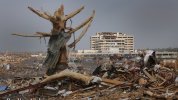
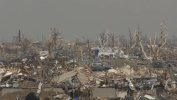
Unsure if this has been shared before, but this video of aftermath in the St. John’s area from Joplin is extraordinary. Starting at 1:04 shows some truly extreme damage to large medical and professional buildings just west of St. John’s, followed by zoomed in shots of total destruction of residential areas with incredible vegetation damage.

Then beginning at 4:06 is probably the most impressive part of the video, and IMO is some of the most violent tornado damage to a residential area ever caught on camera. It shows damage east of St. John’s along 26th St facing south where entire rows of homes were simply wiped clean. Virtually every tree and shrub is completely debarked, and pronounced ground scouring is visible.


For reference, here’s what the area from 4:40 to the end of the video looked like before the tornado.
IMG_1433.jpegIMG_1432.jpeg

Also, here’s a handful of screen grabs from the video.
IMG_1428.jpegIMG_1430.jpegIMG_1431.jpeg
 
Unsure if this has been shared before, but this video of aftermath in the St. John’s area from Joplin is extraordinary. Starting at 1:04 shows some truly extreme damage to large medical and professional buildings just west of St. John’s, followed by zoomed in shots of total destruction of residential areas with incredible vegetation damage.

Then beginning at 4:06 is probably the most impressive part of the video, and IMO is some of the most violent tornado damage to a residential area ever caught on camera. It shows damage east of St. John’s along 26th St facing south where entire rows of homes were simply wiped clean. Virtually every tree and shrub is completely debarked, and pronounced ground scouring is visible.


For reference, here’s what the area from 4:40 to the end of the video looked like before the tornado.
View attachment 49075View attachment 49076

Also, here’s a handful of screen grabs from the video.
View attachment 49072View attachment 49073View attachment 49074

My goodness! I knew south of the hospital was bad, but good god! That was a mature hardwood definitely. Not to mention the degree of damage to commercial buildings...It really makes me feel worse for the people who had to experience this.
 
Unsure if this has been shared before, but this video of aftermath in the St. John’s area from Joplin is extraordinary. Starting at 1:04 shows some truly extreme damage to large medical and professional buildings just west of St. John’s, followed by zoomed in shots of total destruction of residential areas with incredible vegetation damage.

Then beginning at 4:06 is probably the most impressive part of the video, and IMO is some of the most violent tornado damage to a residential area ever caught on camera. It shows damage east of St. John’s along 26th St facing south where entire rows of homes were simply wiped clean. Virtually every tree and shrub is completely debarked, and pronounced ground scouring is visible.


For reference, here’s what the area from 4:40 to the end of the video looked like before the tornado.
View attachment 49075View attachment 49076

Also, here’s a handful of screen grabs from the video.
View attachment 49072View attachment 49073View attachment 49074

Joplin caused some of the most extreme tree debarking I have ever seen photographed. Some trees are so debarked that they practically gleam.
 
Joplin wouldn't have happened had those nudgers turned it into a very rampant tornadic supercell. There was already great parameters for tornadoes that day, and the nudger turned it into a very potent supercell. Worst case scenario, one of the most violent tornadoes to hit a residential area touches down, wedges out and becomes violent in minutes. It's nearly impossible to give those residents adequate lead time. A tornado like Joplin was just a stack of such subtle scenarios that went the wrong way every time and it resulted in one of the worst catastrophes to hit Missouri ever.

Absurd damage. The St Johns damage is extraordinarily impressive, and for a high rise building like that, i haven't seen anything else.

Not to get too off topic, but is it essentially impossible to sustain a tornado with >210 mph winds in areas like Fort Worth, Washington DC? High rise buildings somewhat disrupt circulations, and it's something I'm curious about. This may belong in another thread perhaps but just asking
 
Hello! I'm new here. I am a big fan of weather, specifically tornadoes, thunderstorms and the like. Does anyone have any information on a tornado in rural Nebraska in 1928, that, according to Grazulis, moved extremely slowly and caused 6 foot deep scouring. A farmer reportedly said that the holes were "Deep enough to bury a horse"
 
Back
Top