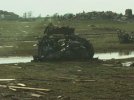
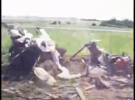
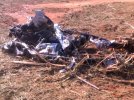
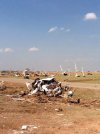
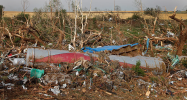
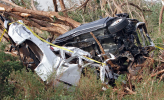
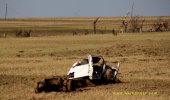
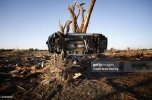
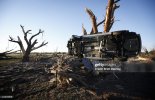
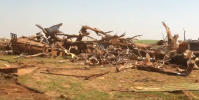
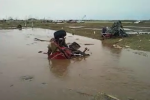
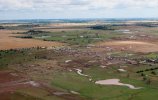
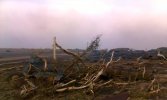
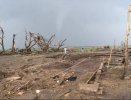
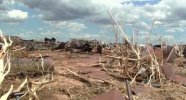
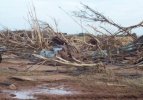
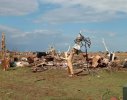
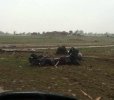
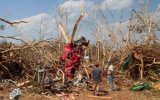
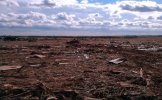
I don’t want to derail what everyone’s been discussing too much, but I found a great video (quite short though) on YouTube of the Elie MB 2007 tornado videos synced with each other, and it’s quite well made. More specifically, the very beginning of the F5 stage of the tornado.
At the very beginning you can see a very clear and
rapid consolidation of the vortex from the base upwards, which to me is super interesting! I haven’t seen that sort of motion in a tornadic vortex before and it coincides with the F5 damage it inflicted remarkably well. I don’t know if it’s the result of particle motion in the funnel (if it is, the velocity of said particles would be astoundingly high) or if it’s the result of condensation becoming better defined - whatever it is, it’s wicked looking and I would love to understand how it works.
Elie may have been what I would call a “low-end” F5 (if you can call any F5 that) but the tornado itself is so remarkable. It’s extremely strange that it managed to intensify the way it did - I understand how vortex constriction and angular momentum conservation leads to extreme winds when tornadoes shrink in width, but I’ve never heard anything remotely remarkable about the atmosphere in this location at this date in the vicinity of this tornado either.
Edit:
@joshoctober16 Did you make this video? If so, it’s really well done!