• Welcome to TalkWeather!
    We see you lurking around TalkWeather! Take the extra step and join us today to view attachments, see less ads and maybe even join the discussion.
    CLICK TO JOIN TALKWEATHER

Hurricane Melissa

The interaction with the trough to the north is really what sealed the deal for the sub-900 mb intensification as well, it seems. Melissa was floating in the ~905 mb range before that. Took an already pristine environment for the hurricane and just improved upon it even more, kinda similar to how you have the outflow boundary further modify and improve the kinematics of an already extreme environment on 4/27/11. Furthermore, you also had the fact this storm just never went through a full traditional EWRC. Just an absolutely absurd chaining together of pristine ingredients to lead to a complete behemoth of a hurricane.
Additional point i forgot. For some reason, people thought that would hurt Melissa, but it just seemed like a major boost to it for me. It basically was the equivalent of the gravity wave to Jarrell/thermal boundary on 4/27, except for a hurricane. It just reinforces a point that we will never truly get "perfect" at severe weather/hurricane forecasting. There are so many layers to all of it.
 
As of a little under a week ago, 15 are still missing in Jamaica. What I'm really worried about is the scale of destruction and the amount of now-unhoused people the storm has left behind. As people continue to go without shelter, food, water and hygiene amenities, the risk of excess morbidity and mortality increases. There are still some towns authorities haven't reached. I just hope folks get the help they need, and in a timely fashion.
 
I’m really hoping that more videos can be found during the eyewall. It must have been so intense that the people in the path were only thinking about protecting their lives and couldn’t think about recording it. There is a lot of good video footage of Irma going through the islands. I wish there was a way to be able to locate such videos for this easier. That Montego Bay video is probably the most intense I’ve seen so far.
 
I’m really hoping that more videos can be found during the eyewall. It must have been so intense that the people in the path were only thinking about protecting their lives and couldn’t think about recording it. There is a lot of good video footage of Irma going through the islands. I wish there was a way to be able to locate such videos for this easier. That Montego Bay video is probably the most intense I’ve seen so far.
Josh's video will probably be the best footage we see of this hurricane.
 
Josh's video will probably be the best footage we see of this hurricane.
I believe he said he had to cut off video at some point because of how ear grating it felt to listen to, plus the incredible winds. Several people in his building covered their ears and winced, because that's how horrible it felt to listen to. Absolutely unbearable sound.


Record dropsonde wind measurement of 252 mph has been verified by NCAR with Melissa. This is now the strongest wind ever measured by a dropsonde in a TC, and likely the strongest ever reliably measured through any means in a TC.
 
TBH, the most surprising thing regarding the aftermath of this storm so far to me is that only 48 people died in Jamaica. That's a lot less dead than I thought. Thank god.

(I'm gonna be proven wrong as the death toll skyrockets into the hundreds now, aren't I?)


Record dropsonde wind measurement of 252 mph has been verified by NCAR with Melissa. This is now the strongest wind ever measured by a dropsonde in a TC, and likely the strongest ever reliably measured through any means in a TC.

Katrina had a 263 mph gust measured by drop sonde, obviously that has long been discounted due to some pretty substantial flaws with the data. Then you have Olivia’s 253mph surface based gust.

What makes Melissa particularly impressive is the fact that wind velocities taken by this DS in the lowest 900mb were all above 170knots, which is ludicrous.
1763596956889.png
 

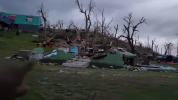
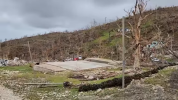
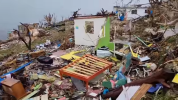
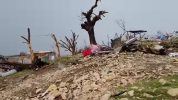
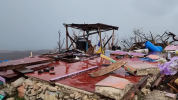
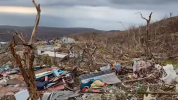
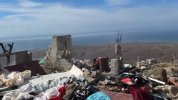
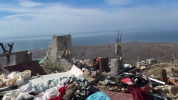
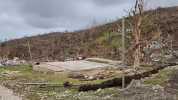
Video posted yesterday showing extreme wind damage in Beeston Springs. You can see multiple slabbed wooden homes, reinforced concrete homes that were ripped apart, numerous debarked trees and a radio tower that was flattened to the ground.

If you guys haven’t watched this video, you have to. This is hands down, the most violent eyewall damage I have ever seen. There is not only debarking of entire forests, there is slabbing of homes, and even obliteration of sturdy masonry homes. If this was a tornado, it would be pushing at least well into the EF4 range. It’s safe to say this area saw 200+ MPH wind gusts.
IMG_0593.png
IMG_0594.png
IMG_0596.png
IMG_0601.png
IMG_0602.png
IMG_0603.png
IMG_0598.png
 
Last edited:
If you guys haven’t watched this video, you have to. This is hands down, the most violent eyewall damage I have ever seen. There is not only debarking of entire forests, there is slabbing of homes, and even obliteration of sturdy masonry homes. If this was a tornado, it would be pushing at least well into the EF4 range. It’s safe to say this area saw 200+ MPH wind gusts.
View attachment 48718
View attachment 48719
View attachment 48720
View attachment 48722
View attachment 48723
View attachment 48724
View attachment 48725
Uhhh, yeah that's the most extreme wind damage I've seen from a TC. Can't think of anything that tops that. Area is just a total wasteland.
 
I mean dude, simply ridiculous, the damage this thing did is like something you see/read in a outlandish hypothetical hurricane forum article.
View attachment 48575
1763617403928.png

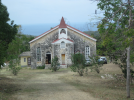
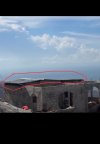
This building is the Salem Moravian Church in Beeston Spring. Completely destroyed.
 
Belmont is also heavily damaged, tree damage askew 45 degree+ mesovortice. Snapped poles and tossed vehicles, 70+ structural collapses.

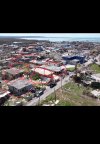
Arlington, which is to the southeast of Black River, is flooded and has major wind damage. Flooding from Arlington to the coastline. (source NOAA photography). I didn't mention Black River since most of you already know it's badly damaged. It has a 9 foot seawall or so which shattered in parts
but maybe mostly protected it from surge.
 
Last edited:
I’m really hoping that more videos can be found during the eyewall. It must have been so intense that the people in the path were only thinking about protecting their lives and couldn’t think about recording it. There is a lot of good video footage of Irma going through the islands. I wish there was a way to be able to locate such videos for this easier. That Montego Bay video is probably the most intense I’ve seen so far.

There's a video from Treasure Beach, didn't have too much wind damage but some significant surge. It's three hours long - skipped through the video
looking for something interesting.. the cloud structure turned black there for 10 minutes and resembled a tornadic supercell, the cloud roiling unstably
as if about to drop a tornado.
 
Last edited:
View attachment 48730
That is truly unbelievable. The demolished reinforced concrete block home near the beginning is just incredible.
Obviously, the damage is extremely impressive for a TC, likely the strongest TC wind damage we've ever seen in history. But I believe a more detailed analysis is necessary.
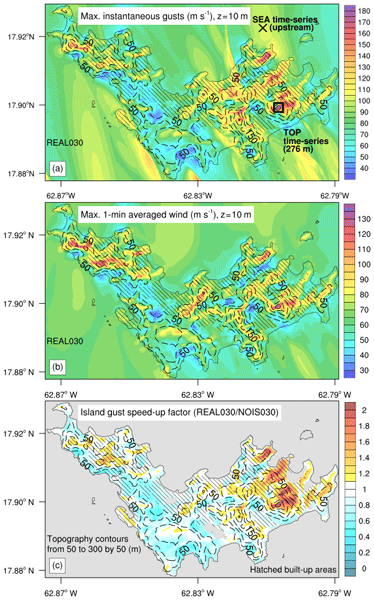
Beeston Springs and the nearby towns and villages are situated on mountain slopes at elevations between 200-500 meters. These areas lie well within the hurricane's boundary layer and are also on windward slopes. The wind speed conversion ratio from the hurricane's mean surface to 300-500 meters is approximately 0.7. Due to topographic effects, the gust factor is relatively high. Here, I take it as 1.3. Assuming the hurricane's intensity at the time was around 150 knots (within half an hour of landfall), the maximum gusts in this region could conservatively reach 300 mph with sustained wind speed well into 200mph. (sustained winds might have been slightly weaker due to the influence of friction.)Multiple studies on Category 5 hurricane boundary-layer wind speeds support that such winds are entirely possible.
Screenshot_2025-11-20-22-19-53-159_cn.wps.moffice_eng-edit.jpg
Then we can look into damage: the destruction across the area clearly reflects how buildings of varying quality perform differently under extreme wind speeds. First, in terms of this house below
IMG_0607.png
a concrete block house reinforced with rebar, with a sheet metal roof. Its original appearance can be inferred from nearby houses that were not completely destroyed.
Image_1763785382142.jpg
Not far away, same type of house but built with a concrete roof remains intact.
Image_1763785369335.jpg
This disparity in damage is observable throughout Jamaica. Almost all these types of building covered with concrete roof remains intact and those built with wooden roof would been more or less damaged.
Image_1763786184762.jpg
A closer look at this destruction reveals that the sections reinforced with rebar remain standing, while the collapsed portions include the sheet metal roof and unreinforced concrete block walls.
Image_1763785363028.jpg
The houses got damaged from 2015 Ciudad Acuña tornado is almost identical to this which can take a reference here.
SAVE_20251122_122408.jpg
Also concrete block houses reinforced by rebar, but all covered with concrete roofs. Many of those houses suffered extensive wall collapses, with at least one being completely leveled.
Image_1763785376091.jpg

There seems to be some debate regarding the rating and intensity of the Ciudad Acuña tornado. However, if the house above in Ciudad Acuña can be rated EF5, then Melissa’s concrete block house could only be rated EF3. If the house in Ciudad Acuña can be rated EF4, then Melissa’s house would only qualify for EF2, given the significant differences in both construction quality and damage severity.
Then, this house below was a CMU house not reinforced with rebar get leveled. Similar houses in US would typically get high end EF3 to low end EF4 rating. I would tend to give high end EF3 to this one given lack of rebar
IMG_0593.png
Then this one slabbed is just a barn, more like SBO building in EF scale.
IMG_0594.png
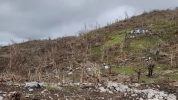
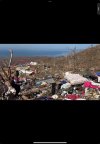
Trees around the area were completed destroyed. I'm not an expert on this. But not exactly looks like "debarking" in my eye.However, this isn't all that matters. Under such prolonged extreme wind speeds from a Cat5 hurricane of this magnitude, these trees ought to have been destroyed.
 
Last edited:
Obviously, the damage is extremely impressive for a TC, likely the strongest TC wind damage we've ever seen in history. But I believe a more detailed analysis is necessary.
Beeston Springs and the nearby towns and villages are situated on mountain slopes at elevations between 200-500 meters. These areas lie well within the hurricane's boundary layer and are also on windward slopes. The wind speed conversion ratio from the hurricane's mean surface to 300-500 meters is approximately 0.7. Due to topographic effects, the gust factor is relatively high. Here, I take it as 1.3. Assuming the hurricane's intensity at the time was around 150 knots (within half an hour of landfall), the maximum gusts in this region could conservatively reach 300 mph with sustained wind speed well into 200mph. (sustained winds might have been slightly weaker due to the influence of friction.)Multiple studies on Category 5 hurricane boundary-layer wind speeds support that such winds are entirely possible.
View attachment 48786
Then we can look into damage: the destruction across the area clearly reflects how buildings of varying quality perform differently under extreme wind speeds. First, in terms of this house below
View attachment 48785
a concrete block house reinforced with rebar, with a sheet metal roof. Its original appearance can be inferred from nearby houses that were not completely destroyed.
View attachment 48781
Not far away, same type of house but built with a concrete roof remains intact.
View attachment 48783
This disparity in damage is observable throughout Jamaica. Almost all these types of building covered with concrete roof remains intact and those built with wooden roof would been more or less damaged.
View attachment 48787
A closer look at this destruction reveals that the sections reinforced with rebar remain standing, while the collapsed portions include the sheet metal roof and unreinforced concrete block walls.
View attachment 48784
The houses got damaged from 2015 Ciudad Acuña tornado is almost identical to this which can take a reference here.
View attachment 48780
Also concrete block houses reinforced by rebar, but all covered with concrete roofs. Many of those houses suffered extensive wall collapses, with at least one being completely leveled.
View attachment 48782

There seems to be some debate regarding the rating and intensity of the Ciudad Acuña tornado. However, if the house above in Ciudad Acuña can be rated EF5, then Melissa’s concrete block house could only be rated EF3. If the house in Ciudad Acuña can be rated EF4, then Melissa’s house would only qualify for EF2, given the significant differences in both construction quality and damage severity.
Then, this house below was a CMU house not reinforced with rebar get leveled. Similar houses in US would typically get high end EF3 to low end EF4 rating. I would tend to give high end EF3 to this one given lack of rebar
View attachment 48788
Then this one slabbed is just a barn, more like SBO building in EF scale.
View attachment 48789
Trees around the area were completed destroyed. I'm not an expert on this. But not exactly looks like "debarking" in my eye.However, this isn't all that matters. Under such prolonged extreme wind speeds from a Cat5 hurricane of this magnitude, these trees ought to have been destroyed.
I do see what you’re saying about the variance in masonry house construction and how some failed as a result. With that said, the photos I posted, specifically #5 and #7 absolutely show genuine debarking, no doubt about it. There are multiple other points in multiple videos from Beeston Spring that show clear examples of debarking. Plus, the one slab pic I posted is just a random one I chose and is not the only example. There were absolutely homes slabbed by the eyewall winds in that area. Besides some of the masonry homes not being quite as sturdy as others, there’s really nothing to be dismissive of here.
 
Last edited:
I do see what you’re saying about the variance in masonry house construction and how some failed as a result. With that said, the photos I posted, specifically #5 and #7 absolutely show genuine debarking, no doubt about it. There are multiple other points in multiple videos from Beeston Spring that show clear examples of debarking. Plus, the one slab pic I posted is just a random one I chose and is not the only example. There were absolutely homes slabbed by the eyewall winds in that area. Besides some of the masonry homes not being quite as sturdy as others, there’s really nothing to be dismissive of here.
Don't get me wrong here. I'm very impressed by the damage. I 've been collecting TC damage since at least 15 years ago and this is by far the strongest TC damage I've ever seen, up there with Haiyan. If you perceived any dismissive tone here, it must be a misunderstanding. For that, I sincerely apologize. I've already watched these videos above and all the other videos and satellite I can find in this area. I believe I simply need to point this out that nearly all the structure damage I've observed occurred to houses with wooden or sheet metal roofs, or unreinforced CMU structures, or stone houses with poor mortar bonding. If they had built their houses slightly better, like most of the other structures in the vicinity, the damage would have been far less severe. I just can't help but feel a sense of regret for them.
 
Back
Top