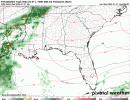
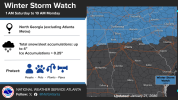
Let's back up and take the ole' 40,000ft view of things.
Variables:
1. Big cold air mass.
2. Big warm air mass
3. Boundary between them
4. Low pressure to form and move west to east, pulling warm moisture up into the cold air mass.
So things to watch/nowcast and compare to models over the next couple of days:
1. Strength of the cold. Are temps colder or warmer under that air mass than forecast?
2. Strength of the warm air mass. Same as the cold - eyes on the model forecast vs. reality.
3. North or south shifts of where the "fight" will take place, which is determined by:
4. The path of the low.
Now those are of course what the models themselves will be adjusting for as they ingest more real-world data, but we can certainly enjoy the process of checking those against reality ourselves still. I find I learn a lot that way - an "Oh! That's why the models are saying that!" is often the outcome, but then I know more about the weather.