Lake Martin EF4 asked me this in the Significant Tornado Thread.
I'm going to limit this somewhat to tornadoes in my lifetime or close to it. I have bolded the tornadoes I feel pretty strongly about and italicized ones about which I have a few comments.
One note: I'm not interested in saying "these were all specifically EF5-warranted tornadoes." They weren't all. What I'm saying is, by the very, very reasonable standards of the Fujita Scale in the late 20th century, these are highest grade tornadoes.
Greenfield, IA - 5/21/2024
Matador, TX - 6/21/2023
Rolling Fork, MS - 3/24/2023
Mayfield-Bremen, KY - 12/10/2021
Monette, AR - 12/10/2021
Bassfield, MS - 4/12/2020
Chapman, KS - 5/25/2016
Holly Springs, MS - 12/23/2015
Cisco, TX - 5/9/2015
Rochelle-Fairdale, IL - 4/9/2015
Alpena, SD - 6/18/2014
Pilger (west), NE - 6/16/2014
Pilger (east), NE - 6/16/2014
Stanton, NE - 6/16/2014
Louisville, MS - 4/28/2014
Vilonia, AR - 4/27/2014
Washington, IL - 11/17/2013
Moore, OK - 5/20/2013
Shawnee, OK - 5/19/2013
Berlin, ND - 7/17/2011
Goldsby, OK - 5/24/2011
Chickasha, OK - 5/24/2011
El Reno-Piedmont, OK - 5/24/2011
Joplin, MO - 5/22/2011
Rainsville, AL - 4/27/2011
Hackleburg-Phil Campbell, AL - 4/27/2011
Tuscaloosa-Birmingham, AL - 4/27/2011
Smithville, MS - 4/27/2011
Philadelphia, MS - 4/27/2011
New Wren, MS - 4/27/2011
Parkersburg, IA - 5/25/2008
Picher, OK - Neosho, MO - 5/10/2008
Elie, Manitoba, CAN - 6/22/2007
Greensburg, KS - 5/4/2007
Westminster, TX - 5/9/2006
Marion, ND - 7/18/2004
Roanoke, IL - 7/13/2004
Harper, KS - 5/12/2004
Van Wert, OH - 11/10/2002
Loyal Valley, TX - 5/11/1999
Bridge Creek, OK - 5/3/1999
Deerfield (Lawrenceburg), TN - 4/16/1998
Martins Mills, TN - 4/16/1998
Birmingham, AL - 4/8/1998
Jarrell, TX - 5/27/1997
Oakfield, WI - 7/18/1996
Kellerville, TX - 6/8/1995
Pampa, TX - 6/8/1995
Chandler, MN - 6/16/1992
Red Rock, OK - 4/26/1991
Winfield, KS - 4/26/1991
Andover, KS - 4/26/1991
Plainfield, IL - 8/28/1990
Stratton, NE - 6/15/1990
Bakersfield Valley, TX - 6/1/1990
Goessel, KS - 3/13/1990
Hesston, KS - 3/13/1990
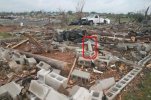
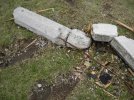
Greenfield was not necessarily the strongest tornado we've seen recently in terms of damage, but it had enough instances of contextual damage, plus that crazy concrete parking stop damage, to impress me. Rolling Fork is similar.
I agree with posts by buckeye elsewhere suggesting that Matador simply couldn't be rated EF5 in the modern use of the scale. But I also feel very, very strongly that that ain't the tornado's fault that the scale is being used without any reference at all to context.
Mayfield-Bremen is THE perfect tornado for representing all or most of the problems with the current implementation of rating tornadoes. I just think it is crazy to suggest context - including blitheringly obvious context - doesn't matter. Mayfield was NOT an EF5. But it WAS an F5 and it SHOULD have been ... look, you get the point. IF you have a tornado scale with a slot for "highest", Mayfield should be in it.
Monette ... I could be talked one way or the other on this, but as someone just posted elsewhere, the tree damage was incredibly strong. Bassfield's contextual damage was so monstrous that, to me, it's just obvious it was an F5 tornado.
Louisville utterly annihilated a fairly impressive apartment building.
Washington had some debarking, very high end windrowing, etc. Not a high end F5, but probably good enough. Some of it reminds me of Xenia back in the day.
I'll be honest: I don't remember why I had Shawnee 2013 on this list. Anyone who can remind me why is welcome to.
Roanoke and Van Wert are sorta in the same category of "well, they definitely had the LOOK if nothing else." Seriously, if you look at pictures of the damage from both, it just looks .... I hate to be so brief and clcihed, but I'm tired ... it looks nasty. Mud spattered everywhere, trees ravaged, industrial facilities crumpled and destroyed, vehicles rendered into ruined piles of unintelligible metal. By contrast, Bridge Creek does even more than that: Bridge Creek does damage that the eyes can't even comprehend. That's a HIGH END F5. But Roanoke and Van Wert were in that zone where the context just really suggests the highest rating is warranted. In my opinion, anyway.
With Martins Mills, the tornado that preceded the main "Forgotten F5", I have never seen photos, but have read various things suggesting it was extremely violent.
I've never been super familiar with the 1998 Birmingham tornado - I know some have suggested it wasn't an F5 at all.
Recent pictures of Kellerville definitely suggest extraordinary intensity.
I think people forget that corn damage wasn't the only accomplishment of the Plainfield F5.
I have absolutely no clue how Stratton wasn't rated F5.
I unironically believe the following: if you don't think Vilonia was both an F5 and an EF5, then you shouldn't be allowed to discuss tornadoes until you correct your mind.
I may discuss some earlier tornadoes I think were underrated (or even overrated!) but that'll do for now. Although one thing I will say is, I like to think logically about implications: that is, if I rate one tornado this way, shouldn't I rate a very similar tornado the same way? And one example is, Moshannon State Forest 1985. Based on tree damage, kinda hard to rate Bassfield EF5 (or F5), and not Moshannon, eh? Edit: or probably Tionesta for that matter. Well, we all know how crazy 5/31/85 was.
By the way, I have no idea if the Franklin, KS tornado of 2003 was an F5 or not.
I don't pretend to be as educated as some of you, but I do think my list is reasonable. There's a few others I haven't made up my mind about, like Camp Crook or one or both of the Canton, TX tornadoes from 2017.