I don't know why Texas Tech was the main driver of a lot of these discussions, but my guess is it is simply because of the fact that they decided to be the deepest divers into the damage and whatnot when this science was still in its infancy. Different college departments have varying levels of expertise in different fields - for example, Ohio State and West Virginia have large astronomy departments and have a lot of high end research occurring at those schools in that field. However, Ohio State doesn't have nearly as significant of a atmospheric sciences department (it still exists), and as such doesn't produce nearly as many tornado damage surveyors as somewhere like, say, University of Oklahoma would, because their meteorology department is much more well-established.
Tim Marshall is because, similar to how LaDue is viewed, he's a leading expert on damage and he's surveyed hundreds of strong+ tornadoes. He isn't the only one who is viewed in this light, though. He also has a meteorology degree in addition to his engineering degrees IIRC, which means he has a good understanding of the true physics going on too, and what may or may not deem to be valid damage indicators. He's very likely the most experienced surveyor, and if he isn't, he's definitely in the top ten. So, offices will naturally look to him for his support on ratings.
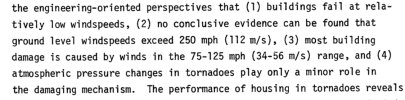
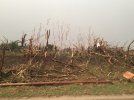
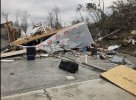
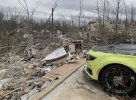
Bringing up my earlier point on this, though - I don't agree with how stingy Texas Tech is. It's also a common theme in engineering departments to be like this (speaking from my own experience working alongside engineers in classes and whatnot), and it's because they tend to be very conservative with estimates. Even today, they (Texas Tech in particular) seem to only strictly analyze things from a purely structural standpoint and omit contextual damage, including extreme vehicle mangling and disassembly, in their rating process. This is evident from the Matador survey they conducted - completely disregarding all contextual indicators of a very high-end event. That's lazy surveying, especially nowadays. I was only saying that stating what they're doing isn't science and needs to be omitted completely is not correct, they still have valuable opinions in the scientific world. Texas Tech and Tim Marshall, amongst others' contribution to the EF scale is still a positive for the scientific community, and researchers are building off of it to improve the science. When more niche wind calcs revealing higher wind velocities become more believable, mainstream, and proven to said engineers, I have little doubt they would have no issues including it in surveying.
Additionally, the precedent Enderlin has set will no doubt affect how other tornadoes are surveyed. Having Marshall and LaDue so deeply involved in that rating process is a giant plus, WFOs (at least the good ones) are likely going to take thrown objects into account now, especially with Marshall's support of such an idea. Good science takes time. The Northern Tornadoes Project has shown a very strong case for higher winds than expected being involved with thrown objects, and I have little doubt it will be incorporated going forwards.
Ok. So try to imagine if Ohio State and West Virginia consistently worked against scientific progress in astronomy and made patently false claims..Where would we be if they managed to convince NASA Einstein's Theory of Relativity was bogus and that there was zero evidence to support it? Would Nasa still lean on them as heavily today when all their claims were proven false by study after study? What about when it became more obvious their claims were made in bad faith and they clearly should've known better?
I can't even think of an analogy for Coldfront's anecdotes about thrown vehicles. How can you defend an institution that would deny irrefutable evidence? The sooner the NWS disassociates with Texas Tech the better. They're legitimately a cancer to tornado research.