• Welcome to TalkWeather!
    We see you lurking around TalkWeather! Take the extra step and join us today to view attachments, see less ads and maybe even join the discussion.
    CLICK TO JOIN TALKWEATHER

Enhanced Fujita Ratings Debate Thread

I don't know why Texas Tech was the main driver of a lot of these discussions, but my guess is it is simply because of the fact that they decided to be the deepest divers into the damage and whatnot when this science was still in its infancy. Different college departments have varying levels of expertise in different fields - for example, Ohio State and West Virginia have large astronomy departments and have a lot of high end research occurring at those schools in that field. However, Ohio State doesn't have nearly as significant of a atmospheric sciences department (it still exists), and as such doesn't produce nearly as many tornado damage surveyors as somewhere like, say, University of Oklahoma would, because their meteorology department is much more well-established.

Tim Marshall is because, similar to how LaDue is viewed, he's a leading expert on damage and he's surveyed hundreds of strong+ tornadoes. He isn't the only one who is viewed in this light, though. He also has a meteorology degree in addition to his engineering degrees IIRC, which means he has a good understanding of the true physics going on too, and what may or may not deem to be valid damage indicators. He's very likely the most experienced surveyor, and if he isn't, he's definitely in the top ten. So, offices will naturally look to him for his support on ratings.

Bringing up my earlier point on this, though - I don't agree with how stingy Texas Tech is. It's also a common theme in engineering departments to be like this (speaking from my own experience working alongside engineers in classes and whatnot), and it's because they tend to be very conservative with estimates. Even today, they (Texas Tech in particular) seem to only strictly analyze things from a purely structural standpoint and omit contextual damage, including extreme vehicle mangling and disassembly, in their rating process. This is evident from the Matador survey they conducted - completely disregarding all contextual indicators of a very high-end event. That's lazy surveying, especially nowadays. I was only saying that stating what they're doing isn't science and needs to be omitted completely is not correct, they still have valuable opinions in the scientific world. Texas Tech and Tim Marshall, amongst others' contribution to the EF scale is still a positive for the scientific community, and researchers are building off of it to improve the science. When more niche wind calcs revealing higher wind velocities become more believable, mainstream, and proven to said engineers, I have little doubt they would have no issues including it in surveying.

Additionally, the precedent Enderlin has set will no doubt affect how other tornadoes are surveyed. Having Marshall and LaDue so deeply involved in that rating process is a giant plus, WFOs (at least the good ones) are likely going to take thrown objects into account now, especially with Marshall's support of such an idea. Good science takes time. The Northern Tornadoes Project has shown a very strong case for higher winds than expected being involved with thrown objects, and I have little doubt it will be incorporated going forwards.

Ok. So try to imagine if Ohio State and West Virginia consistently worked against scientific progress in astronomy and made patently false claims..Where would we be if they managed to convince NASA Einstein's Theory of Relativity was bogus and that there was zero evidence to support it? Would Nasa still lean on them as heavily today when all their claims were proven false by study after study? What about when it became more obvious their claims were made in bad faith and they clearly should've known better?

I can't even think of an analogy for Coldfront's anecdotes about thrown vehicles. How can you defend an institution that would deny irrefutable evidence? The sooner the NWS disassociates with Texas Tech the better. They're legitimately a cancer to tornado research.
 
I don't know why Texas Tech was the main driver of a lot of these discussions, but my guess is it is simply because of the fact that they decided to be the deepest divers into the damage and whatnot when this science was still in its infancy. Different college departments have varying levels of expertise in different fields - for example, Ohio State and West Virginia have large astronomy departments and have a lot of high end research occurring at those schools in that field. However, Ohio State doesn't have nearly as significant of a atmospheric sciences department (it still exists), and as such doesn't produce nearly as many tornado damage surveyors as somewhere like, say, University of Oklahoma would, because their meteorology department is much more well-established.

Tim Marshall is because, similar to how LaDue is viewed, he's a leading expert on damage and he's surveyed hundreds of strong+ tornadoes. He isn't the only one who is viewed in this light, though. He also has a meteorology degree in addition to his engineering degrees IIRC, which means he has a good understanding of the true physics going on too, and what may or may not deem to be valid damage indicators. He's very likely the most experienced surveyor, and if he isn't, he's definitely in the top ten. So, offices will naturally look to him for his support on ratings.

Bringing up my earlier point on this, though - I don't agree with how stingy Texas Tech is. It's also a common theme in engineering departments to be like this (speaking from my own experience working alongside engineers in classes and whatnot), and it's because they tend to be very conservative with estimates. Even today, they (Texas Tech in particular) seem to only strictly analyze things from a purely structural standpoint and omit contextual damage, including extreme vehicle mangling and disassembly, in their rating process. This is evident from the Matador survey they conducted - completely disregarding all contextual indicators of a very high-end event. That's lazy surveying, especially nowadays. I was only saying that stating what they're doing isn't science and needs to be omitted completely is not correct, they still have valuable opinions in the scientific world. Texas Tech and Tim Marshall, amongst others' contribution to the EF scale is still a positive for the scientific community, and researchers are building off of it to improve the science. When more niche wind calcs revealing higher wind velocities become more believable, mainstream, and proven to said engineers, I have little doubt they would have no issues including it in surveying.

Additionally, the precedent Enderlin has set will no doubt affect how other tornadoes are surveyed. Having Marshall and LaDue so deeply involved in that rating process is a giant plus, WFOs (at least the good ones) are likely going to take thrown objects into account now, especially with Marshall's support of such an idea. Good science takes time. The Northern Tornadoes Project has shown a very strong case for higher winds than expected being involved with thrown objects, and I have little doubt it will be incorporated going forwards.

I think Texas Tech is prominently mentioned partly because of what Doswell said about them. Speaking of which, does anyone have that article? I can't find it.
 

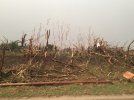
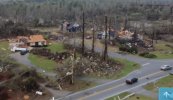
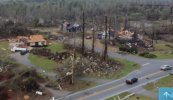
Almost certainly the most severe Appalachian forest damage since Moshannon back in '85.

Hypothetically, there's got to be a scientific way to pull EF5 wind estimates from extreme tree damage, hasn't there? I'm not saying this IS EF5 (200+) but it could be. Of course most posters here believe some Texas tornadoes (Loyal Valley, Matador) may have produced comparably severe damage.

Edit: I see the linked Tweet estimates 191 MPH

I imagine, though, that it would be a lot of work (in examination alone).

Don't take this as an argument, I'm more curious if anyone has thoughts.
 
Ok. So try to imagine if Ohio State and West Virginia consistently worked against scientific progress in astronomy and made patently false claims..Where would we be if they managed to convince NASA Einstein's Theory of Relativity was bogus and that there was zero evidence to support it? Would Nasa still lean on them as heavily today when all their claims were proven false by study after study? What about when it became more obvious their claims were made in bad faith and they clearly should've known better?

I can't even think of an analogy for Coldfront's anecdotes about thrown vehicles. How can you defend an institution that would deny irrefutable evidence? The sooner the NWS disassociates with Texas Tech the better. They're legitimately a cancer to tornado research.
Are you even reading what I’m saying about automatically assuming these things are in bad faith? Again, you are jumping to a ridiculous viewpoint so drastically based on a blog post by Doswell, which I still haven’t seen the source of at all and cannot find, and three statements in Grazulis’s paper that came out at a time when, as I have repeatedly stated, it was before the research that suggests these ideas were wrong came out. You’re relying on information that is both 100% outdated and isn’t even technically incorrect given the time period, and you’re taking it and automatically assuming they have malicious intent. This is what electric universe/flat earth/antivax cranks do, they take quotes out of context from a long time ago and stretch them to fit the viewpoint that they have preconceived bias towards. I’m not saying you are on the same level as that, but I am saying you’re starting to sound like it. Be better than that and approach with a more accepting stance on others views, even if they are very conservative on how tornadoes work. Otherwise, no one wants to debate with you if you assume bad faith every time.

Also, I really don’t even know where to start with the theory of general relativity point you brought up. That objectively isn’t the same thing at all, it’s a theoretical framework that makes predictions about how gravity works. There’s an absolutely insane amount of work that has been done that shows support for it, and there’s also been work done that shows it isn’t 100% correct in some ways. The EF scale isn’t a theory, it’s just a rating system for tornadoes, That’s it. It’s also 20 years old and doesn’t nearly have as much science backing it because the field investigating tornado damage is literally a newborn baby compared to the titan that is physics, comparatively. How in the world could you say that this is remotely the same thing, in the same ballpark, as some major institution claiming the theory of relativity is wrong? The theory of relativity is up there with the most successful prediction models in science, like the standard model or the theory of evolution. The theory of relativity also, as we know, is not 100% correct either, and scientists know this. Guess what? I can 10000% guarantee you that Texas Tech, Tim Marshall, Jim LaDue, and literally every damage surveyor knows for a fact that the EF scale isn’t 100% accurate. That’s why it’s getting a revision, an official update. That’s why people are doing studies on thrown objects. That’s also why Tim Marshall’s views changed on incorporating thrown objects, as you can quite clearly see from his stance on Enderlin. You’re continuously ignoring the evolution of the mindset and digging in your heels about outdated information, and I’m sick of it at this point.
 
Last edited:
Are you even reading what I’m saying about automatically assuming these things are in bad faith? Again, you are jumping to a ridiculous viewpoint so drastically based on a blog post by Doswell, which I still haven’t seen the source of at all and cannot find, and three statements in Grazulis’s paper that came out at a time when, as I have repeatedly stated, it was before the research that suggests these ideas were wrong came out. You’re relying on information that is both 100% outdated and isn’t even technically incorrect given the time period, and you’re taking it and automatically assuming they have malicious intent. This is what electric universe/flat earth/antivax cranks do, they take quotes out of context from a long time ago and stretch them to fit the viewpoint that they have preconceived bias towards. I’m not saying you are on the same level as that, but I am saying you’re starting to sound like it. Be better than that and approach with a more accepting stance on others views, even if they are very conservative on how tornadoes work. Otherwise, no one wants to debate with you if you assume bad faith every time.

Also, I really don’t even know where to start with the theory of relativity point you brought up. That objectively isn’t the same thing at all, it’s a theoretical framework that makes predictions about how gravity works. There’s an absolutely insane amount of work that has been done that shows support for it, and there’s also been work done that shows it isn’t 100% correct in some ways. The EF scale isn’t a theory, it’s just a rating system for tornadoes, That’s it. It’s also 20 years old and doesn’t nearly have as much science backing it because the field investigating tornado damage is literally a newborn baby compared to the titan that is physics, comparatively. How in the world could you say that this is remotely the same thing, in the same ballpark, as some major institution claiming the theory of relativity is wrong? The theory of relativity is up there with the most successful prediction models in science, like the standard model or the theory of evolution. The theory of relativity also, as we know, is not 100% correct either, and scientists know this. Guess what? I can 10000% guarantee you that Texas Tech, Tim Marshall, Jim LaDue, and literally every damage surveyor knows for a fact that the EF scale isn’t 100% accurate. That’s why it’s getting a revision, an official update. That’s why people are doing studies on thrown objects. That’s also why Tim Marshall’s views changed on incorporating thrown objects, as you can quite clearly see from his stance on Enderlin. You’re continuously ignoring the evolution of the mindset and digging in your heels about outdated information, and I’m sick of it at this point.
I'm not gonna join this debate but I do agree it's got a bit more tension then it should. So far, I'm enjoying it though haha
 
Ok. So try to imagine if Ohio State and West Virginia consistently worked against scientific progress in astronomy and made patently false claims..Where would we be if they managed to convince NASA Einstein's Theory of Relativity was bogus and that there was zero evidence to support it? Would Nasa still lean on them as heavily today when all their claims were proven false by study after study? What about when it became more obvious their claims were made in bad faith and they clearly should've known better?

I can't even think of an analogy for Coldfront's anecdotes about thrown vehicles. How can you defend an institution that would deny irrefutable evidence? The sooner the NWS disassociates with Texas Tech the better. They're legitimately a cancer to tornado research.
You really need to stop and think more before you post.
 
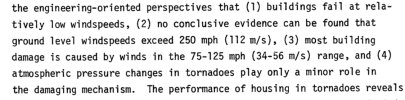
Not in a position to continue the debate at the moment, but glad people are enjoying it. In the meantime here is an official source I found of Texas Tech researchers claiming "no conclusive evidence exists of ground level windspeeds exceeding 250 mph." This appears to be a big one, and was released in 1993.

IMG_4102.jpeg

THE TORNADO: AN ENGINEERING-ORIENTED PERSPECTIVE
 
Here's a transcript of an interview with Kishor Mehta (founder and the former director of the Wind Science and Engineering Research Center at TTU) from March 30th 2022 where he's STILL denying that cars can get thrown exceptional distances by tornadoes.

"And for a long time, we had taken a position that really— cars really don't fly in tornado, but I'll admit, they had produced one or two movies, and there are rare occasion where a pickup truck does get picked up, and up in the air to about thirty feet, or thirty-five feet[...]"

The topic starts on page 17.


Texas Tech's Wind Science and Engineering Research Center later became the National Wind Institute and is the leading authority on tornado damage assessment. Mehta was director from 1986-2003 and is known at Texas Tech as the father of the Enhanced Fujita scale.
 
Last edited:
Tornado research began in earnest in 1970. It took Texas Tech 23 years to reach the conclusion "proof of 250 mph+ winds didn't exist" (when they did). And then a consistent flood of research from other institutions has summarily dismantled it. Has Texas Tech rescinded that claim or seperated themselves from it? The answer is no. They released a follow up study on Jarell, and then another on Joplin, and they devised a new rating scale based on those claims. Their wind institute's founding director still claims cars don't get thrown long distances in 2022. And they still slap tornadoes like Matador with 160 mph ratings.

"They made the claims before the research that suggests these ideas were wrong came out." So we're just ignoring Fujitas research now? His claims have more proof backing them now than they ever have. From the very beginning of tornado research, there has been a public rift/fued between Fujita's camp and Texas Tech's camp. Texas Tech eventually won (after Fujita died) and took over. It is beyond clear now that it was (and is still) the wrong decision.
 
Last edited:
Yeah, I’m not going to make a claim that Doswell said something, and just completely make it up. Here is the exact paragraph as well as the source:


I've also been disturbed for many years that the very same Texas Tech. engineers pushing a revision to the windspeeds of tornadoes at the upper end of the F-scale have consistently denied that automobiles and other motor vehicles become airborne in some tornadoes. This denial flies in the face of indisputable video evidence and so is completely unjustified, in my opinion. I've wondered why they're so adamant in disputing the clear fact that motor vehicles can become airborne in F3+ tornadoes. The only plausible explanation I can dream up for such steadfast denial of the facts is that they've been promoting a "saferoom" that would evidently not be able to withstand the impact of an airborne motor vehicle. Such a "projectile" would render useless their standard saferoom.

Blog link: https://www.flame.org/~cdoswell/EFscale_rant.html
 
Yeah, I’m not going to make a claim that Doswell said something, and just completely make it up. Here is the exact paragraph as well as the source:


I've also been disturbed for many years that the very same Texas Tech. engineers pushing a revision to the windspeeds of tornadoes at the upper end of the F-scale have consistently denied that automobiles and other motor vehicles become airborne in some tornadoes. This denial flies in the face of indisputable video evidence and so is completely unjustified, in my opinion. I've wondered why they're so adamant in disputing the clear fact that motor vehicles can become airborne in F3+ tornadoes. The only plausible explanation I can dream up for such steadfast denial of the facts is that they've been promoting a "saferoom" that would evidently not be able to withstand the impact of an airborne motor vehicle. Such a "projectile" would render useless their standard saferoom.

Blog link: https://www.flame.org/~cdoswell/EFscale_rant.html
Debates run on evidence and proof.

You can't just say someone said something and expect people to take that as gospel, you need the evidence to make your point a bit more believable.
 
Debates run on evidence and proof.

You can't just say someone said something and expect people to take that as gospel, you need the evidence to make your point a bit more believable.
Yes, but, that proof has been posted multiple times in this same thread already lol. By me and others. A quick search yielded it, I just copied and pasted when I originally put it in here. I’m also not involved in this debate, just adding context on Texas Tech.
 
Yes, but, that proof has been posted multiple times in this same thread already lol. By me and others. A quick search yielded it, I just copied and pasted when I originally put it in here. I’m also not involved in this debate, just adding context on Texas Tech.
Oh, i know. I've heard the point made plenty of times, just moreso regarding the fact about how there's a slight trend in this thread sometimes of always saying about a certain remark but never proving it was said or adding context. I didn't mean to sound any way unusual
 
Yeah, I’m not going to make a claim that Doswell said something, and just completely make it up. Here is the exact paragraph as well as the source:


I've also been disturbed for many years that the very same Texas Tech. engineers pushing a revision to the windspeeds of tornadoes at the upper end of the F-scale have consistently denied that automobiles and other motor vehicles become airborne in some tornadoes. This denial flies in the face of indisputable video evidence and so is completely unjustified, in my opinion. I've wondered why they're so adamant in disputing the clear fact that motor vehicles can become airborne in F3+ tornadoes. The only plausible explanation I can dream up for such steadfast denial of the facts is that they've been promoting a "saferoom" that would evidently not be able to withstand the impact of an airborne motor vehicle. Such a "projectile" would render useless their standard saferoom.

Blog link: https://www.flame.org/~cdoswell/EFscale_rant.html
Never claimed you did make it up, I just never saw the direct claim, and I looked up “Chuck Doswell EF Scale Blog” amongst other variations in that query, in the search bar. I couldn’t find it. FWIW I did believe this was real statement, I just think it’s dangerous to take this small snippet from a blog post by someone not even directly involved in the research they’re conducting and run with it. I know that is not what you yourself did, though, you were only providing context. I’m well aware of that, and I apologize if I came off that way.
Tornado research began in earnest in 1970. It took Texas Tech 23 years to reach the conclusion "proof of 250 mph+ winds didn't exist" (when they did). And then a consistent flood of research from other institutions has summarily dismantled it. Has Texas Tech rescinded that claim or seperated themselves from it? The answer is no. They released a follow up study on Jarell, and then another on Joplin, and they devised a new rating scale based on those claims. Their wind institute's founding director still claims cars don't get thrown long distances in 2022. And they still slap tornadoes like Matador with 160 mph ratings.

"They made the claims before the research that suggests these ideas were wrong came out." So we're just ignoring Fujitas research now? His claims have more proof backing them now than they ever have. From the very beginning of tornado research, there has been a public rift/fued between Fujita's camp and Texas Tech's camp. Texas Tech eventually won (after Fujita died) and took over. It is beyond clear now that it was (and is still) the wrong decision.
I’m not defending Texas Tech because I agree with them. My statement on these ideas being outdated in that department was clearly wrong based on what you’ve posted, and I’ll rescind that point. But here’s the thing: You’re claiming that TTU is a “cancer” and their input should be omitted completely, and that is the complete antithesis of the pro-scientific standpoint you’re claiming to have. I can say with a very high degree of confidence that if TTU continues to have this viewpoint on thrown objects and whatnot (which does begin from the top-down), they will naturally fall behind and their input will not hold as much value by default anyways, across the scientific community. We can literally see this in the improvements that are being made in the scale right now, we can see this with Enderlin’s EF5 rating, we can see this with LaDue’s presentation that discusses the EF5 rating being too difficult to achieve for homes, and we can see it with the plethora of new groundbreaking research with the Northern Tornadoes Project and Anthony Lyza’s paper on lowering the EF5 threshold. What TTU did is still science despite the significant amount of issues that their methodology holds. That didn’t stop all these other researchers from claiming otherwise. There is still forward progress here, with or without TTU’s input. That’s my entire point.

I apologize for being standoff-ish, but I really dislike the automatic jump to “they’re definitely malicious and they want to put the science back” when Occam’s razor tells me that the overwhelmingly likely reason why they do this is because engineers tend to be extremely conservative in their estimates for things, and they genuinely believe from the top-down that they are correct. This is something that hits particularly close to my own field when it comes to justifying defunding scientific fields based on reasons that are, quite frankly, far too vapid, based on loose correlations, and hearsay rather than strict documentation and strong evidence displaying true malicious intent. I stand by the opinion that TTU still deserves a place in this science and unless there’s some slam-dunk evidence that they are truly attempting to put the science on a backwards trajectory on purpose, I think it’s dangerous to believe they should be completely omitted from scientific discussion.

You’re free to disagree and not have their opinion hold much weight, if any at all, but accusing them of being purposefully anti-science is not the correct take. I certainly don’t hold their opinions to a very high regard.
 
Last edited:
Never claimed you did make it up, I just never saw the direct claim, and I looked up “Chuck Doswell EF Scale Blog” amongst other variations in that query, in the search bar. I couldn’t find it. FWIW I did believe this was real statement, I just think it’s dangerous to take this small snippet from a blog post by someone not even directly involved in the research they’re conducting and run with it. I know that is not what you yourself did, though, you were only providing context. I’m well aware of that, and I apologize if I came off that way.
No worries or need to apologize at all. I didn’t take it that way. Was just merely trying to frame why TTU does have a less-than-stellar reputation amongst some on this community.
 
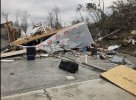
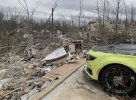
IMG_5319.jpegIMG_5320.jpegIMG_5322.jpegIMG_5321.jpeg
I’ve always found it a bit strange to me that the Newnan, GA tornado received an EF4 rating despite producing relatively unremarkable contextual damage and didn’t really produce any damage that stood out to me as being low end EF4. If you compare it to some other tornadoes from 2021 that were rated EF3 but should’ve been rated EF4, such as Bowling Green or Saloma, KY, you’ll notice the contextual damage was notably more intense in both of those tornadoes. Just a bit confusing to me to this day.
 

Attachments

  • IMG_5322.jpeg
    IMG_5322.jpeg
    107.6 KB · Views: 0
Here's at least one I found recently WIND SPEEDS REQUIRED TO UPSET VEHICLES (2003)

I always wondered why wind tunnels were never used to study vehicle displacement. It turns out they were, and this was the conclusion they reached. If over 50% of cars in a location are tossed, it is likely due to 200 MPH+ wind speeds.

There's also the fact Ethan Moriarty has shown very clearly, using standard engineering wind calculations that several structures prove greater than 220 mph winds when destroyed or displaced.

1. The Enderlin train car - 260 mph
2. The Rolling Fork Water Tower 229 mph
3. Parkersburg, IA home 273 MPH
4. The Greenfield parking stops - 247 mph
5. Rochelle-Fairdale, IL 226 MPH (Later rescinded)
6. Tri-State tornado - 289 MPH

Say what you want about the guy, but he actually shows the math, which the Texas Tech engineers consistently refuse to do. All these structures he calculated existed and have been hit by tornadoes prior to the year 2000 when Texas Tech made those claims, as well. If they actually wanted the EF scale to be more accurate they'd use some of this methodology instead of throwing out anything that can be calculated over 200 mph as "debris loading" or other bogus outliers. How is that even remotely scientific? How can you claim "this is science" when half the evidence has been thrown out for 30 years?

It's not science. That's literally my entire point. It's conjecture, and has been conjecture the entire time. Even the methodology you listed behind the conception of the EF scale is conjecture. Just because it was a panel of experts, doesn't make their numbers any less arbitrary. Plus, half the panel was made up by Texas Tech's camp. Almost every single mathematical study that has been done on high-end tornado winds goes against Texas Tech's claims about maximum winds, yet they are still propped up as truth. Why is that? There is no remotely adequate explanation.
interesting that every EF5 rated tornadoes in that list had ethan pull up a 260+ mph wind speed ...
 
Back
Top