• Welcome to TalkWeather!
    We see you lurking around TalkWeather! Take the extra step and join us today to view attachments, see less ads and maybe even join the discussion.
    CLICK TO JOIN TALKWEATHER

Enhanced Fujita Ratings Debate Thread

This actually isn’t entirely true IIRC - Fujita et al. did have some papers on cycloidal markings. With the size and orientation of it you can get a very crude windspeed estimate. I’ll have to try to find the sources when I’m on my computer.
He did, but he also calculated that that cycloidal marks in the Charles City F5 were 500 miles-per-hour iirc, so I highly doubt that equation was accurate. I'm referring to a different (and apparently non-public) one that was used to calculate the Robinson EF3's scarring.
 
He did, but he also calculated that that cycloidal marks in the Charles City F5 were 500 miles-per-hour iirc, so I highly doubt that equation was accurate. I'm referring to a different (and apparently non-public) one that was used to calculate the Robinson EF3's scarring.
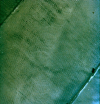
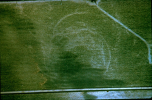
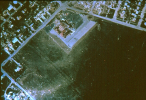
If the equation I'm talking about is peer-reviewed and confirmed to be accurate, I'd love to see it used specifically on cycloidal marks from the Grand Island tornadoes:
1772632167307.png1772632192155.png
1772632198908.png
 
He did, but he also calculated that that cycloidal marks in the Charles City F5 were 500 miles-per-hour iirc, so I highly doubt that equation was accurate. I'm referring to a different (and apparently non-public) one that was used to calculate the Robinson EF3's scarring.
I misinterpreted your original post, my bad. I saw the poster that described the methodology for it and it seemed very solid to me. Also, the windspeeds they calculated for Robinson were reasonable to me, given how underrated that storm was. I also would like to see it applied elsewhere.

I think the users that came on here using it as some sort of evidence that it was stronger than Smithville were greatly exaggeratory and gave it an initial bad look to those on this forum.
 
I misinterpreted your original post, my bad. I saw the poster that described the methodology for it and it seemed very solid to me. Also, the windspeeds they calculated for Robinson were pretty reasonable to me. I also would like to see it applied elsewhere.
IIrc they got ~220 miles-per-hour. Structurally I could see a low-end EF4 rating and contextually outside of the marks I could see 180-200 miles-per-hour. It could be solid, who knows, I just won't fully trust anything calculated through it until it is peer-reviewed.
 
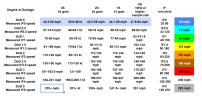
There was a DOW measurement of 224 mph like, 600 m AGL, which to me is absolutely both way too high up and not strong enough to yield an EF5 rating by itself. If you gave it a 170 EF4, I guess I'd be fine with it. But the graphic states "EF4/5" and I cannot get behind it being EF5.

EDIT: Also Sulphur Springs being EF5 would be a little odd to me too. IIRC, that was a ~216 mph reading. It was much closer to the ground than Minden's reading was, though.
i say its safer to go with the IF scale wind speed to be safer , sulphur spring being rated EF4 seems more resonable.
1772648104564.png
IF scale has 232 mph under 60 meters as IF5.
 
He did, but he also calculated that that cycloidal marks in the Charles City F5 were 500 miles-per-hour iirc, so I highly doubt that equation was accurate.
That wasn't Fujita and wasn't using the same equation.

I did an extensive two-parter on Fujita's work here.

I'm referring to a different (and apparently non-public) one that was used to calculate the Robinson EF3's scarring.
That person's methods being non public is an issue as I suspect there's some assumptions behind their calculations that I'm not sure hold.
 
That wasn't Fujita and wasn't using the same equation.
Ah, my bad. I thought that was him.
That person's methods being non public is an issue as I suspect there's some assumptions behind their calculations that I'm not sure hold.
That's my main issue as well - I'm glad they are taking it through a peer-review as I think that is the best possible route, but I'm skeptical as there is currently no way to verify that the equation isn't missing a major component. I think back to that one time Ethan Moriarty posted the Enderlin tipping calculations where he made a "fix" that lowered the windspeeds below the 201-mph range - that fix was later found out to have screwed up the final estimate below realistic levels.
 
Ah, my bad. I thought that was him.

That's my main issue as well - I'm glad they are taking it through a peer-review as I think that is the best possible route, but I'm skeptical as there is currently no way to verify that the equation isn't missing a major component. I think back to that one time Ethan Moriarty posted the Enderlin tipping calculations where he made a "fix" that lowered the windspeeds below the 201-mph range - that fix was later found out to have screwed up the final estimate below realistic levels.
Things I'd be concerned about:

- They (and Fujita) assume the shapes of markings are regular, which they're not. This could make a difference, as when Agee applied Fujita's method to the West Lafayette tornado he got very different results using loop width and loop shift. It also means that ones calculated from part of a marking (like El Reno 2013) are very doubtful.

- They calculate three second standard and volumetric gusts using assumptions from straight line winds. The markings are formed by an abrupt change in direction and these assumptions may not actually apply.

- It's not clear to me from the small amount of existing literature that the marks are 'penciled out' from an approximate points as opposed to being formed over longer, arc-like segments, which could have implications for how well they represent the wind speed

- So far as I know subvortices do not move at a constant rate around the centre, and while you don't need subvortices I suspect the same would apply to whatever turbulent feature is producing the pronounced corner flow.

I think it would require a significant amount of computer modelling (this has already been done to some extent) to really drill down into the formation of the marks.

Also, when this was first raised, I saw someone here claim that Fujita's equation produces overestimates. It shouldn't produce anything much different to what this person's come up with, because they're assuming the same geometry. The estimates I've seen from Fujita's method are, if anything, conservative.
 
Last edited:
In contrast to a lot of the sentiment about what the rating will be here, I'm actually pretty confident this will get an EF4 rating with the mindset shift that may be taking place after the Enderlin upgrade, and also after the precedent set by the 5/16 tornadoes last year. With Marion being a "high end EF4" from a swept subfloor structure (not saying I disagree with it, only that it's a bit of an outlier compared to other HE EF4s) and London-Somerset only really getting the nod to EF4 because of the super impressive tree damage, I can see more offices outside of MEG and those associated with TTU being more liberal in general with ratings. The contextual damage in Union City is really quite impressive and definitely was not the result of an EF3 tornado.
 
In contrast to a lot of the sentiment about what the rating will be here, I'm actually pretty confident this will get an EF4 rating with the mindset shift that may be taking place after the Enderlin upgrade, and also after the precedent set by the 5/16 tornadoes last year. With Marion being a "high end EF4" from a swept subfloor structure (not saying I disagree with it, only that it's a bit of an outlier compared to other HE EF4s) and London-Somerset only really getting the nod to EF4 because of the super impressive tree damage, I can see more offices outside of MEG and those associated with TTU being more liberal in general with ratings. The contextual damage in Union City is really quite impressive and definitely was not the result of an EF3 tornado.
Same. I'd bet atleast one or two homes on the left here get slapped with a 170 MPH. Especially given the contextuals.

HCxArR6a8AAsdTB.jpg
 
In contrast to a lot of the sentiment about what the rating will be here, I'm actually pretty confident this will get an EF4 rating with the mindset shift that may be taking place after the Enderlin upgrade, and also after the precedent set by the 5/16 tornadoes last year. With Marion being a "high end EF4" from a swept subfloor structure (not saying I disagree with it, only that it's a bit of an outlier compared to other HE EF4s) and London-Somerset only really getting the nod to EF4 because of the super impressive tree damage, I can see more offices outside of MEG and those associated with TTU being more liberal in general with ratings. The contextual damage in Union City is really quite impressive and definitely was not the result of an EF3 tornado.
I agree, I think the overall level destruction to that neighborhood, the fact that multiple homes were leveled/swept away, trees stripped, and vehicles tossed, warrants an EF4 rating.
 
Pretty ridiculous Fairview got an EF2 rating based on what it did to that vehicle. I just can't understand the mental disconnect of seeing that and rating it 115 mph.
Fairview and Union City both need be upgraded by at least one level in my opinion. And quite possibly two levels in the case of Fairview...I can't think of a single example of an EF2 doing that kind of vehicle damage if I'm honest.
 
Fairview and Union City both need be upgraded by at least one level in my opinion. And quite possibly two levels in the case of Fairview...I can't think of a single example of an EF2 doing that kind of vehicle damage if I'm honest.
I think Union City has a very solid chance of going EF-4. Its 165 prelim right now
 
Back
Top