Ah, my bad. I thought that was him.
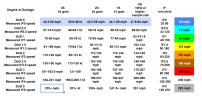
That's my main issue as well - I'm glad they are taking it through a peer-review as I think that is the best possible route, but I'm skeptical as there is currently no way to verify that the equation isn't missing a major component. I think back to that one time Ethan Moriarty posted the Enderlin tipping calculations where he made a "fix" that lowered the windspeeds below the 201-mph range - that fix was later found out to have screwed up the final estimate below realistic levels.
Things I'd be concerned about:
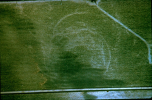
- They (and Fujita) assume the shapes of markings are regular, which they're not. This could make a difference, as when Agee applied Fujita's method to the West Lafayette tornado he got very different results using loop width and loop shift. It also means that ones calculated from part of a marking (like El Reno 2013) are very doubtful.
- They calculate three second standard and volumetric gusts using assumptions from straight line winds. The markings are formed by an abrupt change in direction and these assumptions may not actually apply.
- It's not clear to me from the small amount of existing literature that the marks are 'penciled out' from an approximate points as opposed to being formed over longer, arc-like segments, which could have implications for how well they represent the wind speed
- So far as I know subvortices do not move at a constant rate around the centre, and while you don't need subvortices I suspect the same would apply to whatever turbulent feature is producing the pronounced corner flow.
I think it would require a significant amount of computer modelling (this has already been done to some extent) to really drill down into the formation of the marks.
Also, when this was first raised, I saw someone here claim that Fujita's equation produces overestimates. It shouldn't produce anything much different to what this person's come up with, because they're assuming the same geometry. The estimates I've seen from Fujita's method are, if anything, conservative.