

Kds86z
Member
Another upgrade
Follow along with the video below to see how to install our site as a web app on your home screen.
Note: This feature may not be available in some browsers.

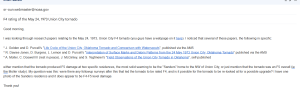
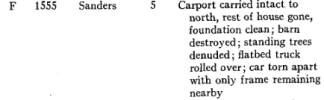
Would you be able to post that Sanders picture?View attachment 50574
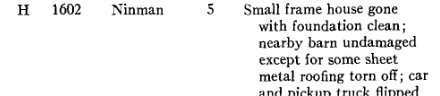
Reached out to OUN about the Union City tornado's F4 rating; my theory is that Fujita gave a presentation where he rated it F5 and the NSSL picked up and ran with it. The NWS still has it at F4, which is odd.
Of course!Would you be able to post that Sanders picture?
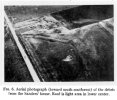

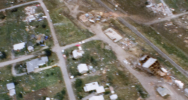
Here's the scouring:Interesting, despite its position as *the* watershed event for tornado field research, I'd never heard anything to the effect that Union City was ever an F5 candidate before. Always had understood its F4 rating was pretty non-controversial. Guess I was wrong!
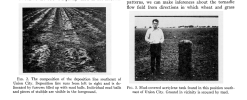
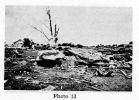
Here's the scouring:
View attachment 50585View attachment 50586
What's interesting is that if this is upgraded, it would make it one of the visually thinnest post-1950 F5/EF5s.
Surprisingly:I don't think anything can beat Elie in that department.
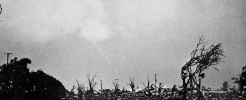
Fujita's application of F-scale was still in flux at the time, taking a much more 'face value' approach with less consideration of structure frailty. His early papers on ratings for 1971 and 72 list 2 F5s and 23 F4s for 1971 (now 1 and 10) and for 1972 11 F4s (only 4 are now recognised). Things only became more consistent after the Super Outbreak. Even there one of his early papers lists the Hamburg and Rochester tornadoes as having caused 'F4 to F5' damage. It was all very in line with the scale's origin as a quick-and-dirty method to be used in the absence of a detailed engineering examination.Reached out to OUN about the Union City tornado's F4 rating; my theory is that Fujita gave a presentation where he rated it F5 and the NSSL picked up and ran with it. The NWS still has it at F4, which is odd.

Wait, I thought we didn't have any pictures of that one, just the damage. I don't recall anything saying that one was especially narrow.Adair
We don’t, but we do have a path width (100-200 yards depending on sources). I should’ve removed the “visually” part of my message, sorry.Wait, I thought we didn't have any pictures of that one, just the damage. I don't recall anything saying that one was especially narrow.
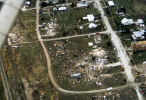
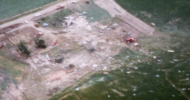
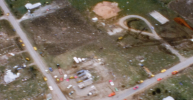
This Monday night’s Weather Brains will feature staff at the NWS WFO in Grand Forks and their decision process about upgrading Enderlin to EF5 last fall.

I would recommend everyone watch this. Fantastic job on Grand Forks’ part. They go into the meteorology and then the process of giving the Enderlin tornado an EF5.
A couple of points I found interesting:
They settled pretty quickly it was going to be finalized as a 5. Up to two months, per Mindy Beerends (Grand Forks), was spent working within the NWS bureaucracy with meetings. Everyone in the enterprise was supportive of the rating, but it seems they (internal enterprise) needed to all be in alignment before publicly releasing it. Jim LaDue played a big role in referencing Grand Forks to the Northern Tornados Project.
The other part was this. I’m not a conspiracy theorist, but when Mindy was talking about non-traditional DIs like the train, she says something to this effect: “we hadn’t been allowed to use them” before rephrasing it as “they hadn’t been used in a while” and references El Reno 2011. Could have just been a rephrase though.

I would recommend everyone watch this. Fantastic job on Grand Forks’ part. They go into the meteorology and then the process of giving the Enderlin tornado an EF5.
A couple of points I found interesting:
They settled pretty quickly it was going to be finalized as a 5. Up to two months, per Mindy Beerends (Grand Forks), was spent working within the NWS bureaucracy with meetings. Everyone in the enterprise was supportive of the rating, but it seems they (internal enterprise) needed to all be in alignment before publicly releasing it. Jim LaDue played a big role in referencing Grand Forks to the Northern Tornados Project.
The other part was this. I’m not a conspiracy theorist, but when Mindy was talking about non-traditional DIs like the train, she says something to this effect: “we hadn’t been allowed to use them” before rephrasing it as “they hadn’t been used in a while” and references El Reno 2011. Could have just been a rephrase though.
Honestly, listening to part of the episode I am shocked at the amount of stuff needed to go through just for the EF5 rating to be accepted. Why all the bureaucracy? I don't doubt that's why nothing since 2013 was rated EF5 until that point.One thing I learned so far (haven’t watched the whole thing yet) is that James Spann loves a good haircut.
In all seriousness, though, I’m sure what was meant by “not being allowed to use it” was more along the lines of “any attempt at upgrading tornadoes in the past couple years based on non-traditional DIs was shot down by peer review because there wasn’t enough supporting literature for it at the time” would be my guess, unless it was an overwhelmingly needed upgrade to EF5 like El Reno 2011. IIRC the Northern Tornadoes Project paper was published in the 2023-2024 time frame, and now that researchers have had time to grapple with the ideas it put out there, it allows surveyors to be much more confident in issuing higher ratings than before.

It definitely seems this podcast confirms the offices don't act totally independently and there is central leadership who ultimately gets to make the final decision on ratings. This has been a heavily debated topic in here for a long time.Honestly, listening to part of the episode I am shocked at the amount of stuff needed to go through just for the EF5 rating to be accepted. Why all the bureaucracy? I don't doubt that's why nothing since 2013 was rated EF5 until that point.
Granted that I haven't watched the entire video yet - but would the word "bureaucracy" really fit here? Or is it careful science, checking in with as many intelligent minds as possible before pushing out the rating that hasn't occurred in over 12 years because of Vilonia syndrome? They said it themselves that the rating was finalized quite quickly, they just needed a lot of time to adequately prepare before pushing the rating out fully. That's pretty much the definition of being a careful scientist, in my opinion. I would absolutely prefer that they check in with as many minds as possible before publishing a rating that will be looked into and will have people attempting to scrutinize it.Honestly, listening to part of the episode I am shocked at the amount of stuff needed to go through just for the EF5 rating to be accepted. Why all the bureaucracy? I don't doubt that's why nothing since 2013 was rated EF5 until that point.
I guess I could see it that way as well. It really depends on how you interpret them going through so many steps for the rating; for some it could seem overly-complicated for a single number (to be fair, though, the first 5 since 2013 is incredibly significant and more than just a number), and for others it could mean that the checks are there to ensure quality over quantity.Granted that I haven't watched the entire video yet - but would the word "bureaucracy" really fit here? Or is it careful science, checking in with as many intelligent minds as possible before pushing out the rating that hasn't occurred in over 12 years because of Vilonia syndrome? They said it themselves that the rating was finalized quite quickly, they just needed a lot of time to adequately prepare before pushing the rating out fully. That's pretty much the definition of being a careful scientist, in my opinion. I would absolutely prefer that they check in with as many minds as possible before publishing a rating that will be looked into and will have people attempting to scrutinize it.