• Welcome to TalkWeather!
    We see you lurking around TalkWeather! Take the extra step and join us today to view attachments, see less ads and maybe even join the discussion.
    CLICK TO JOIN TALKWEATHER

Enhanced Fujita Ratings Debate Thread

Well, you can make a argument. But half of that subreddit was calling Hackleburg a EF4 for intentional drama which i found weird. I think i should keep a lot of that dumpfire out of here and not ruin the thread.
I think the issue was that people took the initial few posts that argued Hackleburg might not be rated EF5 today based off structural evidence (again, there is a genuine debate to be had about that regardless of your own opinion; no plausible opinion is considered outlandish enough that it shouldn't be considered imo) and others with less-genuine intentions interpreted that as the entire tornado was not of EF5 intensity and ran with it. The latter part is very clearly ragebait, and the entire subreddit managed to fall for it. This is why I dislike Reddit - it's full of people who want to get mad at something just to get mad, and do not recognize when they are being baited into it.

Most of that subreddit is fundamentally just "is this a tornado?", "what's the cutest tornado you've seen?" or "rate my tornado art" and scientific debate to any capacity is basically impossible. That's actually how I initially found this site!
 
Last edited:
Most of that subreddit is fundamentally just "is this a tornado?", "what's the cutest tornado you've seen?" or "rate my tornado art" and scientific debate to any capacity is basically impossible. That's actually how I initially found this site!
Classic R/Tornado starterpack. That essentially sums it up
 
Classic R/Tornado starterpack. That essentially sums it up
Can’t forget the classic “what’s the scariest tornado photo you have”…
 
I think the issue was that people took the initial few posts that argued Hackleburg might not be rated EF5 today based off structural evidence (again, there is a genuine debate to be had about that regardless of your own opinion; no plausible opinion is considered outlandish enough that it shouldn't be considered imo) and others with less-genuine intentions interpreted that as the entire tornado was not of EF5 intensity and ran with it. The latter part is very clearly ragebait, and the entire subreddit managed to fall for it. This is why I dislike Reddit - it's full of people who want to get mad at something just to get mad, and do not recognize when they are being baited into it.

Most of that subreddit is fundamentally just "is this a tornado?", "what's the cutest tornado you've seen?" or "rate my tornado art" and scientific debate to any capacity is basically impossible. That's actually how I initially found this site!
The art stuff i don't mind but i do agree the content is extremely repetitive and as you said, it's full of people trying to spark a fire for others to get mad then it leads to others getting in clashes and it turns into fully blown chaos. Most are so entitled and think they know best over there. Sometimes Reddit in itself can be a somewhat good place, but most of the time, it's users whose heads are in their backsides.
 
Honestly r/tornado seems like complete garbage, I've seen so many hobbyist and small subreddits that are significantly less meaningless in the discussion that goes on. Legitimately a total waste of time in comparison to even twitter posting about tornadoes.
 
Sure, but that's just what damage intensity means. If you want to call it trenching that's fine, but sod being peeled up in loose soil can't be considered the same thing as 12 inch deep trenches lol. The depth of the trench is a major factor.

In the same vein as what you were saying about judging contextual indicators based on experience, how often do you seen 8+ inch trenches? I can't remember how deep they were in the photos you shared a while back.
I’d say it is the same thing, but you have to understand the difference between varying severity versus a genuinely separate phenomenon. It’s like saying “Hey look at this tree that only has one section of bark removed. It’s like debarking but on a smaller scale, what should we call it?” That would still be debarking, just at a minimal level. Same applies to this recent ground phenomenon in MS, even though there’s not much depth in this case. The trenching process began, but the deep chunky upwelling of ground did not occur. That’s simply a reflection of lower intensity, not an indication of a separate phenomenon occurring. It’s not the different visual appearance or lesser severity that would make it a separate phenomenon, it’s the mechanics of what happened, which are the same as trenching. Therefore, it’s trenching, just at its most minimal extent.

In terms of that kind of depth you mentioned, only a handful of times, typically involving violent intensity, but not always, and certainly not exclusive to F5/EF5 intensity, which is one of the main points I’m making here. Yeah the depth does matter, but not to the degree that you’d expect. At the deepest parts of ground trenched by the Mauk, GA EF1 tornado, I’d estimate it was about 5 or 6 inches deep at its absolute worst. The Clarks, LA tornado appears to have dug deeper than that, and that was a low-end EF3. So obviously a high-end monster like Philadelphia is going to obviously trench even deeper than both of those examples, but trenching is not a good EF5 indicator by itself when we have evidence that an EF1 can get you to half a foot, and you have three additional EF scale rankings to climb before you reach EF5. It’s just not reliable and the correlation isn’t strong enough.

To be clear, I still think the Philadelphia tornado was an EF5. The only thing in question is the reliability of the main damage indicator cited for that rating.
 
Last edited:
Can’t forget the classic “what’s the scariest tornado photo you have”…
Far and down:
Kerry_Von_Erich%2C_1987.jpg
 
I’d say it is the same thing, but you have to understand the difference between varying severity versus a genuinely separate phenomenon. It’s like saying “Hey look at this tree that only has one section of bark removed. It’s like debarking but on a smaller scale, what should we call it?” That would still be debarking, just at a minimal level. Same applies to this recent ground phenomenon in MS, even though there’s not much depth in this case. The trenching process began, but the deep chunky upwelling of ground did not occur. That’s simply a reflection of lower intensity, not an indication of a separate phenomenon occurring. It’s not the different visual appearance or lesser severity that would make it a separate phenomenon, it’s the mechanics of what happened, which are the same as trenching. Therefore, it’s trenching, just at its most minimal extent.

In terms of that kind of depth you mentioned, only a handful of times, typically involving violent intensity, but not always, and certainly not exclusive to F5/EF5 intensity, which is one of the main points I’m making here. Yeah the depth does matter, but not to the degree that you’d expect. At the deepest parts of ground trenched by the Mauk, GA EF1 tornado, I’d estimate it was about 5 or 6 inches deep at its absolute worst. The Clarks, LA tornado appears to have dug deeper than that, and that was a low-end EF3. So obviously a high-end monster like Philadelphia is going to obviously trench even deeper than both of those examples, but trenching is not a good EF5 indicator by itself when we have evidence that an EF1 can get you to half a foot, and you have three additional EF scale rankings to climb before you reach EF5. It’s just not reliable and the correlation isn’t strong enough.

To be clear, I still think the Philadelphia tornado was an EF5. The only thing in question is the reliability of the main damage indicator cited for that rating.

Philadelphia often seems like something of a forgotten tornado in the context of 2011.

What were the other main reasons you find supportive of the highest rating?
 
Trenching is dependent on soil type, compaction, moisture content, and whatever grows on it. I've seen most common soil types too many times, often on the end of a pick and shovel. Some hardpan is almost like concrete (Jarrell) and clay (Philadelphia) is nearly as tough if it's not too wet. Disturbed soil (plowing) makes it easier, the root structure of grass makes it harder than farmed crops. I think the trenching in Philadelphia is significant and noteworthy indicating a strong tornado.
 
I've come more over to the side of Greenfield being a borderline case, but for unconventional reasons. The EF scale works with 3 second wind gusts, but it's very likely the tornado was never over the same spot for longer than 3 seconds.

Who's to say the reason there was EF3 damage below the DOWs peak wind recording wasn't because the tornado briefly accelerated over the area? 318 mph for one second very likely has a different damage presentation than 250 mph for 10 seconds.

Unfortunately, this side of tornado damage has become a bit taboo to discuss, because it's been used with such bad faith to underrate slow moving tornadoes, but never to upgrade fast moving ones. There haven't been many tornadoes like Greenfield that were small, fast moving drillbits with such extreme explosive strength.
 
Almost 20 years later and we're further away from clarity and consensus on the wind speed/damage relationship than we've ever been, and the ratings align with neither.
from what i remember from some papers on wind speed measurement vs damage it seems like on average EF0-EF2 seem to match with the EF scale and EF3-EF5 seem to match with the F scale wind speed, however the data was from 10 to 20 meters with most being 15 meters , EF scale damage uses 0-10 meters , meaning most are not at the correct height however a few are at the correct height.
then again the IF scale has it from 0-60 meters for wind measurement.
 
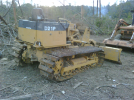
NWS BMX changed the 180-mph DI from the 2011 Cordova EF4 to N/A earlier today, I wonder if they're evaluating it for a higher (or maybe even lower) rating:
1770422565125.png
From DAT: "Komatsu 5 ton bulldozer rolled over". I would be shocked if they re-rate it in the 190+-mph range; this DI has always struck as odd to me as there isn't proof in the image the bulldozer was actually rolled.
 
Does anyone have close-up photos of the home from the Boscobel EF3 tornado that NWS La Crosse said was "pushing EF4"? As far as I can find the home wasn't completely destroyed, although the way the property is laid out makes it hard to determine what is what.
 
Does anyone have close-up photos of the home from the Boscobel EF3 tornado that NWS La Crosse said was "pushing EF4"? As far as I can find the home wasn't completely destroyed, although the way the property is laid out makes it hard to determine what is what.
I think the DAT is the best imagery there is for that one. I’ve always found the “pushing EF4” quip to be questionable. It always looked to me that the attached garage just caught the wind, and took a big portion of the house with it as it failed. The side of the house farthest from the garage was left intact, which to me is telling and doesn’t exactly scream “pushing EF4”.
 
Last edited:
I think the DAT is the best imagery there is for that one. I’ve always found the “pushing EF4” quip to be questionable. It always looked to me that the attached garage just caught the wind, and took a big portion of the house with it as it failed. The side of the house farthest from the garage was left intact, which to me is telling and doesn’t exactly scream “pushing EF4”.
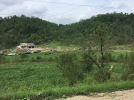
That's what I mean; the below photo of the house could pass for 153 if it is as well-built as they say it was.
1770832236017.png
What's confusing me is that there appears to be a second structure to the right of the home that was completely swept away; I don't know if they're referring to the (still-standing) home or the completely destroyed structure.
 
NWS BMX changed the 180-mph DI from the 2011 Cordova EF4 to N/A earlier today, I wonder if they're evaluating it for a higher (or maybe even lower) rating:
View attachment 50525
From DAT: "Komatsu 5 ton bulldozer rolled over". I would be shocked if they re-rate it in the 190+-mph range; this DI has always struck as odd to me as there isn't proof in the image the bulldozer was actually rolled.
Is every NWS office seeing what happened at enderlin and going “Oh wait we can do this too”?
 
Back
Top