

Eoline
Member
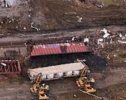
Was that the one calculated to be in the 140-170 mph range?After a long time, I have found the exact dimensions and a ton of info of one of the coal hoppers that the Mayfield tornado had derailed.
Follow along with the video below to see how to install our site as a web app on your home screen.
Note: This feature may not be available in some browsers.
Was that the one calculated to be in the 140-170 mph range?After a long time, I have found the exact dimensions and a ton of info of one of the coal hoppers that the Mayfield tornado had derailed.
I think so? I can't really tell. But the car I identified is the orange coal hopper. It's actually one of the bigger coal hoppers that CSX (The train company) had on their list of cars they used.Was that the one calculated to be in the 140-170 mph range?
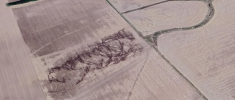
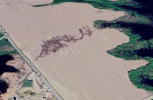
Which Smithville claims are you referring to? I noticed the pipe pulled from the ground theory was debunked and Tornado Talk eventually edited stating the pipe, in question, was actually a “sand blasted” telephone pole.Again, while I don’t trust every single claim posted on Tornado Talk (especially some of the Smithville stuff), gathering detailed publicly available information and developing a reasonably clear idea of a tornado’s intensity based on that information is not something experts are only privy to. Like I said earlier, it’s not this insanely convoluted process of analysis that only a select few can objectively understand. There’s healthy skepticism, and then there’s being unreasonably dismissive of anything that isn’t backed by the NWS.
The facts are that the MEG survey of New Wren tornado missed miles of damage path, and that missed segment contained incredibly intense EF5 candidate damage. That isn’t really up for debate.
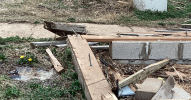
Under zero circumstances should this be 140 mph. Can argue about whether it should be EF4 or not, but to assign this lower bound EF3 is just poor surveying.While I'm certainly not defending Bakersfield's EF3 rating, I will say that some of the anchor bolts on the EF3 140 "swept to foundation" home are comically long:
View attachment 49108
For this structure in particular I would've went either 165 or 170 given the expected resistance being around that margin.
I could see it getting 140 if the home slid, but in this case it didn't.Under zero circumstances should this be 140 mph. Can argue about whether it should be EF4 or not, but to assign this lower bound EF3 is just poor surveying.

While I'm certainly not defending Bakersfield's EF3 rating, I will say that some of the anchor bolts on the EF3 140 "swept to foundation" home are comically long:
View attachment 49108
For this structure in particular I would've went either 165 or 170 given the expected resistance being around that margin.
I'm about a month late but I noticed the March 2021 Newnan, Georgia EF4 was missing. I actually have significant doubts about this tornado's rating, given 8 out of 10 EF4 DIs I've already ruled out as legitimately being EF4 and the other two the images are too confusing to actually determine what happened.Well, here it is. I'm planning on making a series of posts explaining the tornadoes that I would have rated differently, but this is my first draft of my list of violent tornadoes during the EF5 drought, between May 21, 2013 and June 20, 2025 (and I also found a lot of EF2s which I think should have been rated EF3). I'm open to feedback, and in fact I'd really like to hear people's opinions on the tornadoes that I'm still undecided on in particular, but feedback on any of them would be much appreciated. Obviously subject to change.
Italicized = I'm still undecided on what rating I would give the tornado.
Asterisk = I consider it to be a very marginal/low-end violent tornado.
List:
El Reno, Oklahoma - May 31, 2013 (EF4)
Belmond, Iowa - June 12, 2013 (EF4)*
Wayne, Nebraska - October 4, 2013 (EF4)
Pierson, Iowa - October 4, 2013 (EF4)*
Washington, Illinois - November 17, 2013 (EF4)
New Minden, Illinois - November 17, 2013 (EF4)
Vilonia, Arkansas - April 27, 2014 (EF5)
Tupelo, Mississippi - April 28, 2014 (EF4)
Louisville, Mississippi - April 28, 2014 (EF4)
Stanton, Nebraska - June 16, 2014 (EF5)
Pilger, Nebraska - June 16, 2014 (EF4)
E Pilger, Nebraska - June 16, 2014 (EF4)
Wakefield, Nebraska - June 16, 2014 (EF4)
Coleridge, Nebraska - June 17, 2014 (EF4)
Alpena, South Dakota - June 18, 2014 (EF4)
Columbia, Mississippi - December 23, 2014 (EF4)
Rochelle, Illinois - April 9, 2015 (EF5)
Cisco, Texas - May 9, 2015 (EF4)
Coal City, Illinois - June 22, 2015 (EF3 or EF4)
Clarksdale, Mississippi - December 23, 2015 (EF4)
Holly Springs, Mississippi - December 23, 2015 (EF4 or EF5)
Rowlett, Texas - December 26, 2015 (EF4)
Katie, Oklahoma - May 9, 2016 (EF4)
Sulphur, Oklahoma - May 9, 2016 (EF3 or EF4) (Possible EF4 based on vehicle damage.)
Connerville, Oklahoma - May 9, 2016 (EF3 or EF4) (Same as Sulphur.)
Chapman, Kansas - May 25, 2016 (EF5)
Perryville, Missouri - February 28, 2017 (EF4)
W Canton, Texas - April 29, 2017 (EF4)
E Canton, Texas - April 29, 2017 (EF4)
Great Bend, Kansas - May 16, 2017 (EF4)*
Laramie, Wyoming - June 6, 2018 (EF4) (Based on ground scouring.)
Camp Crook, South Dakota - June 28, 2018 (EF5)
Douglas, Wyoming - July 28, 2018 (EF4 or EF5)
Alonsa, Manitoba - August 3, 2018 (EF4)
Beauregard, Alabama - March 3, 2019 (EF4)
Greenwood Springs, Mississippi - April 13, 2019 (EF4)
Laverne, Oklahoma - May 23, 2019 (EF4)
Dayton, Ohio - May 27, 2019 (EF4)*
Linwood, Kansas - May 28, 2019 (EF4)
Mount Juliet, Tennessee - March 3, 2020 (EF4) (Mostly based on damage to elementary schools in Mount Juliet. Couldn't find explanation for why official NWS rating was lower bound.)
Cookeville, Tennessee - March 3, 2020 (EF4)
Sartinville, Mississippi - April 12, 2020 (EF4)
Bassfield, Mississippi - April 12, 2020 (EF4 or EF5)
Nixville, South Carolina - April 13, 2020 (EF4)
Hurricane Creek, Mississippi - April 19, 2020 (EF4)
Dalton, Minnesota - July 8, 2020 (EF4)
Boscobel, Wisconsin - August 7, 2021 (EF4)
Monette, Arkansas - December 10, 2021 (EF4)
Mayfield, Kentucky - December 10, 2021 (EF5)
Dresden, Tennessee - December 10, 2021 (EF3 or EF4)
Bowling Green, Kentucky - December 10, 2021 (EF4)
Saloma, Kentucky - December 11, 2021 (EF4)
Winterset, Iowa - March 5, 2022 (EF4)
Black Creek, Georgia - April 5, 2022 (EF4) (Borderline EF5, but the contextual concerns are valid imho.)
Ulmer, South Carolina - April 5, 2022 (EF4)
Andover, Kansas - April 29, 2022 (EF4)*
Caviness, Texas - November 4, 2022 (EF4)* (I frankly think the EF4 rating is a bit questionable, but if it had been rated EF3 I'd probably be arguing for an EF4 rating.
VERY borderline.)
Clarksville, Texas - November 4, 2022 (EF4)
Rolling Fork, Mississippi - March 24, 2023 (EF5)
Keota, Iowa - March 31, 2023 (EF4)
Robinson, Illinois - March 31, 2023 (EF4)
Covington, Tennessee - March 31, 2023 (EF3 or EF4)
Bethel Springs, Tennessee - March 31, 2023 (EF3 or EF4)
Matador, Texas - June 21, 2023 (EF5)
Didsbury, Alberta - July 1, 2023 (EF4)
Elkhorn, Nebraska - April 26, 2024 (EF4)
Marietta, Oklahoma - April 27, 2024 (EF4)* (Same as Caviness.)
Hawkley, Texas - May 2, 2024 (EF4)*
Barnsdall, Oklahoma - May 6, 2024 (EF4)
Greenfield, Iowa - May 21, 2024 (EF4)
Charleston, Kentucky - May 26, 2024 (EF3 or EF4)
Whitman, Nebraska - June 25, 2024 (EF3 or EF4)
Bakersfield, Missouri - March 14, 2025 (EF4)
Fremont, Missouri - March 14, 2025 (EF3 or EF4)
Larkin, Arkansas - March 14, 2025 (EF4)
Diaz, Arkansas - March 14, 2025 (EF4)
Tylertown, Mississippi - March 15, 2025 (EF4)
Lake City, Arkansas - April 2, 2025 (EF4)
Marion, Illinois - May 16, 2025 (EF4)*
London, Kentucky - May 16, 2025 (EF4 or EF5) (House damage is low-mid EF4. Extreme tree and vehicle damage seem close to EF5 level).
Grinnell, Kansas - May 18, 2025 (EF4)
Preston, Kansas - May 18, 2025 (EF4)
Enderlin, North Dakota - June 20, 2025 (EF5)
Gary, South Dakota - June 28, 2025 (EF4)
Edit: forgot Lake City.
Edit 2: Ulmer, SC, not GA.

Yeah, Newnan was a interesting case. Didn't need the EF4 rating, would've been better off at EF3 from what I've seen. A rare case of a overrated tornado which isn't usually what people think of when you have NWS "mistakes"I'm about a month late but I noticed the March 2021 Newnan, Georgia EF4 was missing. I actually have significant doubts about this tornado's rating, given 8 out of 10 EF4 DIs I've already ruled out as legitimately being EF4 and the other two the images are too confusing to actually determine what happened.
I'm applying DOD9; I don't know whether it would classify as a well-constructed residence or not. Definitely wouldn't argue for 200 though; 170 seems appropriate.Can you elaborate on why it matters that the anchor bolts are long? Also the expected value for DOD 10 is 200 mph. 165 or 170 would be the lower bound.
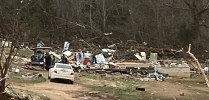
Almost all of the EF4 DIs involved either non-swept or slid homes; I think it was an over-liberal application of process. With the other two DIs it’s hard to see what happened but contextually the trees directly beside the residence were untouched.Yeah, Newnan was an interesting case. Didn't need the EF4 rating, would've been better off at EF3 from what I've seen. A rare case of a overrated tornado which isn't usually what people think of when you have NWS "mistakes"

The Bakersfield survey is in contention for quite possibly the worst survey of the year. Same with Grinnell, KS.While I'm certainly not defending Bakersfield's EF3 rating, I will say that some of the anchor bolts on the EF3 140 "swept to foundation" home are comically long:
View attachment 49108
For this structure in particular I would've went either 165 or 170 given the expected resistance being around that margin.
Interestingly, AWC's "Wood-Framed Construction Manual" notes that "A minimum of one anchor bolt shall be provided within 6 to 12 inches of each end of each plate. Anchor bolts shall have a minimum embedment of 7 inches in concrete foundations and slabs on grade or 7 inches in masonry block foundations when resisting lateral and shear loads only" (specifically refering to sill plates; I can't find one for non-plate construction). I'm actually not sure whether length has anything to do with integrity; they define a minimum but not a maximum.I'm applying DOD9; I don't know whether it would classify as a well-constructed residence or not. Definitely wouldn't argue for 200 though; 170 seems appropriate.
If I'm remembering correctly, bolts that are too long can lead to installation issues or otherwise compromise structural integrity for reasons I'm not really sure (I think concrete plays a part?); I admittedly am still learning about things like sill plates, bolts, toenailing, etc, so I could be completely wrong. The home also wasn't completely swept, with debris being piled up on one side.
View attachment 49109
Also, what specifically about sill plates weakens structural integrity? I've heard that as a common argument regarding the Marion EF4 and I'm not really getting it.
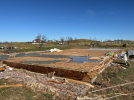
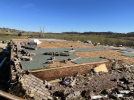
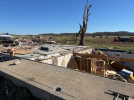
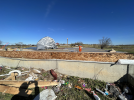
What makes you say this is horrendously constructed? I see a poured concrete foundation, anchored sill plates with joists that are spaced less than 16 inches (above code), and straight nailed subfloor. The fact the subfloor and joists are actually tore up where the walls came off tells me there was an adequate continuous load path through the entire structure. Also the tile and carpet being ripped up tells me the tornado was especially strong.View attachment 49131
View attachment 49132
EF3, 145 mile-per-hour DI from the December 10, 2021 Greenbriar EF3. A bit conflicted on this; while I can see where 145 came from (this building is horrendously-constructed) it doesn't appear to have slid. Contextuals are meh minus one tree near a small pond which was debarked. While the direction of the wind was likely going west (the second photo is facing east), the homes damaged in the background could've enhanced this level of debarking.
View attachment 49134View attachment 49135
145 and 142 (respectively) DIs to the northwest and southwest. Right home looks weirdly-small while the left one wasn't resting on a slab.
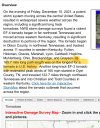
I'm stupid, I was looking for anchors on the wood foundation itself and not the bottom (still learning, mistakes happen). Go figure. 170-180 looks fine but the contextual damage is generally lacking outside of the one debarked tree. Could have been an intense and thin subvortex; numerous tornadoes on 12/10 displayed that characteristic. Would explain how quickly the damage goes from intense to significant.What makes you say this is horrendously constructed? I see a poured concrete foundation, anchored sill plates with joists that are spaced less than 16 inches (above code), and straight nailed subfloor. The fact the subfloor and joists are actually tore up where the walls came off tells me there was an adequate continuous load path through the entire structure. Also the tile and carpet being ripped up tells me the tornado was especially strong.
I'm going to add this to my spreadsheet of rerated tornadoes to an F4, but I'm honestly almost thinking F5 looking at these pics. In terms of EF rating, that's a textbook DOD 10, so the absolute lowest rating it should be given is 165. I see no reason it should be the absolute lowest bound though. I could maybe see an argument for 180 or 190.
Regardless thanks for sharing these details! Enjoying your posts.
I think it's either a typo or alternative spelling of "one of", which would put it up there among the longest, but not definitively the longest.View attachment 49136
Also looking up the December 2021 outbreak again and it looks like the NWS is actually saying the Mayfield tornado had the longest track in history? When did that happen? I thought officially the Tri-state tornado was still (controversially) longer.
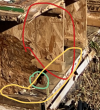
Yellow is sill plate, green is bolt, red is joist.I'm stupid, I was looking for anchors on the wood foundation itself and not the bottom (still learning, mistakes happen). Go figure. 170-180 looks fine but the contextual damage is generally lacking outside of the one debarked tree. Could have been an intense and thin subvortex; numerous tornadoes on 12/10 displayed that characteristic. Would explain how quickly the damage goes from intense to significant.
Question:
View attachment 49137
I'm assuming the thing I have circled in red is the sill plate (actually, I think it's the horizontal block holding it up)? And what is the thing in yellow called (just the walls of the foundation, I'm guessing)? Trying to learn more about foundations and unfortunately homes can be built wildly-different in the states. Hope you don't mind me asking questions.
- Red = plate?
- Green = bolt (self-explanatory)
- Yellow = ?
Maybe there's an engineer forum I could ask around at, but I'd rather make myself look dumb here than there. Off-season is boring and I've been trying to strike up damage-related conversations, but people are mostly offline.