• Welcome to TalkWeather!
    We see you lurking around TalkWeather! Take the extra step and join us today to view attachments, see less ads and maybe even join the discussion.
    CLICK TO JOIN TALKWEATHER

Significant Tornado Events

I've been thinking alot about these higher end events recently, and the one thing that I really focus on is how utterly incomprehensible they are.

Palm Sunday, 4/27 and 74 are the three big events that stand far above the rest, but even events that only reach a fraction of the intensity of those days are incredibly rare, which is only compounded by how much harder violent tornado ratings are to get in the current era. An outbreak that reaches triple, if not more, than the violent tornado count of a year like 2025 seems like a bad attempt at fiction.
 
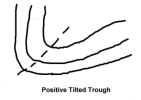
Palm Sunday 1965 had a very unique trough geometry.
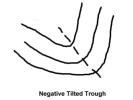
For one, it was a positive tilt, which isn’t exactly what you would expect for a borderline super outbreak.
Funny you say that, when 4/3/74 also featured a positively titled trough as the event began. Plus the surface low that day actually filled as the event went on rather than deepened. Again, things you wouldn’t expect for a generational outbreak. Corfidi specifically calls that out in his paper on the event.
 
Funny you say that, when 4/3/74 also featured a positively titled trough as the event began. Plus the surface low that day actually filled as the event went on rather than deepened. Again, things you wouldn’t expect for a generational outbreak. Corfidi specifically calls that out in his paper on the event.
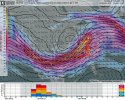
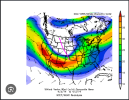
That’s the unique part about that outbreak. Even though the trough had a positive tilt, (teetering on neutral), the jet streak orientation was of what you’d expect in a negative tilt set up.
1786289228414.jpeg
If you just looked at the jet streak by itself, it clearly has the geometry of a negative tilt.
1786288880887.png1786288913791.png
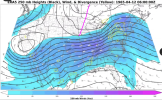
Compared to the Palm Sunday Outbreak, it was positively tilted in every way.
You can really see the back edge was becoming a cut off mid level low as the ridge to its north was rapidly building in.
Again, looking at something like this, (ignoring the date) one would’ve reasonably assumed this was a snapshot of a central US winter storm event.
1786288960821.png1786289000605.png
 
Yet another reminder of by far the most egregious survey and most robbed tornado of all time.


Yep. The most egregious one of all and it really set the horrible precedent (although there were warning signs, like Tuscaloosa and Chickasha/Goldsby) that we're still dealing with.
 
Well, at least Nick K. is correctly addressing its violence here. I seem to recall him being on board with the EF4 rating. I don’t know if I’d say it exceeded Smithville’s tornado damage in any location, but it definitely was on par with the top tier tornadoes from 4/27, at the very least. So strange too, none of the other tornadoes from the same day as Vilonia were anywhere close to that tier.
 
Last edited:
Well, at least Nick K. is correctly addressing its violence here. I seem to recall him being on board with the EF4 rating. I don’t know if I’d say it exceeded Smithville’s tornado damage in any location, but it definitely was on par with the top tier tornadoes from 4/27, at the very least. So strange too, none of the other tornadoes from the same day as Vilonia were anywhere close to that tier.

2014 was a weird year. Quite muted for overall tornado activity, when spurts of activity did occur (April 27-28, June 16-18), the overall tornado count was relatively low but several of them were exceptionally violent.

I would remember it as a great year if only I hadn't screwed up Pilger when all I would have had to do was continue west on US 20. :rolleyes:
 
2014 was a weird year. Quite muted for overall tornado activity, when spurts of activity did occur (April 27-28, June 16-18), the overall tornado count was relatively low but several of them were exceptionally violent.

I would remember it as a great year if only I hadn't screwed up Pilger when all I would have had to do was continue west on US 20. :rolleyes:
2013 was similar as well. A very low total count for the year, but a well above average amount of those were violent
 
Well, at least Nick K. is correctly addressing its violence here. I seem to recall him being on board with the EF4 rating. I don’t know if I’d say it exceeded Smithville’s tornado damage in any location, but it definitely was on par with the top tier tornadoes from 4/27, at the very least. So strange too, none of the other tornadoes from the same day as Vilonia were anywhere close to that tier.
That day almost completely Atmospheric Anti-Climax in a way that very few modern day high risks have. We almost had no tornadic supercells occur in the high-risk portion of the OWS. It looked like we were getting discrete supercells firing in the late afternoon in E Oklahoma, but they just struggled.

I remember this event distinctly. I wrote off the event for a bit because of how much storms were struggling only to open RadarScope and see a debris ball as the cell was beginning to take off.

I think this may have been a classic Dixie situation with low-level lapse rates and OWS crapvection really kept a lid on things? Might be wrong on the former since it’s been a while since I looked at the set-up
 
Yeah, it was a extremely sloppy Dixie eque day in the warm sector that just relied on extremely favorable stacks of mergers and if I'm correct, even a warm front interaction also helped it. You already had extreme low level shear in place so that warm front must've added a almost localised, 4/27-eque environment for that supercell alone.,Vilonia arguably competes for strongest of all time too. It was really on point with tornadoes like Moore 2013, and etc
 
Well, at least Nick K. is addressing its violence here. I seem to recall him being on board with the EF4 rating. I don’t know if I’d say it exceeded Smithville’s tornado damage in any location, but it definitely was on par with the top tier tornadoes from 4/27, at the very least. So strange too, none of the other tornadoes from the same day as Vilonia were anywhere close to that tier.
Yup, absolutely. A while ago he was definitely dismissive of it and I explicitly recall a tweet he made in which he was asked if it deserved an EF5 rating, and he said no and brushed it off as a “very high-end EF4”.

A short while later I made a long post on this forum explaining why @Saltical Wx and others in that circle of influence were completely missing the boat by ignoring the remarkable, Bridge Creek-like contextual damage in Vilonia, and how instead honing in on extremely small scale details like bolt placement and porch overhangs in an attempt to validate the official EF4 rating at that location, despite it being very obvious that this was not the appropriate rating, was not the right move to make. His defense was that he was simply using the Moore 2013 criteria for EF5 house damage, even though the Moore surveyors explicitly said that the “Moore definition” for EF5 was not to be used across the board, and that they used that criteria to account for a dense suburban debris field, which obviously doesn’t apply to Vilonia. I did my best to convey the point of “just because you can, doesn’t mean that you should”, and that Saltical was not modulating his scrutiny of the Wicker Street home in a reasonable manner given the caliber of contextual damage. And perhaps more importantly, I did my best to convey that what he was doing was extremely harmful in the realm of the ongoing collective push for accuracy in real world EF Scale application, and that using his influence to prop up/defend a rating that was clearly a huge, historic mistake was a terribly misguided decision given the influence he has. He said that he personally believed that Vilonia was an EF5, but apparently failed to make this point clear. As a result, a ton of discord kids who are unable to read between the lines or think for themselves just started basically regurgitating “Saltical says Vilonia was an EF4, so it was an EF4”.

But in any case, it seems like that “circle” finally recognizes the Vilonia rating for the huge, historic mistake that it truly was, albeit years too late. I don’t know if it was my critique (I do see several of the exact pics I cited in my side of the debate in Nick’s post), or if they somehow overlooked all the remarkable evidence until now, but at least they finally have pulled their heads out of the sand. If Saltical would have used his influence to point out how EF4 is not an appropriate rating for Vilonia, and used his skills and intellect to make a case for EF5 using the numerous missed damage points, or put work into calculating the lofted fertilizer tank, it would have been greatly productive and a huge step forward. Instead he used it to reinforce a terrible decision made by the LZK survey team. It’s real shame, but I am glad that they finally see Vilonia for what it really is.

I hope that group/circle is beginning to see that the NWS does get things wrong sometimes, and that there’s no reason to jump to the defense of ratings like Lake City or Vilonia. They defended both of them initially, only to later backpedal and take the dissenting side. Sure their gripes about TalkWeather and how we handled these differences are valid, but I hope they start to see that when we have a dissenting opinion about a rating, sometimes it’s valid. I want to trust the NWS rating process, and when I was first getting into the topic, generally I did and sometimes went on the defensive of questionable ratings that I probably shouldn’t have because I simply wanted to trust their word. But 16 years later, it’s clear to me that there is a big problem with how the EF scale is applied. I hope that Nick and Saltical are starting to see that moving things forward in the EF Scale/damage surveying field of study isn’t just about toeing the line and defending the official word. It’s more important to question the official word when it’s clearly wrong, and be willing to be that person who presents a well-argued dissenting opinion and challenges the status quo, even when it may be a bit uncomfortable or even controversial to do so. Being the teachers pet and defending bad ratings will never initiate the changes we need to see in this field of study.
 
Last edited:
Yup, absolutely. A while ago he was definitely dismissive of it and I explicitly recall a tweet he made in which he was asked if it deserved an EF5 rating, and he said no and brushed it off as a “very high-end EF4”.

A short while later I made a long post on this forum explaining why @Saltical Wx and others in that circle of influence were completely missing the boat by ignoring the remarkable, Bridge Creek-like contextual damage in Vilonia, and how instead honing in on extremely small scale details like bolt placement and porch overhangs in an attempt to validate the official EF4 rating at that location, despite it being very obvious that this was not the appropriate rating, was not the right move to make. His defense was that he was simply using the Moore 2013 criteria for EF5 house damage, even though the Moore surveyors explicitly said that the “Moore definition” for EF5 was not to be used across the board, and that they used that criteria to account for a dense suburban debris field, which obviously doesn’t apply to Vilonia. I did my best to convey the point of “just because you can, doesn’t mean that you should”, and that Saltical was not modulating his scrutiny of the Wicker Street home in a reasonable manner given the caliber of contextual damage. And perhaps more importantly, I did my best to convey that what he was doing was extremely harmful in the realm of the ongoing collective push for accuracy in real world EF Scale application, and that using his influence to prop up/defend a rating that was clearly a huge, historic mistake was a terribly misguided decision given the influence he has. He said that he personally believed that Vilonia was an EF5, but apparently failed to make this point clear. As a result, a ton of discord kids who are unable to read between the lines or think for themselves just started basically regurgitating “Saltical says Vilonia was an EF4, so it was an EF4”.

But in any case, it seems like that “circle” finally recognizes the Vilonia rating for the huge, historic mistake that it truly was, albeit years too late. I don’t know if it was my critique (I do see several of the exact pics I cited in my side of the debate in Nick’s post), or if they somehow overlooked all the remarkable evidence until now, but at least they finally have pulled their heads out of the sand.

If Saltical would have used his influence to point out how EF4 is not an appropriate rating for Vilonia, and used his skills and intellect to make a case for EF5 using the numerous missed damage points, or put work into calculating the lofted fertilizer tank, it would have been greatly productive and a huge step forward. Instead he used it to reinforce a terrible decision made by the LZK survey team. It’s real shame, but I am glad that they finally see Vilonia for what it really is.

I hope that group/circle is beginning to see that the NWS does get things wrong sometimes, and that there’s no reason to jump to the defense of ratings like Lake City or Vilonia. They defended both of them initially, only to later backpedal and take the dissenting side. Sure their gripes about TalkWeather and how we handled these differences are valid, but I hope they start to see that when we have a dissenting opinion about a rating, sometimes it’s valid. I want to trust the NWS rating process, and when I was first getting into the topic, generally I did and sometimes went on the defensive of questionable ratings that I probably shouldn’t have because I simply wanted to trust their word. But 16 years later, it’s clear to me that there is a big problem with how the EF scale is applied. I hope that Nick and Saltical are starting to see that moving things forward in the EF Scale/damage surveying field of study isn’t just about toeing the line and defending the official word. It’s more important to question the official word when it’s clearly wrong, and be willing to be that person who presents a well-argued dissenting opinion and challenges the status quo, even when it may be a bit uncomfortable or even controversial to do so. Being the teachers pet and defending bad ratings will never initiate the changes we need to see in this field of study.
It’s incredibly relieving to see the younger weather enthusiasts/future engineers, meteorologists take a step back, actually make an observation, and come to a census of their own rather than just “NWS says this, end of discussion”.
It was getting a little worrying at first, but it seems “that side” of the tornado rating field will be alright, especially with how now everyone is finally opening their eyes and seeing how screwed over that Vilonia survey was.
 
It’s incredibly relieving to see the younger weather enthusiasts/future engineers, meteorologists take a step back, actually make an observation, and come to a census of their own rather than just “NWS says this, end of discussion”.
It was getting a little worrying at first, but it seems “that side” of the tornado rating field will be alright, especially with how now everyone is finally opening their eyes and seeing how screwed over that Vilonia survey was.
Exactly. And believe me, when I was younger, that was me. I viewed NWS surveyors and big names in EF scale world as people I looked up to greatly, and I still do in some cases. But the difference is back when I was younger, because I had such intense admiration, my first reaction to a questionable survey was to find a way to defend it. I didn’t want to question surveys. I wanted to believe everything in the surveying/EF scale field of study was all good, and sometimes I even fell into the “more conservative = better” train of thinking, so I do understand how younger, passionate minds brimming with admiration and aspiration will generally lean in that direction. You want to believe your heroes, and you tend to trust their word.

But unfortunately as the years went by, there were nagging questions and inconsistencies I had more trouble ignoring the more I thought about them. Then Vilonia happened, and it was the tipping point. I remember John Robinson’s arrogant dismissive interview with the local news. I remember the Lentz family’s news interview where they talked about how the NWS never stopped to survey their slabbed, anchor bolted home. I remember NWS employees defending the Vilonia rating in online spaces, and revealing just how skewed and unrealistic their views were. It completely shattered my trust of NWS surveyors and ended my innate glowing admiration for them. It also completely changed my perception and opened my eyes. People like Nick probably were too young at the time to watch the Vilonia debacle play out in real time, so him and others in that circle are only putting the pieces together after the fact, and it makes sense that their initial reaction was to give the rating and official story the benefit of the doubt.

But anyway I agree with your sentiment. I don’t think these people like Nick and Saltical are dumb by any means. In fact, it’s clear they are highly intelligent individuals. But they are young and maybe a little misguided at times, and have only been at this for a relatively short period of time. It sounds cynical, but they simply haven’t been deeply involved in the EF Scale/Surveying world long enough to really start to see the problems. When you’re only at for a few years, that list of botched surveys, examples of the scale being misapplied, and troubling questions and inconsistencies is a relatively small list. But when you’re at it for a longer time, the list of questionable surveys gets longer, one’s innate trust in the surveying process starts to decrease, and more troubling questions and inconsistencies start to compound. In addition, the longer you’re at it, the better you get at identifying truly remarkable damage, and you start to see patterns that clarify the relationship between tornado intensity and damage. It also becomes more obvious how often the NWS overlooks it.

I’d like to think the “discord kids” are at the stage where they are starting to question things a little more, are starting to see the contextual damage patterns we often talk about here on this forum, and are starting to develop their own opinions beyond “NWS says” and “Tim Marshall says”. I could be wrong, but I’d also like to think people like Nick are on the right track, and hopefully are willing to be that dissenting voice when the situation calls for it. If he plays his cards right, someone like Nick could be the person who rights the ship and becomes another forward thinking voice of reason in this field of study.
 
Last edited:
I think the problem mainly stemmed from a reluctance to see how it is and blindly defending offices regardless of questionable and straight out puzzling decisions. I can understand that's viewpoint, because you don't want to seem like a "THEY'RE WRONG" guy at the same time but you dint wanna drive away from surveying mistakes. Now that people are beginning to realise these offices actually make mistakes and we're transitioning to a more open minded discussion on these events really helping. In this field, people piggyback off other opinions way too much instead of actually isolating themselves and taking a look at damage/or a certain tkrnado and developing their own thought. Just because a train of thought is popular doesn't necessarily mean it's right always.

Yes, they are the professionals but this field is incredibly subjective and all professional surveyors have different takes on DIs of sorts, or they follow a strict tendency, or it's slash out ego getting the better of them and i mean John Robinson when I say that. The more people that progressively become open minded to offices being wrong at times will help us progress and get ratings on track. But I don't think this issue will ever really change. This is probably more suited for the EF thread, but the conservative approach set sometime in 2013-2014 will never leave. It was endorsed and stuck in, and i don't think offices will ever move on from that train of thought honestly. Some are, and some are trying to find ways to bypass it, be more accurate and LOOKING for reasons to rate a tornado what it is instead of going for ways to downgrade it and dismiss its true intensity. We're beating a dead horse here but it needs to be said.
 
I think the problem mainly stemmed from a reluctance to see how it is and blindly defending offices regardless of questionable and straight out puzzling decisions. I can understand that's viewpoint, because you don't want to seem like a "THEY'RE WRONG" guy at the same time but you dint wanna drive away from surveying mistakes. Now that people are beginning to realise these offices actually make mistakes and we're transitioning to a more open minded discussion on these events really helping. In this field, people piggyback off other opinions way too much instead of actually isolating themselves and taking a look at damage/or a certain tkrnado and developing their own thought. Just because a train of thought is popular doesn't necessarily mean it's right always.

Yes, they are the professionals but this field is incredibly subjective and all professional surveyors have different takes on DIs of sorts, or they follow a strict tendency, or it's slash out ego getting the better of them and i mean John Robinson when I say that. The more people that progressively become open minded to offices being wrong at times will help us progress and get ratings on track. But I don't think this issue will ever really change. This is probably more suited for the EF thread, but the conservative approach set sometime in 2013-2014 will never leave. It was endorsed and stuck in, and i don't think offices will ever move on from that train of thought honestly. Some are, and some are trying to find ways to bypass it, be more accurate and LOOKING for reasons to rate a tornado what it is instead of going for ways to downgrade it and dismiss its true intensity. We're beating a dead horse here but it needs to be said.
I wouldn’t be so pessimistic. The hard data supporting the dissenting side is starting to pile up, such as what was recently posted by @A Guy. It’s just one example, but it clearly shows how things are starting to make the leap between hunches and beliefs expressed online in discussion forums, to real data-backed evidence in legitimate papers and presentations. Jim LaDue made a presentation last year highlighting various DIs that were rated too low by various offices, and Tony Lyza is just churning out paper after paper challenging the status quo and highlighting new approaches to survey science. When big names like that are going public with questioning things, that means the tide is already turning. When you combine that with new surveying techniques, things like computer based physics modeling, and a new scale that will be rolled out in 2030 that has the tree DI going all the way up to EF5, it all bodes well. Science takes time, and change happens slowly, usually amid lots of papers and studies. There’s no reason to say “it’s all set in stone and nothing will ever be different”, especially when the early stages of change are clearly underway. But it won’t happen overnight. These things happen gradually over time, and while there will be frustrating moments and setbacks along the way, the sentiment of hopelessness is not valid or helpful.
 
I wouldn’t be so pessimistic. The hard data supporting the dissenting side is starting to pile up, such as what was recently posted by @A Guy. It’s just one example, but it clearly shows how things are starting to make the leap between hunches and beliefs expressed online in discussion forums, to real data-backed evidence in legitimate papers and presentations. Jim LaDue made a presentation last year highlighting various DIs that were rated too low by various offices, and Tony Lyza is just churning out paper after paper challenging the status quo and highlighting new approaches and survey science. When big names like that are going public with questioning things, that means the tide is already turning. When you combine that with new surveying techniques, things like computer based physics modeling, and a new scale that will be rolled out in 2030 that has the tree DI going all the way up to EF5, it all bodes well. Science takes time, and change happens slowly, usually amid lots of papers and studies. There’s no reason to say “it’s all set in stone and nothing will ever be different”, especially when the early stages of change are clearly underway. But it won’t happen overnight. These things happen gradually over time, and while there will be frustrating moments and setbacks along the way, the sentiment of hopelessness is not valid or helpful.
That is true. I'm not fully set in stone about it, but I'm just not gonna believe this new era until I see it fully in action. Lyza has drove this party forward so much with his papers so i have him sincerely to thank if we sit here in 5 years time talking about this situation in pasta tense. Moreso, what i mean is even with all this evidence, will offices still differentiate in surveying practice or will this research get all offices on board with some sort of standard? I'm intrigued to see how it all works out. Rome wasn't built in a day, i don't expect a major revamp of ratings to be either.
 
I don't expect all offices to stick to the standard but my main point was that this type of mindset may not leave certain offices even with all this research done but I'm no expert nor no predictor of the future so I should just wait and see how it happens. I expect change, but how will it be met?
 
That is true. I'm not fully set in stone about it, but I'm just not gonna believe this new era until I see it fully in action. Lyza has drove this party forward so much with his papers so i have him sincerely to thank if we sit here in 5 years time talking about this situation in pasta tense. Moreso, what i mean is even with all this evidence, will offices still differentiate in surveying practice or will this research get all offices on board with some sort of standard? I'm intrigued to see how it all works out. Rome wasn't built in a day, i don't expect a major revamp of ratings to be either.

I don't expect all offices to stick to the standard but my main point was that this type of mindset may not leave certain offices even with all this research done but I'm no expert nor no predictor of the future so I should just wait and see how it happens. I expect change, but how will it be met?
Well that’s exactly why 2030 is so important and that’s what I think you are forgetting: there is an actual deadline for a major overhaul. What we are probably seeing now is the lead-up to it. This is the crucial time in which people who have influence and ability to really change things are pleading their cases. The last glimpse we got of the proposed new scale was a couple years ago, and it was prior to Enderlin, Lyza and LaDue’s recent work, and new avenues and new data derived from computer based physics models. I can guarantee you that once the new scale is rolled out, there will be all kinds of official supplemental papers and presentations such as “New Approaches to EF Scale Application” and stuff like that. They aren’t just gonna plop out a newly revamped scale that took years and years of work to develop and say “Hey forecast offices, here’s the new scale. You can use it, or not, it doesn’t really matter. K bye”.

It’s going to be an official thing with an integration process. Will it take some time to get used to, and will some WFOs struggle to drop old habits? Sure. But a scenario in which all the WFOs just collectively and willfully ignore the new scale and all the new data is not a likely outcome in my opinion. In fact, we are already seeing some WFOs change their techniques as new data is rolled out. For example, in the 2000s and early 2010s, how often did we see EF4 rated tree damage? Pretty much never, with the 2011 Great Smoky Mountains National Park EF4 and one cluster of trees from Moore 2013 being the sole exceptions. How often do we see EF4 rated tree damage now? Pretty much every single year.

It’s happening slowly, but surveyors are gradually separating their mental connection from extreme tree damage and the EF3 range, and slowly establishing the mental link between extreme tree damage and EF4 intensity as more and more data supports it. This is exactly what I’m talking about. This kind of thing doesn’t just happen abruptly. It’s a slow shift that happens over time, and it’s sometimes so gradual you don’t really notice the dramatic changes until it’s pointed out, like the tree damage example.

I am hopeful and fairly confident we will see similar gradual changes in the future.
 
Well that’s exactly why 2030 is so important and that’s what I think you are forgetting: there is an actual deadline for a major overhaul. What we are probably seeing now is the lead-up to it. This is the crucial time in which people who have influence and ability to really change things are pleading their cases. The last glimpse we got of the proposed new scale was a couple years ago, and it was prior to Enderlin, Lyza and LaDue’s recent work, and new avenues and new data derived from computer based physics models. I can guarantee you that once the new scale is rolled out, there will be all kinds of official supplemental papers and presentations such as “New Approaches to EF Scale Application” and stuff like that. They aren’t just gonna plop out a newly revamped scale that took years and years of work to develop and say “Hey forecast offices, here’s the new scale. You can use it, or not, it doesn’t really matter. K bye”.

It’s going to be an official thing with an integration process. Will it take some time to get used to, and will some WFOs struggle to drop old habits? Sure. But a scenario in which all the WFOs just collectively and willfully ignore the new scale and all the new data is not a likely outcome in my opinion. In fact, we are already seeing some WFOs change their techniques as new data is rolled out. For example, in the 2000s and early 2010s, how often did we see EF4 rated tree damage? Pretty much never, with the 2011 Great Smoky Mountains National Park EF4 and one cluster of trees from Moore 2013 being the sole exceptions. How often do we see EF4 rated tree damage now? Pretty much every single year.

It’s happening slowly, but surveyors are gradually separating their mental connection from extreme tree damage and the EF3 range, and slowly establishing the mental link between extreme tree damage and EF4 intensity as more and more data supports it. This is exactly what I’m talking about. This kind of thing doesn’t just happen abruptly. It’s a slow shift that happens over time, and it’s sometimes so gradual you don’t really notice the dramatic changes until it’s pointed out, like the tree damage example.

I am hopeful and fairly confident we will see similar gradual changes in the future.
I never suggested all WFOs would just step back and not use the new scale when it rolls out. I am hopeful that offices will learn and take it hand in hand, the "old habits" bit is my main thing. How will offices settle in to it? Im as hopeful as you are, I'm just leaning on the more conservative, skeptical side still.
 
I never suggested all WFOs would just step back and not use the new scale when it rolls out. I am hopeful that offices will learn and take it hand in hand, the "old habits" bit is my main thing. How will offices settle in to it? Im as hopeful as you are, I'm just leaning on the more conservative, skeptical side still.
Sure, and that’s fair. There are offices like MEG that have a bad track record even well before 2011, and they just don’t seem to really care. Those are the ones that are going to continue to cause problems. More forward thinking offices like Norman and Jackson though will probably adopt new data and new techniques with open arms.
 
Back
Top