• Welcome to TalkWeather!
    We see you lurking around TalkWeather! Take the extra step and join us today to view attachments, see less ads and maybe even join the discussion.
    CLICK TO JOIN TALKWEATHER

Significant Tornado Events


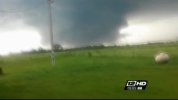
One of the craziest Moore 2013 videos I've ever seen. Captures the formation and as the tornado bombs out into a EF5 within minutes with intense RFD as they shelter inside a building. They were less than a mile away here. Filmed at the Access Medical Center in Newcastle. Geolocation and resurfacing of video by wxArizona on X. Tweet is here to also demonstrate their location. This is as visually violent as it gets.

 
I'm just a lurker here, but I did some research on a tornado outbreak that happened in 1825 in my home state of Ohio. There's not a lot of information about this particular outbreak online, but I managed to dig up some interesting stuff. If anyone has anything to add, I'd be happy to include it!

 
While 5/9/2016 is known for the Sulphur EF3 and Katie EF4, a LOT forget that it also produced a even wider tornado than Sulphur which lay in the Boswell, OK EF3. While this tornado stayed across mostly rural vicinity, it tore thru Bryan and Choctaw County in S OK causing tree damage up to EF2 damage as it grew to a mile wide. Continuing its progress east, the tornado SW of Boswell, OK maxed out in width at a wild 1.8 miles wide.
FPPHLHWUCZPTFO65YMFJJ7QCMY.jpg
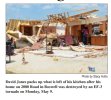
The tornado destroyed homes along 2080 Road near the town of Boswell, and this is the only photo I found with regards to damage on that road:
Screenshot_2026-07-02-23-58-20-668.jpeg
The tornado also topped two high tension, transmission towers at high end EF3 intensity but i couldn't find images of this damage. Despite its width, it is still not the widest at all in Oklahoma history which is mind boggling to even think of, and we all know which one that belongs to.. In my opinion, 5/9/16 is a outbreak that gets shoved over but it was really the last classic daytime significant tornado outbreak Oklahoma endured. 4/27/24 was the last truly big one of note that I remember. Hope you enjoyed this writeup! I plan to do more
 
I have been working on a way to categorize historic outbreaks and properly compare them to modern ones. The main issue being that modern events seem bigger and more historically significant because more tornadoes are reported. This is almost certainly not true.

I settled with organizing events by the number of reported F3 or higher tornadoes. Strong tornadoes were more likely to be properly documented. There are still some problems with this. A lot of long track tornadoes are actually families that went through cycles. There's also the issue with older tornadoes being retroactively overrated, especially from the 1950s to 1970s.

I found that the 1974 super outbreak remains in a category of its own. As discussed it almost certainly had more tornadoes than 2011. Other major outbreaks occurred in the southeast in 1932 and 1952, and the midwest/Great Lakes in 1965 and 1985. The Enigma outbreak may have also been significant, but there's not enough data to confirm this.

* denotes continuing into the next calendar day.

Top 10 largest outbreaks:
April 3, 1974*64
April 27, 201135
April 11, 196522
March 21, 1952*21
March 21, 1932*20
May 31, 198519
March 1, 199718
March 16, 194218
April 12, 2020*16
March 28, 192016

Largest by month:
January 21, 1999*12
February 19, 188413
March 21, 1952*21
April 3, 1974*64
May 31, 198519
June 5, 191614
July 3, 19074
August 6, 19698
September 20, 19678
October 9, 19146
November 22, 1992*13
December 18, 195711

Largest by decade:
April 12, 2020*16
April 27, 201135
May 12, 200312
March 1, 199718
May 31, 198519
April 3, 1974*64
April 11, 196522
March 21, 1952*21
March 16, 194218
March 21, 1932*20
March 28, 192016
June 5, 1916*14
April 29, 1909*11
March 27, 189012
May 18, 188314
March 20, 187511
In the largest by month category how would those look reordered based on size?
 
While 5/9/2016 is known for the Sulphur EF3 and Katie EF4, a LOT forget that it also produced a even wider tornado than Sulphur which lay in the Boswell, OK EF3. While this tornado stayed across mostly rural vicinity, it tore thru Bryan and Choctaw County in S OK causing tree damage up to EF2 damage as it grew to a mile wide. Continuing its progress east, the tornado SW of Boswell, OK maxed out in width at a wild 1.8 miles wide.
View attachment 54026
The tornado destroyed homes along 2080 Road near the town of Boswell, and this is the only photo I found with regards to damage on that road:
View attachment 54027
The tornado also topped two high tension, transmission towers at high end EF3 intensity but i couldn't find images of this damage. Despite its width, it is still not the widest at all in Oklahoma history which is mind boggling to even think of, and we all know which one that belongs to.. In my opinion, 5/9/16 is a outbreak that gets shoved over but it was really the last classic daytime significant tornado outbreak Oklahoma endured. 4/27/24 was the last truly big one of note that I remember. Hope you enjoyed this writeup! I plan to do more
There’s a really good video on YouTube of the Boswell tornado in its multi vortex stage. Or at least there was. It’s probably impossible to find and buried under endless piles of slop now.

Edit. It’s still there! It’s Jason McLaughlin’s video.
 
Also that outbreak gets overlooked overall, like you mentioned. Everyone only seems to remember the Katie EF4 and the Sulphur EF3 wedge. But like you said there were many other photogenic, significant tornadoes across Oklahoma that day. Also there were other significant tornadoes on the other days of the outbreak too, including the Wiggins and Wray, CO EF2s. The final day also included an EF3 that struck Mayfield, KY. That one has been overshadowed for obvious reasons.
 
There’s a really good video on YouTube of the Boswell tornado in its multi vortex stage. Or at least there was. It’s probably impossible to find and buried under endless piles of slop now.

Edit. It’s still there! It’s Jason McLaughlin’s video.
Yeah, Jason probably got the best documentation of the day on that thing. I'm currently in progress digging up old 4/27 media so all of you must stay tuned in case I find anything. Shoal Creek Valley in particular but I'm assuming @Central Ohio Wx mightve scoured all of that stuff considering he created the articles.
 
Yeah, Jason probably got the best documentation of the day on that thing. I'm currently in progress digging up old 4/27 media so all of you must stay tuned in case I find anything. Shoal Creek Valley in particular but I'm assuming @Central Ohio Wx mightve scoured all of that stuff considering he created the articles.
meh lot of the stuff on Flickr has definitely been seen before, i don't think anything new is on there for shoal creek
 
While 5/9/2016 is known for the Sulphur EF3 and Katie EF4, a LOT forget that it also produced a even wider tornado than Sulphur which lay in the Boswell, OK EF3. While this tornado stayed across mostly rural vicinity, it tore thru Bryan and Choctaw County in S OK causing tree damage up to EF2 damage as it grew to a mile wide. Continuing its progress east, the tornado SW of Boswell, OK maxed out in width at a wild 1.8 miles wide.
View attachment 54026
The tornado destroyed homes along 2080 Road near the town of Boswell, and this is the only photo I found with regards to damage on that road:
View attachment 54027
The tornado also topped two high tension, transmission towers at high end EF3 intensity but i couldn't find images of this damage. Despite its width, it is still not the widest at all in Oklahoma history which is mind boggling to even think of, and we all know which one that belongs to.. In my opinion, 5/9/16 is a outbreak that gets shoved over but it was really the last classic daytime significant tornado outbreak Oklahoma endured. 4/27/24 was the last truly big one of note that I remember. Hope you enjoyed this writeup! I plan to do more

I remember back when a certain user was on here they were saying that their hadn't been a true OK outbreak in a decade or something. All I could think of was this outbreak. I'd imagine Boswell had to be EF4 strength at some point, and I think we can all agree that Wynnewood was definitely EF5 strength even if it didn't hit anything well built.
 
One of the most baffling decision to be made is when NWS Chicago did a reanalysis on the May 6th, 1876 Chicago F3 tornado event. There were obvious hints that this event was tornadic in nature with descriptions mentioning rotating winds, tall column, funnel-shaped cloud touching and bounding along with infamous description of eight to ten columns rotating over Lake Michigan. Yet the event was considered as "damaging winds that mimic tornado damage"

Newspapers that published in the days to weeks after the event referred to it as either a “tornado,” a “gale,” or a “cyclone.” In one detailed newspaper account, published by the Bloomington Pantagraph on May 12, it was indicated that strong winds first came from the west, lasting about 5 minutes, followed by light winds and heavy rainfall for about 10 minutes, and then the rainfall stopped, but strong winds came from the east for about 10 minutes. Other accounts of the storm published in newspapers indicated gusty winds off Lake Michigan from the east or northeast right up until the storm hit, after which winds briefly switched to a westerly direction. The majority of newspaper articles that discussed this event did not describe a tornado, but “dark clouds” or a “singular appearance” moving into the city. One article did mention “a tall column having swift rotating motion from right to left” and another mentioned “eight or ten columns grouped together, all whirling” as the storm moved out over Lake Michigan, suggesting a tornado. These descriptions were in the minority, however.

Although the swath of wind damage through the city appeared to generally move from southwest to northeast, it was over a mile wide at times. Digitized paper observations show that a stationary front or warm front remained south of the city during the day and into the evening, with easterly winds off of Lake Michigan. Temperatures north of the front were in the 40s. These surface weather conditions were generally not consistent with weather known to be associated with tornadoes.
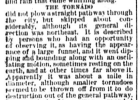
This is exact quote from NWS Chicago's summary on the 1876 event. In an ironic (?) twist, NWS Chicago also included an account from the Chicago Journal newspapers (May 8, 1876 edition) mentioning "large funnel dipping and bounding along with oscillating motion":
1000138455.png
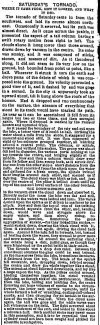
The major Chicago newspaper (the May 8, 1876 edition of Chicago Tribune/Chicago Daily Tribune) had a very detailed description of the tornado as it moved into Lake Michigan:
1000138456.jpg
 
Back
Top