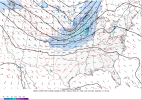
Yeah these LLLRs could be a major fly in the ointment.
Follow along with the video below to see how to install our site as a web app on your home screen.
Note: This feature may not be available in some browsers.

Not to mention, not like looking at the weather models right now is even productive, but no model predicted this MCS in Indiana lasting this long, so you can basically call any previous run unreliable.

Yes, but LLLR are counted in 1km. In this case the vertical temperature difference in this layer is only a little over 5c.Surface to 850mb cools at about 9 degrees based on this pic. The temperature is skewed (look at the red, diagonal lines), hence the name of "skew-t"
The MCS is pretty much a non factor all things considered. The airmass behind it has completely recovered and is rapidly advecting northward.Not to mention, not like looking at the weather models right now is even productive, but no model predicted this MCS in Indiana lasting this long, so you can basically call any previous run unreliable.
We basically looking at a squall line, QLCS event at this point?The MCS is pretty much a non factor all things considered. The airmass behind it has completely recovered and is rapidly advecting northward.
If we had a stout cap, actually good LLLR, a favorably mixed/drier vertical profile, and a slightly better positioned 300mb jet, we would’ve been looking at a slam dunk tornado outbreak.
Pretty much yea, the deep layer sheer vector is parallel with the cold front, which favors upscale growth, which is already occurring.We basically looking at a main squall line, QLCS event at this point?
You've got pretty decent lift over there too. Our main threat area is only moderately unstable atm.Cell developing E of Edina MO may be the first candidate for a long lived supercell, has that kidney bean shape.
You are not reading that temperature profile correctly.Not gonna lie, the LLLR are….no good.
As expected, the parameter space is extremely volatile, however, the atmosphere from the surface to 850mb cools only 5 degrees.
This is a profound lack of vertical stretching and I couldn’t think of a better way to put 5000+cape to waste.
Favorable storm mergers will have to occur for anything significant in the tornado department to verify.
View attachment 53235
I clarified this in a later post that Im specifically talking about the 1km increment within this layer, which is what LLLR are based off of. (Obviously you already know this)You are not reading that temperature profile correctly.
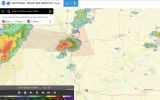
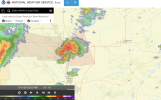
Tornado warned now. It's basically on its own with some showers/weak cells for mergers. In an environment of STP 5-7Cell developing E of Edina MO may be the first candidate for a long lived supercell, has that kidney bean shape.
I would say it’s possible, but storm mergers are probably be needed for it to actually occur. This environment has some similarities with the afternoon portion of April 12, 2020 where lapse rates were similarly poor and it took assistance for the two Bassfield cells to take off.I wonder if the higher sheer and instability will make up for the lower lapse rates. It's not like the sharper temperature gradient will be needed for forcing.