

tornadowatch211
Member
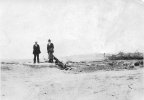
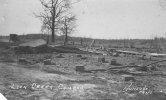
Tri-State (Lick Creek Church)Jarrell is one I know for sure did it.
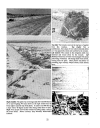
Bakersfield Valley (Culver scoured)
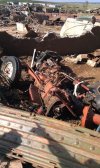
Hackleburg (storm shelter roof ripped)
Piedmont (trenched home)
Follow along with the video below to see how to install our site as a web app on your home screen.
Note: This feature may not be available in some browsers.
Tri-State (Lick Creek Church)Jarrell is one I know for sure did it.
Parkersburg 2008 had this kind of extreme granulation. It left little to no debris in the golf course subdivision.By “no debris pattern,” what do you mean specifically? The best examples of windrowing I can think of right off the top of my head are Andover ‘91 and the aerial of Bremen in ‘21. Those areas of damage seemed like they were interchangeable in being “as high end as it gets” as far as debris patterns are concerned. I feel like even in the highest end events, I still can see some level of a pattern, unless you’re talking about Jarrell.
What tornadoes did this? I’m curious. I’ve never heard of this phenomenon before, what discerns it from regular damage to concrete and/or debris impacts?
Can you provide photos? I’m especially curious about the Tri-state, as I have never heard that it did that before. Also, did not know that piedmont did that!Tri-State (Lick Creek Church)
Bakersfield Valley (Culver scoured)
Hackleburg (storm shelter roof ripped)
Piedmont (trenched home)
HereCan you provide photos? I’m especially curious about the Tri-state, as I have never heard that it did that before. Also, did not know that piedmont did that!

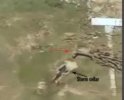

Quoting for posterityHackleburg
Hold up
Shocking. The Tri-state image especially impresses me. Also the piedmont has the stem walls sheared off, which is insane.Here
View attachment 49340
BV (scoured culver is middle left)
View attachment 49341
Piedmont (aeiral but noticable)
View attachment 49342
Hackleburg
View attachment 49343
The parts the guy on the right is standing next to have been upheaved.Quoting for posterity
Also not sure if there actually is scoured concrete in that Tri State photo

I think concrete scouring means concrete being upheaved and moved/shifted/swept away.When I hear the term “concrete scouring” I’m picturing something that is entirely separate from something like Hackleburg’s storm cellar feat, which I do find extremely impressive nonetheless. I’m picturing something like the concrete being genuinely worn down and eroded, specifically the surface of it, not ripped up from a roadway or anything like that. I do think El Reno ‘11’s “trenched home” is extremely impressive as well, but again, I don’t know if that damage applies to what I’m picturing, unless I have the wrong idea of what concrete scouring entails.
I think it means what is shown here in these Jarrell picsI think concrete scouring means concrete being upheaved and moved/shifted/swept away.
I tend to be on the more skeptical side when it comes to damage photo analysis, but I don't know what this would be besides what it looks like. From what I understand this was a concrete house that was reinforced with metal mesh/lattice, and it appears to be scoured down to the metal reinforcement.


That’s terrifying. Imagine being in that house. You would need a storm shelter to survive something like that.I think it means what is shown here in these Jarrell pics
Judging by what other tornadoes have done, would a shelter have been enough in this instance?That’s terrifying. Imagine being in that house. You would need a storm shelter to survive something like that.
For the Hernandez family yes. But for the farm near the start, noJudging by what other tornadoes have done, would a shelter have been enough in this instance?
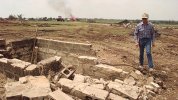
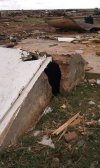
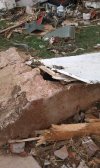
Tri-state did it to foundations in other areas too actually, notably in West Frankfort where concrete basement walls were blown in, and in Caldwell where it happened too.Shocking. The Tri-state image especially impresses me. Also the piedmont has the stem walls sheared off, which is insane.
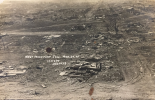
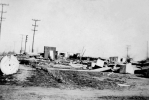 Several rural homes had this occur too, and three underground storm shelters were also destroyed and several others damaged. I can provide more details, but I did talk about them in my article.
That process is almost definitely debris driven, and also is likely dependent on the quality of the concrete itself, I cannot think of any explicit examples besides Jarrell.Clarification on a few of my points:
-By no debris pattern, I’m referring to when the obliteration of the home in question is so thorough, that there is no discernible directional debris scatter path extending away from the foundation. Examples include the first EF5 house that was hit south of Greensburg, the golf course homes in Parkersburg, many homes in Jarrell, Fish Hooks Restaurant in Vilonia, multiple homes in Piedmont/El Reno, the Harper farmhouse, etc.
-In terms of concrete scouring, some of those examples I saw posted above apply, while others don’t. Concrete scouring is when the concrete itself is well, scoured, and eroded away, rather than just being shattered or removed in one big piece. The storm shelter roof in Phil Campbell is more removal of a concrete slab than actual scouring, and same goes for the church hit by the Tri-state tornado (If I recall correctly, the church’s concrete floor was removed from the pier foundation below). The best example of concrete scouring was Jarrell, where a concrete home had its walls and foundation literally sandblasted and scoured down to the metal reinforcements within. There are some detailed high quality pics of this somewhere on the forum. The thick poured concrete storm shelter and home from Piedmont/El Reno is another good example, along with the concrete irrigation canal in Bakersfield Valley.
Edit: Looks like @Lake Martin EF4 found the Jarrell photos I was referring to.
Even then, I do not feel like scouring is accurately describing the process.Clarification on a few of my points:
-By no debris pattern, I’m referring to when the obliteration of the home in question is so thorough, that there is no discernible directional debris scatter path extending away from the foundation. Examples include the first EF5 house that was hit south of Greensburg, the golf course homes in Parkersburg, many homes in Jarrell, Fish Hooks Restaurant in Vilonia, multiple homes in Piedmont/El Reno, the Harper farmhouse, etc.
-In terms of concrete scouring, some of those examples I saw posted above apply, while others don’t. Concrete scouring is when the concrete itself is well, scoured, and eroded away, rather than just being shattered or removed in one big piece. The storm shelter roof in Phil Campbell is more removal of a concrete slab than actual scouring, and same goes for the church hit by the Tri-state tornado (If I recall correctly, the church’s concrete floor was removed from the pier foundation below). The best example of concrete scouring was Jarrell, where a concrete home had its walls and foundation literally sandblasted and scoured down to the metal reinforcements within. There are some detailed high quality pics of this somewhere on the forum. The thick poured concrete storm shelter and home from Piedmont/El Reno is another good example, along with the concrete irrigation canal in Bakersfield Valley.
Edit: Looks like @Lake Martin EF4 found the Jarrell photos I was referring to.
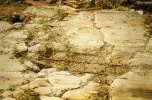 Here for instance you can see all the mulch which was blasted into this concrete wall, this actually reminds me of descriptions of "straw in concrete" in tri-state.but you can see where the concrete has shattered and fractured under the stress, not that the winds literally peeled it away layer by layer. Sure there is disturbance and damage to the outer concrete layers, but what we see down to the reinforcing bars is where the concrete around it has likely shattered, here it does not appear to be of particularly high quality.
Would concrete disintegrating into very small pieces and being swept away also count? Assuming it is not just debris caused.Clarification on a few of my points:
-By no debris pattern, I’m referring to when the obliteration of the home in question is so thorough, that there is no discernible directional debris scatter path extending away from the foundation. Examples include the first EF5 house that was hit south of Greensburg, the golf course homes in Parkersburg, many homes in Jarrell, Fish Hooks Restaurant in Vilonia, multiple homes in Piedmont/El Reno, the Harper farmhouse, etc.
-In terms of concrete scouring, some of those examples I saw posted above apply, while others don’t. Concrete scouring is when the concrete itself is well, scoured, and eroded away, rather than just being shattered or removed in one big piece. The storm shelter roof in Phil Campbell is more removal of a concrete slab than actual scouring, and same goes for the church hit by the Tri-state tornado (If I recall correctly, the church’s concrete floor was removed from the pier foundation below). The best example of concrete scouring was Jarrell, where a concrete home had its walls and foundation literally sandblasted and scoured down to the metal reinforcements within. There are some detailed high quality pics of this somewhere on the forum. The thick poured concrete storm shelter and home from Piedmont/El Reno is another good example, along with the concrete irrigation canal in Bakersfield Valley.
Edit: Looks like @Lake Martin EF4 found the Jarrell photos I was referring to.
That would not be "scouring", i think the term of concrete scouring is misleading and should not really be used to be honest, it is quite different to say scouring asphalt I think.Would concrete shattering into very small pieces and being swept away also count? Assuming it is not just debris caused.
