• Welcome to TalkWeather!
    We see you lurking around TalkWeather! Take the extra step and join us today to view attachments, see less ads and maybe even join the discussion.
    CLICK TO JOIN TALKWEATHER

Severe WX Severe Weather Thread - 6/15/26 - 6/18/26

Well, if this event ends up becoming the lined out w/ 4-5 sigtors embedded in the line that it’s looking like it’ll end up being right now, I think it’s safe to say there’s something very wrong with how the models are handling setups right now.

I’m retracting much of what I said in the last 36 hours. Maybe this is a mistake, but something tells me it won’t be. This still could have a few significant tornadoes but EF4-5 tornadoes are probably off the table here.
 
Well, if this event ends up becoming the lined out w/ 4-5 sigtors embedded in the line that it’s looking like it’ll end up being right now, I think it’s safe to say there’s something very wrong with how the models are handling setups right now.

I’m retracting much of what I said in the last 36 hours. Maybe this is a mistake, but something tells me it won’t be. This still could have a few significant tornadoes but EF4-5 tornadoes are probably off the table here.

I see it kinda the other way around. I think if anything it could end up looking like the May 21 2024 outbreak.
 
Honestly, Im actually beginning to think things are on the uptrend. Safe to say cams are completely useless with this event.
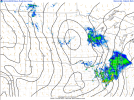
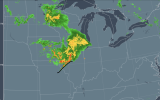
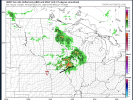
Take a look at this, I knew it was hogwash with how slow the cams were with the MCS, but this is astonishing. The hrrr for just one example is off by as much as 60 to 80miles with the forward edge. I mean what?
1781706565024.png1781706624075.png
 
Im not saying this event will be that event, just using this day to make a point... 4/27/11 had an MCS blast through the risk zone on roughly the same time frame this one will. The days with extreme dynamics at play change things so quickly.
Just looked up the radar loop from April 27 to confirm: you had two morning MCS that day. The first was the most significant one that came through central Alabama between 4:30 AM and 8 AM. A second complex fired back to the NW along the MS border north of the warm front later in the morning and traversed NW Alabama and southern TN from the late morning into the early afternoon. That latter MCS is what laid down the thermal/outflow boundary in Northern Alabama that significantly enhanced the tornado threat for any cell that interacted with it.

If the kinematics are in place later, we will see some degree of WAA. How much that recovers the air mass in the western portion of the risk today is TBD. I’d also be keeping an eye on whether the MCS lays down any kind of boundaries that could come into play later as well.
 
Honestly, Im actually beginning to think things are on the uptrend. Safe to say cams are completely useless with this event.
Take a look at this, I knew it was hogwash with how slow the cams were with the MCS, but this is astonishing. The hrrr for just one example is off by as much as 60 to 80miles with the forward edge. I mean what?
View attachment 53510View attachment 53511
CAMs stand for Crap And Misleading surely this year
 
Honestly, Im actually beginning to think things are on the uptrend. Safe to say cams are completely useless with this event.
Take a look at this, I knew it was hogwash with how slow the cams were with the MCS, but this is astonishing. The hrrr for just one example is off by as much as 60 to 80miles with the forward edge. I mean what?
View attachment 53510View attachment 53511

Was wondering about that garbage west of the mcs and damn, everything is HAULING. Those storm motions are fast already.
 
I think it’s safe to say there’s something very wrong with how the models are handling setups right now.
CAMs stand for Crap And Misleading surely this year

The "Big Beautiful Bill" slashed $200 million from NOAA's weather forecasting and public alert programs, cut $50 million in grants on studying climate systems, and eliminated $150 million in funding to advance weather observation systems, modeling, assessments, and dissemination of information to the public.

Source
 
The "Big Beautiful Bill" slashed $200 million from NOAA's weather forecasting and public alert programs, cut $50 million in grants on studying climate systems, and eliminated $150 million in funding to advance weather observation systems, modeling, assessments, and dissemination of information to the public.

Source
There's another thread for this, I'm sure we all know
 
Honestly, Im actually beginning to think things are on the uptrend. Safe to say cams are completely useless with this event.
Take a look at this, I knew it was hogwash with how slow the cams were with the MCS, but this is astonishing. The hrrr for just one example is off by as much as 60 to 80miles with the forward edge. I mean what?
View attachment 53510View attachment 53511
I know we’ve been talking about the models struggling and this is a great example of one of the issues we’ve been having consistently this season. For whatever reason (I’m not a met so I don’t know if this a lack of observed data like soundings being a factor, the models having certain weaknesses, or some combo), the models have really struggled with the placement, speed, and evolution of morning convection in recent setups. This is yet another example of that happening.

At some point, the CAMs may catch up and have some utility for later in the day, but I think we’re going to need to lean heavily into real-time observations to discern what may occur as the day progresses.
 
The "Big Beautiful Bill" slashed $200 million from NOAA's weather forecasting and public alert programs, cut $50 million in grants on studying climate systems, and eliminated $150 million in funding to advance weather observation systems, modeling, assessments, and dissemination of information to the public.

Source
This in particular has nothing to do with how the cams are handling the forward speed of this MCS, because they’ve always have been too slow with things like cold fronts, squall lines, or anything that evolves mass response due to cold pooling.
In MCS, you have things like bowing segments and outflow boundaries which cams simply can’t resolve that speed up the storm.
 
This in particular has nothing to do with how the cams are handling the forward speed of this MCS, because they’ve always have been too slow with things like cold fronts, squall lines, or anything that evolves mass response due to cold pooling.
In MCS, you have things like bowing segments and outflow boundaries cams simply can’t resolve that speed up the storm.
This is true. Models have always been Crap and Misleading with MCSes. The big blah blah has no place in this thread.
 
Back
Top