• Welcome to TalkWeather!
    We see you lurking around TalkWeather! Take the extra step and join us today to view attachments, see less ads and maybe even join the discussion.
    CLICK TO JOIN TALKWEATHER

Severe WX Severe Weather Thread - 6/15/26 - 6/18/26

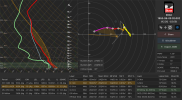
That's some dynamic piping right there
Yep, and no surprise, (but still surprisingly) the result of such high deep layer sheer velocities has lead to the cams depicting very insane storm motions.
Right moving storms could be going over 70mph with left movers clocking at close to 100mph!
I feel bad for storm chasers planning to film these storms, because it’s pretty much going to be impossible to keep up with them.
1781555884554.png
 
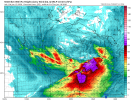
I'll be explicit when I say this: there is a clear corridor for OWS supercells as depicted by the 12z GPAS MPAS model with a high end thermodynamic/kinematic environment, with potential for EF3+ tornadoes.

This type of parameter space is not seen very often in June. I can't imagine that this ends particularly well.
 
I'll be explicit when I say this: there is a clear corridor for OWS supercells as depicted by the 12z GPAS MPAS model with a high end thermodynamic/kinematic environment, with potential for EF3+ tornadoes.

This type of parameter space is not seen very often in June. I can't imagine that this ends particularly well.
Y'all think the area of focus could be moved up to the northern IL/IN and southern MI area depending on the next model runs, or will this likely stick to being a central IL thing?
 
Y'all think the area of focus could be moved up to the northern IL/IN and southern MI area depending on the next model runs, or will this likely stick to being a central IL thing?
That portion will be close to north of the warm front although I wouldn't rule out some brief tornado action but I believe that area will stay out of the truly volatile parameter space.
 
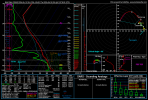
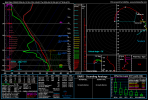
Both the NAM and the RRFS have tri-state 2.0 supercell riding right along the warm front. It’ll be interesting to see if the 0z hrr shows something similar.
These sheer magnitudes are nauseating. (Sounding is a little contaminated since it’s close to convection, but these values also show up in non-contaminated soundings as well)
Don’t be fooled by the low CAPE and laspe rates, when you have this much sheer, it doesn’t matter in the slightest.
With sheer this high, all you need is any measurable amount of vertical instability to produce a long track VI tor.
Obviously this is a very specific scenario so chances this occurs a minimal, let’s hope the trends are only down form here.
1781557006873.png1781557105879.png
 
Both the NAM and the RRFS have tri-state 2.0 supercell riding right along the warm front. It’ll be interesting to see if the 0z hrr shows something similar.
These sheer magnitudes are nauseating.
Don’t be fooled by the low CAPE and laspe rates, when you have this much sheer, it doesn’t matter in the slightest.
With sheer this high, all you need is any measurable amount of vertical instability to produce a long track VI tor.
Obviously this is a very specific scenario so chances this occurs a minimal, let’s hope the trends are only down form here.
View attachment 53428View attachment 53431
Couldn't so much shear in this scenario rip a supercell apart or would this hypothetical scenario with the warm front help it sustain?
 
Both the NAM and the RRFS have tri-state 2.0 supercell riding right along the warm front. It’ll be interesting to see if the 0z hrr shows something similar.
These sheer magnitudes are nauseating.
Don’t be fooled by the low CAPE and laspe rates, when you have this much sheer, it doesn’t matter in the slightest.
With sheer this high, all you need is any measurable amount of vertical instability to produce a long track VI tor.
Obviously this is a very specific scenario so chances this occurs a minimal, let’s hope the trends are only down form here.
View attachment 53428View attachment 53431
The model agreement is really fascinating on this one. I've never seen them aligned so closely before. A little freaky too.
 
Couldn't so much shear in this scenario rip a supercell apart or would this hypothetical scenario with the warm front help it sustain?
I was wondering the same thing actually. I wonder if there will be enough consistently high instability at the surface to sustain such fast moving volatile, storms.
 
Recent models have trended slightly northeast with the system,
so the details are not yet set in stone. There is also some
potential for morning convection, which as always adds a wrinkle
to the afternoon/evening forecast. The latest outlook maintains
an Enhanced Risk (level 3 of 5) across a large portion of the
ILX coverage area. Given the concerning parameter space, an
upgrade to a Moderate Risk (level 4 of 5) may be warranted in
future outlooks if forecast confidence increases regarding the
impact of the morning storms and the placement of the greatest
severe risk.

now this is insane ILX, (NWS Lincoln, IL) says a MDT could be warranted thats wild
 
Couldn't so much shear in this scenario rip a supercell apart or would this hypothetical scenario with the warm front help it sustain?
Usually yes, but because this area is underneath an extreme, and I mean an extreme jet streak maximum, combined with the sub 990mb surface low with height falls of -20 decameters, and fact that this is right on the forward edge of the trough; the forcing mechanism is simply way too strong for convection to be ripped apart by this sheer.
 
Usually yes, but because this area is underneath an extreme, and I mean an extreme jet streak maximum, combined with the sub 990mb surface low with height falls of -20 decameters, and fact that this is right on the forward edge of the trough; the forcing mechanism is simply way too strong for convection to be ripped apart by this sheer.
Yeah, that is true. Thanks for the explanation!
 
Usually yes, but because this area is underneath an extreme, and I mean an extreme jet streak maximum, combined with the sub 990mb surface low with height falls of -20 decameters, and fact that this is right on the forward edge of the trough; the forcing mechanism is simply way too strong for convection to be ripped apart by this sheer.

Oh right, the height falls! This is one of those set ups where you can really visualize the explosive convection we're going to be dealing with. 70 mph forward movement speed pretty much guarantees any tornadoes that drop will be strong-violent too. They'll already be halfway to EF3 strength from translation speed alone!
 
Regardless of how this event fully plays out, all you need is one supercell to sustain in this environment for a violent tornado. Absolutely sickening low level shear. >500 m2s2 across a very wide area with some isolated spots exceeding 700 m2s2 with extreme streamwise vorticity sounds like a certain day that will not be named (this event is obviously not going to be that extreme though).
 
Honestly thinking we’re looking at the biggest threat we’ve seen since May 20th, 2019. SRH and vorticity are off the charts.
Really? It is a high end environment but I think we've seen this environment a handful of times in recent years. But if instability trends ANYWHERE above 3,000, you've got a good candidate for a high end event loading.
 
Honestly thinking we’re looking at the biggest threat we’ve seen since May 20th, 2019. SRH and vorticity are off the charts.
The trough honestly looks kinda similar to it too, just nudged northward and having a slightly different orientation, with no double barrel structure.
 
In an alternative timeline, this fantasy land omega long wave trough with a sub 980mb surface low would’ve produced what could’ve been known as, “The June Great Plains Super Outbreak”.
View attachment 53092View attachment 53098
View attachment 53093View attachment 53095
View attachment 53096View attachment 53097
The theorized effects of the Kara Sea Ridge I talked about last week could actually be coming to fruition for mid-June. In a similar fashion to how mergers can boost supercells, several pockets of low pressure may try to come together and form a respectable trough. This definitely appears to be a situation where rosby waves are disrupting the polar vortex and causing it to shake off pockets of cold air down South. While it's a big IF, and a lot of factors have to come together perfectly for a strong system to form, this is definitely some established science we're talking about here, and it seems like a safe bet we'll get at least one decent sized outbreak out of it.

View attachment 53127

@jiharris0220 with the prophetic post 16 days ago lmao, the storm system is just two days later than originally forecast. In regards to model agreement, the GFS has seen a massive system developing in this time frame for over 2 weeks now. The signal has been remarkably consistent actually, with very little variation. No one took it as seriously as they would've in other years because the models have been so unreliable this year.


Edit:
The presentation of how this low pressure system came together is actually very similar to how it was modeled 2 weeks ago in my post above (just maybe a little further east). Pretty dang fascinating.

1781560165699.gif
 
Last edited:
Really? It is a high end environment but I think we've seen this environment a handful of times in recent years. But if instability trends ANYWHERE above 3,000, you've got a good candidate for a high end event loading.
@slenker. Explained why, and I’m not throwing that around. Compare the two troughs and the orientations of both and the overall pattern both have.
 
Im seeing discussion on twitter (I know I know) about that this setup is garbage regarding storm mode because of the parallel orientation of the jet streak relative to the dryline; because of that, convection specifically along the dryline will grow upscale quickly.
While this would be true 99% of the time, this isn’t the case with this event.
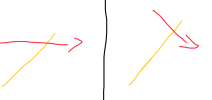
Below, is a childishly drawn illustration of the context.
To the left, is the usual orientation of a jet streak over the common southwest to northeast orientated dry line. In this case, yes, convection would grow upscale quickly because this orientation causes cold pooling from storms to combine in swift succession.
However, on the right, the set up on Wednesday, the dryline is orientated in the usual way, very unfavorable for discrete convection, but the jet streak orientation coming form northwest to southeast makes this a very special case.
Because of the position of this jet streak, storms will be moving towards the southeast away from this dryline rather than straight east or northeast.
This substantial reduces cold pooling combination and allows for storms to actually stay discrete longer.
It’s no coincidence that the squall line loving 3km NAM actually shows a relatively discrete storm mode and the hyper large updraft loving RRFS also shows discrete dryline convection as well.
Again, very curious to see what the hrrr depicts as it gets into range.
1781558656476.png
One final note: you may have noticed that the soundings I’ve pulled display directional sheer rather than the veered sheer profile that’s actually favorable for tornadoes.
Directional shear is a deal breaker for tornadoes and supercells end up being outflow dominant; however when you have storms moving over 50mph, the winds they feel in the low levels become veered from their frame of reference.
This isn’t the same environment at all but it’s a nice example. This here is the sounding from the Flint-Beecher tornado. As you can see, the low level shear is purely directional, and the critical angle as such is abysmal. But look at the storm motion, and you will see it’s 55mph for right movers. The supercell that produced this VI tornado was feeling winds in the low levels coming at it from the southeast rather than from the southwest like this sounding would lead you to believe.
So you have to be very careful when trying to depict how favorable an environment is for tornadoes.
Storm relatively is everything and then some.
1781559574254.png
 
Does this all have to do with the warm front and where that gets placed, in an amount of time? If the warm front goes north of you, does that dictate the tornado threat?
 
Both the NAM and the RRFS have tri-state 2.0 supercell riding right along the warm front. It’ll be interesting to see if the 0z hrr shows something similar.
These sheer magnitudes are nauseating. (Sounding is a little contaminated since it’s close to convection, but these values also show up in non-contaminated soundings as well)
Don’t be fooled by the low CAPE and laspe rates, when you have this much sheer, it doesn’t matter in the slightest.
With sheer this high, all you need is any measurable amount of vertical instability to produce a long track VI tor.
Obviously this is a very specific scenario so chances this occurs a minimal, let’s hope the trends are only down form here.
View attachment 53428View attachment 53431
Regardless of contamination I have literally never seen a sounding (modeled or observed) with above 1100 esrh and non-negligible cape. Nearest I've seen is this RUC sounding from 2011 at Columbus AFB: 1781560366241.png
 
Back
Top