
lake.effect
Member
really not buying the SPC probs for today. seems cooked.
Follow along with the video below to see how to install our site as a web app on your home screen.
Note: This feature may not be available in some browsers.

I wonder if they'll downgrade the MDT at the 1630z outlook.really not buying the SPC probs for today. seems cooked.

I think that’s especially the case across central NC. Junkvection has really mitigated the threat there.really not buying the SPC probs for today. seems cooked.
I actually think that four year streak is a bit of a red herring. BMX has gone to great lengths to be extremely conservative on tornado warnings. That’s why you can see an entire line tornado warned by JAN and the moment it hits western Alabama, BMX won’t re-issue. It’s going to take an actual supercell traversing the warm sector or a legitimate embedded supercell in a line, rather than a 2 minute spin up, for BMX to issue a warning for Jeff Co.crazy heavy snow in bham right now. if you’d have told me we’d have more snow days than tornado warnings in jeffco in the last four years i’d have laughed.

Personal question (also plugging in a weather question so it technically stays on topic), what period of history do you specialize in?Federal offices (including the museums) are closing at 2, even though the first line of storms will have already passed through DC by then…
Hey, I'd take that free afternoon if I were you, storms or not!Federal offices (including the museums) are closing at 2, even though the first line of storms will have already passed through DC by then…
Yeah, writing has been on the wall that this one is cooked. Very poor tornadic environment, if one even exists now.New day 1 dropped the 15% tor risk- still a wind driven MDT
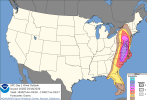


I’m in a strong tornado watch but yeah . ..the probablities in these tornado watches are a joke. 30-50% chance of strong tornadoes from NYC to Savannah? lol, come on. time to admit defeat SPC.

The main concern was that the messy storm mode and faster progression would crash the instability for the entire OWS, ultimately leading to an underperformance for all SVR hazards which is exactly what happened.Yeah, writing has been on the wall that this one is cooked. Very poor tornadic environment, if one even exists now.
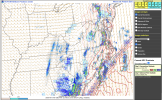
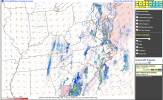
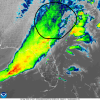

The main concern was that the messy storm mode and faster progression would crash the instability for the entire OWS, ultimately leading to an underperformance for all SVR hazards which is exactly what happened.
What I honestly didn’t expect was the shear itself to underperform, models had widespread helicity values in the 400s, in reality, a minuscule area of values just barely over 300 already almost off the coast. The storms as a consequence are very anemic, not a whole lot of SVR warnings at all in the area of interest.
View attachment 52052View attachment 52053
We’ve seen setups downtrend before in terms of tornadoes with hazards like hail or wind verifying, but I can’t quite remember when a setup crashed and burned in all three sectors before.


