

Right, after you've seen a bad movie, you usually don't want to see it again.sunday’s forecast for birmingham two days ago showed a high of 35 and an icy apocalypse. now it shows 58 and stormy.
next friday now shows 35* and snow.
i’ve seen this movie.
Navigation
Install the app
How to install the app on iOS
Follow along with the video below to see how to install our site as a web app on your home screen.
Note: This feature may not be available in some browsers.
More options
-
Welcome to TalkWeather! We see you lurking around TalkWeather! Take the extra step and join us today to view attachments, see less ads and maybe even join the discussion. CLICK TO JOIN TALKWEATHER
You are using an out of date browser. It may not display this or other websites correctly.
You should upgrade or use an alternative browser.
You should upgrade or use an alternative browser.
January 23-25th Winter Wx
- Thread starter UncleJuJu98
- Start date
pritchlaw
Member
LOL. 2 days ago I was projected enough accumulated ice to prompt me to replace my old generator with a brand new one. And today, Roll Tide.

Geno
Member
Yup - I went and fueled up half a dozen good sized fuel cans on Monday and cranked the genset. Now - nothing but rain. I'll take it over the ice but a lot of folks around here really wanted some snow.

MattW
Member
- Messages
- 390
- Reaction score
- 394
- Location
- Decatur, GA
- HAM Callsign
- KG4GUF
- Special Affiliations
- SKYWARN® Volunteer
FFC is stil not buying the op Euro verbatim:
Trends in the guidance, particularly the ECMWF, towards a warmer
event have received quite a bit attention in the last 24 hours.
While these trends are are potentially positive as they would
support a rapid erosion of the wedge and less widespread ice
accumulation in Georgia, they represent only a portion of the
guidance. About half the EPS members keep temperatures in Atlanta 20
degree colder than the ECMWF on Sunday, while half the GEFS members
keep the Atlanta near or below freezing through Sunday. These
inconsistencies reflect the the models struggle to resolve the wedge
and its potential strength. Historically models overestimate the
ability of strong mid-level WAA to erode the wedge. This has been
particularly true when the wedge is being reinforced by dry CAA and
evaporative cooling. Given these considerations, we seem to be
trending towards an event where we start off with a fairly
widespread mix of light freezing rain and sleet on Saturday. As the
southerly flow intensifies Saturday night and Sunday it may erode
the southern edge of the wedge while the core of the wedges strength
holds true in northeast Georgia. This would lead to contracting
temperature gradients and a potential switch over to rain in parts
of northwest and central Georgia. It wouldn`t be surprising if
temperatures gradients between Athens and Macon exceeded 30 degrees
on Sunday! Where the wedge traditionally holds strong in northeast
Georgia icing may continue through the entire day on Sunday.
Significant and very impactful ice accumulations of 0.25 to 1.25
inches may occur.
TVILLE96
Member
I wanted to see some type of winter precip but its a good thing its all rain. Ice would have been something I regretted after it set in..Yup - I went and fueled up half a dozen good sized fuel cans on Monday and cranked the genset. Now - nothing but rain. I'll take it over the ice but a lot of folks around here really wanted some snow.

Psalm 148:8
Member
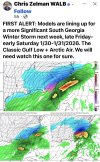 No.. just no!!! I can’t do this right now.. none of us are mental stable after the model runs this week..
akt1985
Member
Something you might not have considered, but if you do lose power and need something to do while it is still daylight outside, go to your local library before this system hits and check out some physical books. That is what I did yesterday as I don’t want to drain my phone battery if my power goes out.

warneagle
Member
Oh good, now we might be getting some ice on top of 10"+ of snow. Fantastic.
bckhd2
Member
I thought this was interesting as well. I guess the Euro is known to handle the wedge poorly. All my life here I’ve learned never to bet against the wedge.FFC is stil not buying the op Euro verbatim:
FFC does have my area at 0.15” of ice with temps up to 40° on Sunday, so it looks like we’re trending in the right direction.

Seconded. Libraries are a great resource even without crippling ice. Also, dust off some board games!Something you might not have considered, but if you do lose power and need something to do while it is still daylight outside, go to your local library before this system hits and check out some physical books. That is what I did yesterday as I don’t want to drain my phone battery if my power goes out.

cincywx
Member
some of the overnight runs (particularly the euro) were knocking on the door of historic snowfall totals in the cincinnati area & to its southeast this weekend. Still a way to go before I bite, as the possibility does exist for sleet to fall during most of the first half of saturday up here.
edit:
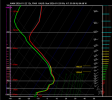
the 12z NAM's skew-t for the cincy area early on Sunday wants to walk that line between fzr and snow. i also can't help but see Doug's side profile in the warm nose.
edit:
the 12z NAM's skew-t for the cincy area early on Sunday wants to walk that line between fzr and snow. i also can't help but see Doug's side profile in the warm nose.
Last edited:
pritchlaw
Member
I have been watching pretty much every source of weather media and have noticed that the Fox Weather channel (222 on Dish) is about 18 hours behind everyone else. Just now really revealing to the viewers that it will "possibly be mostly rain from Montgomery up to Birmingham." Thanks guys.
Ozonelayer
Member
Up here near Pittsburgh, some of the snow melted before yesterday's snowfall and yesterday night's cold. So now we have a thin sheet of ice over most roads.

maroonedinhsv
Member
Agreed. Library books are great for fires if your power goes out. Highly recommend.Something you might not have considered, but if you do lose power and need something to do while it is still daylight outside, go to your local library before this system hits and check out some physical books. That is what I did yesterday as I don’t want to drain my phone battery if my power goes out.
KevinH
Member
I was going to post this in the 2026 thread.. I think I will lolView attachment 50127No.. just no!!! I can’t do this right now.. none of us are mental stable after the model runs this week..

N4GK
Member
- Messages
- 97
- Reaction score
- 214
- Location
- Meridianville, Al.
- HAM Callsign
- N4GKS
- Special Affiliations
- ARRL Member
I’m still of the opinion that the temps in North Alabama will not get below 35 on Saturday or 33 on Sunday. I think rain is about it.
bckhd2
Member
Talked to many people at work here today in downtown ATL and no one's sure how to feel. Everyone has heard different numbers ranging from cold rain to 1.5" of ice. A lot of folks assume we're in the clear as FFC has not expanded the watch down into Atlanta proper.
cniemczura
Member
We got absolutely hammered in the Kenwood area last year. I think the prediction was 8" and I have several pictures of a ruler well past the 12" mark.some of the overnight runs (particularly the euro) were knocking on the door of historic snowfall totals in the cincinnati area & to its southeast this weekend. Still a way to go before I bite, as the possibility does exist for sleet to fall during most of the first half of saturday up here.
edit:
the 12z NAM's skew-t for the cincy area early on Sunday wants to walk that line between fzr and snow. i also can't help but see Doug's side profile in the warm nose.
View attachment 50128
I see anywhere from 2.5 to 15.5 on the Plumes, and they're still very spread out.
Leatherhead08
Member
Central VA and Charlottesville VA areas keep swinging from heavy snow/little sleet or ice to mostly ice it seems like? Anyone have better insight
N4GK
Member
- Messages
- 97
- Reaction score
- 214
- Location
- Meridianville, Al.
- HAM Callsign
- N4GKS
- Special Affiliations
- ARRL Member
The models look more confused than a two headed giraffe.