

Eoline
Member
Just an FYI that the EF scale rating of newly-added historical events is being postponed until the new EF scale comes out around 2030. Basically this means historical ratings are not being changed until then unless I missed something.
Follow along with the video below to see how to install our site as a web app on your home screen.
Note: This feature may not be available in some browsers.

The thing is though, Enid WAS a context based rating. The highest rated DI was a barely anchored old farmhouse that almost certainly would not have deserved an EF4 rating on its own, and the DAT cites contextual factors as the basis for the intensity estimate at that exact damage point. The fact that this irrefutably proves that an office is allowed to hand out a violent rating based on violent contextual damage OVERRIDING clearly poor construction, sets a great precedent.
While there’s no such thing as tornado case law, any time anyone tries to say something like “Oh well you can’t use things like ground scouring, vegetation damage, and lofted heavy objects to upgrade a rating to EF4+ when the house is poorly built, because there are no official DIs for two out of those three things, and the construction quality is the primary thing that matters scientifically”, you can now call full BS on that with full confidence. Why? Because you can cite that recent damage point, especially given that NWS Norman, one of the most knowledgeable and trusted survey teams in the country, are the ones who made the call. It’s a small victory, but it’s something that is going to be incredibly useful in any debate against any dismissive contextual damage naysayers throughout the lead up to 2030, especially when combined with the fact that like half of the half of the EF4 damage points were just debarked/stubbed or root balled trees! Trust me, when anyone is dismissive of either of those two things, we’re going to love having the Enid survey to cite in the coming years.
Now the part that sucks is the windspeed estimate. It’s too low. There is now overwhelming evidence that this was a top of the scale tornado intensity wise, and perhaps more importantly we don’t want people associating the mid-EF4 range with contextual damage that looks like that. Yes the soil composition in that area made it look a little more dramatic, but there were plenty of overlapping contextual hallmarks to give full confidence that it was a very high-end tornado. It’s not like it was JUST the ground scouring alone, and it’s clear that grass was actually fully removed in some areas, not just stained by dirt. That’s why even if we don’t get it bumped up to EF5, getting it into the 190s would still be a big win. But another silver lining is that you can extrapolate this: if extreme contextual damage can get a frail old farmhouse up to 180 MPH EF4, just imagine what it could get a modern, anchor bolted home with a poured concrete foundation up to.
What do you mean by “newly added historical events”? I’m just a little unclear on what that refers to. Do you mean like controversial EF scale ratings since 2007? Or historical like pre 1950s?Just an FYI that the EF scale rating of newly-added historical events is being postponed until the new EF scale comes out around 2030. Basically this means historical ratings are not being changed until then unless I missed something.

I know? I said Tim, lol, I probably should’ve said the last name. My bad.Huh? That’s not Tim Marshall. In fact I don’t know who Timothy Vincent is at all.
Edit: Tim Vincent is the owner of the 190 MPH house in Bremen. This is literally just a random civilian who lost his house that he tried to build as sturdy as possible, and understandably isn’t happy with the rating. This has nothing to do with any EF Scale official, let alone Tim Marshall, expressing dissatisfaction with the rating. In fact Tim Marshall was quite neutral to a fault, if not dismissive of any dissent regarding the Mayfield rating, saying it didn’t look bad as Bridge Creek or something to that effect. You really gotta be careful and verify/fact check before you post, especially if it’s about a statement or general sentiment that you’re alleging someone expressed. In fact, this is at least the second or third Tim Marshall mis-quote I’ve seen on this forum.
I worded that poorly; older events in general that are either not officially acknowledged (ie undocumented events) or are officially rated (FU/EFU/Grazulis) are not being messed with until at least 2030 or when the new scale comes out. Unfortunate, but is what it is. This might also include re-rating older events (ie Oelwein/Valley Mills/Broken Bow) which is why I'm posting here but I'm just going to wait and see. Heard from Nick K, who is actively working with JAN and others and absolutely knows what's going on interior-wise.What do you mean by “newly added historical events”? I’m just a little unclear on what that refers to. Do you mean like controversial EF scale ratings since 2007? Or historical like pre 1950s?
I’m also very curious about where you heard this.
I think 180 is too low too, hence why I mentioned that I don’t want people associating that kind of contextual damage with mid EF4. So I’m with you there. That’s a a bad precedent.I appreciate this perspective and hope you're right. It's worth finding things to be positive about. I don't fully agree that Enid sets a good precedent, though. Even if the contextuals in the area did contribute to the 180 mph rating, the rating is still closer to the lower bound than the expected wind speed for DOD 10. If we were looking at a significant shift in the wind speed rating due to the surrounding contextuals it would be one thing, but only a few mph above the absolute minimum is not what you want to see.
I do agree that having more precedent for vegetative damage as a violent indicator is a positive. Especially considering the lack of sufficient structural damage overall in Enid.
I can definitely see both sides. I just lean a bit more skeptical (as always lol). Especially with the Shawnee downgrade, and lack of an explanation with that. Is anybody else completely fed up with the lack of transparency with these ratings? It's insane we constantly have to speculate about what the reasoning for ratings are when the surveyors should literally just be telling us.
OH ok lol. I thought it was in reference to THE Tim we usually refer to on a first name basis, especially since you directly replied to a comment where I mentioned him.I know? I said Tim, lol, I probably should’ve said the last name. My bad.
Ok I guess that makes sense, kinda. What I don’t understand is how it would impact pre-2007 ratings. That’s a whole different scale. Why would the implementation of the new scale have any impact on old events rated on the old scale?Just an FYI that the EF scale rating of newly-added historical events is being postponed until the new EF scale comes out around 2030. Basically this means historical ratings are not being changed until then unless I missed something.
My only explanation would be that they are waiting for the new scale to release so these events can be re-analyzed using said scale, but I really don't know.Ok I guess that makes sense, kinda. What I don’t understand is how it would impact pre-2007 ratings. That’s a whole different scale. Why would the implementation of the new scale have any impact on old events rated on the old scale?
If that were the case, it would likely entail an International Fujita Scale type conversion of the entire database. That would be a massive endeavor and idk how I would feel about it if such a thing were to happen.My only explanation would be that they are waiting for the new scale to release so these events can be re-analyzed using said scale, but I really don't know.
I personally think that historic ratings should generally be left as they are unless they're clearly wrong (e.g. Belmond).If that were the case, it would likely entail an International Fujita Scale type conversion of the entire database. That would be a massive endeavor and idk how I would feel about it if such a thing were to happen.
I personally think that historic ratings should generally be left as they are unless they're clearly wrong (e.g. Belmond).


Link for those who would like to watch. Interview with Jim LaDue starts around the 13 minute mark.Interesting tidbit from the most recent Weather Brains, from Jim LaDue: Greenfield produced tree damage consistent with EF-5 on the updated scale
Interesting tidbit from the most recent Weather Brains, from Jim LaDue: Greenfield produced tree damage consistent with EF-5 on the updated scale
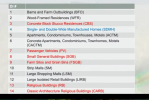
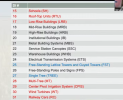
Is that definitely the full list? Seems like a lot is missing. Where are the house, apartment building, church, grain bin, and vehicle DIs?
Whoops! The first half of the list didn't get posted. Just added it.Is that definitely the full list? Seems like a lot is missing. Where are the house, apartment building, church, grain bin, and vehicle DIs?
