• Welcome to TalkWeather!
    We see you lurking around TalkWeather! Take the extra step and join us today to view attachments, see less ads and maybe even join the discussion.
    CLICK TO JOIN TALKWEATHER

Enhanced Fujita Ratings Debate Thread

@buckeye05, regarding your comment because I was too tired to respond back, that is hopeful if true but I would like to see it in action a bit more in the near term future to really confirm that they're building back off this. Call me a Debbie downer but I'm convinced that the caveat is a likely option when it comes to this. Hopefully, though offices are learning.
 
My brother in Christ, there is no way my comment was directed at you. I agree with what you said completely and think it was excellently stated.
Thought i deleted that. I realized after, the comment was not directed at me. I had just woke up. My apologies. Will delete it now since there's no relevance in it
 
We find that a series of factors, both intrinsic to the current operational EF scale and related to how it is being applied, has likely contributed to the downshift in intense-tornado ratings. The evaluation of damage associated with indicators that are unique to the EF scale is too infrequent at higher damage intensities to overcome these factors. Given these findings, we suggest that a reanalysis effort for the significant-tornado [(E)F2 or greater] record should be undertaken upon any future operational adoption of a revised EF scale to develop a more consistent intense-tornado record in the United States.


New paper from Lyza and Flournoy that should send some more shockwaves around this place @buckeye05. Explicitly recommending a reanalysis of significant tornadoes to correct the problems with the climatology that have been generated by bad rating/surveying policy.

Paper is still in EOR so it'll be a little bit before the published version is available, but the abstract says enough generally for now.
 

New paper from Lyza and Flournoy that should send some more shockwaves around this place @buckeye05. Explicitly recommending a reanalysis of significant tornadoes to correct the problems with the climatology that have been generated by bad rating/surveying policy.

Paper is still in EOR so it'll be a little bit before the published version is available, but the abstract says enough generally for now.
Lyza has been doing absolutely superb work on exposing the scale as it is. It's worrying that this problem across many CWAs doesn't even account to just violent tornadoes, it's even EF2s/EF3s that are part of the problem from heavily conservative and goalpost-moving offices. One of the prime examples I could say of that is probably Bakersfield from 3/14, and maybe Grinnell but I'm not exactly well educated on how construction quality was there. I do know the discourse that surrounded that rating and i do think it could've been upped a little more. Anyone feel free to inform me if I'm wrong regarding Grinnell
 

New paper from Lyza and Flournoy that should send some more shockwaves around this place @buckeye05. Explicitly recommending a reanalysis of significant tornadoes to correct the problems with the climatology that have been generated by bad rating/surveying policy.

Paper is still in EOR so it'll be a little bit before the published version is available, but the abstract says enough generally for now.

"Given these findings, we suggest that a reanalysis effort for the significant-tornado [(E)F2 or greater] record should be undertaken upon any future operational adoption of a revised EF scale to develop a more consistent intense-tornado record in the United States."

Music to my ears. Love seeing it stated explicitly like this. Lyza has gotta be a lurker here.
 
"Given these findings, we suggest that a reanalysis effort for the significant-tornado [(E)F2 or greater] record should be undertaken upon any future operational adoption of a revised EF scale to develop a more consistent intense-tornado record in the United States."

Music to my ears. Love seeing it stated explicitly like this. Lyza has gotta be a lurker here.
He really has been the main TRAIN of thought that has brought this underlying issue ever since 2013-2014 to light. There were controversial ratings beforehand, no doubt but once Little Rock did what they did with Vilonia, and the EF scale update of sorts that happened like right after Moore, tornado ratings started seriously taking a big downturn. Now this doesn't exactly mean we're rid of controversial ratings but at least we finally have research papers calling out the severe flaws of this scale as it has been. To me, it's more a scale that depends on what a building can withstand at maximum. That isn't telling the true winds of a tornado at all!

We will never get to know the true winds but i feel like offices have also misused contextuals a bunch. Most of the times they're used, it's been used to moreso downgrade a tornado more than the obvious times that a UPGRADE could be needed. I don't mind downgrades in situations of houses that are poorly constructed completely gone next to some untouched trees but then that arises Mulvane 2004 as the La Plata syndrome arose. That tornado didn't get a F4 rating, i believe due to some pole standing right next to completely debarked trees. It was extremely narrow which is exactly why such a odd difference would take place. This has been going on since 2006, really, only worsened in the early 2010s and has been raging to a sincere degree ever since then. In all the right situations to use contextuals, they don't use them. In all the wrong situations to use such, they do. It's frustrating.
 

New paper from Lyza and Flournoy that should send some more shockwaves around this place @buckeye05. Explicitly recommending a reanalysis of significant tornadoes to correct the problems with the climatology that have been generated by bad rating/surveying policy.

Paper is still in EOR so it'll be a little bit before the published version is available, but the abstract says enough generally for now.
This great and all, but isn’t there currently a ban on any alterations or changes to NWS/NOAA/NCEI records? I was working on an initiative to find resources to calculate the Vilonia fertilizer tank, but I abandoned it because I felt it was pointless given this current policy.

I’m hoping it’s a temporary policy, and I was actually about to ask you about it given the fact that it’s a barrier to any real change right now. Will this records changes ban eventually be lifted?
 
My reply on that would be "look at HURDAT".

NCEI has performed data reformatting and standardization of event types but has not changed any data values for locations, fatalities, injuries, damage, narratives and any other event specific information. Please refer to the Database Details page for more information.

I assume this is what is being referred to from the NCEI page. My guess is you would need studies showing there are consistent problems (like above) to get their attention. The goal isn't to say that the NWS is bad, but more that there should be further QC.
 
My reply on that would be "look at HURDAT".
That’s a good point. Might be time to get back to it with Vilonia. If something good does happen some day, it might be wise to have a mathematically proven EF5 DI at the ready if eventually things really start moving in the right direction.
 
Last edited:
This great and all, but isn’t there currently a ban on any alterations or changes to NWS/NOAA/NCEI records? I was working on an initiative to find resources to calculate the Vilonia fertilizer tank, but I abandoned it because I felt it was pointless given this current policy.

I’m hoping it’s a temporary policy, and I was actually about to ask you about it given the fact that it’s a barrier to any real change right now. Will this records changes ban eventually be lifted?
Currently sick so I’m too lazy to give a full response but yes, it is in place as confirmed by MEG, BMX and MRX.
 

New paper from Lyza and Flournoy that should send some more shockwaves around this place @buckeye05. Explicitly recommending a reanalysis of significant tornadoes to correct the problems with the climatology that have been generated by bad rating/surveying policy.

Paper is still in EOR so it'll be a little bit before the published version is available, but the abstract says enough generally for now.
It’s cool to see the work that Tony has done on this front over the past several years. Back before Twitter really became the hellscape it was today, Tony and I used to interact on there. Part of that was sports related since he’s from Chicago and I’m from the Milwaukee area, but we also discussed tornadoes and severe weather events too.

When he was doing his research on the April 13, 2019 Columbus, MS tornadoes, he gave me a preview of what he found in his damage surveys. I still have the photos saved from that conversation on my phone.

As I think I may have mentioned earlier this year and has been discussed in this forum before, those two tornadoes did some of the most intense tree damage that I can recall. In fact, Tony compared it to the kind of high-end tree damage that several of the April 27, 2011 tornadoes caused, something he was familiar with since he was in Alabama and had extensively studied the 2011 Super Outbreak himself.

I’ve been catching up on the December 10, 2021 event thread and this thread throughout the week. I really appreciate the discussion y’all have been having here since it’s really informative, especially with what @buckeye05 and others have shared regarding unconventional DIs and contextual damage.

I would submit those 4/13/2019 tornadoes as among the first that need to be revisited at some point
 
I will say that this year actually hasn’t been too bad in terms of botched surveys/ratings. The only truly absurd one was the Florence, NC tornado that was rated EF1 despite causing some debarking, and it was explained away in a very ridiculous manner. The Gosport, IN tornado was looking like the worst rating of the year but NWS Indianapolis surprisingly actually fixed it and bumped it up to the appropriate rating of EF3. Then there’s Kouts, IN which I personally would have rated EF4 based on the transmission tower, but I get why didn’t given the current 165 MPH upper bound limit for transmission towers. Saint Libory, NE and Union City, MI caused a stir in less knowledgeable circles but anyone who actually knows their stuff understands they were rated appropriately.

Last year included absurdities like Lake City, AR, Bakersfield, MO and Linton, IN. We haven’t seen any misses of that caliber this year.
 
Last edited:
It’s cool to see the work that Tony has done on this front over the past several years. Back before Twitter really became the hellscape it was today, Tony and I used to interact on there. Part of that was sports related since he’s from Chicago and I’m from the Milwaukee area, but we also discussed tornadoes and severe weather events too.

When he was doing his research on the April 13, 2019 Columbus, MS tornadoes, he gave me a preview of what he found in his damage surveys. I still have the photos saved from that conversation on my phone.

As I think I may have mentioned earlier this year and has been discussed in this forum before, those two tornadoes did some of the most intense tree damage that I can recall. In fact, Tony compared it to the kind of high-end tree damage that several of the April 27, 2011 tornadoes caused, something he was familiar with since he was in Alabama and had extensively studied the 2011 Super Outbreak himself.

I’ve been catching up on the December 10, 2021 event thread and this thread throughout the week. I really appreciate the discussion y’all have been having here since it’s really informative, especially with what @buckeye05 and others have shared regarding unconventional DIs and contextual damage.

I would submit those 4/13/2019 tornadoes as among the first that need to be revisited at some point
Whatever I said about Mayfield a few years ago to defend its EF4 rating you should ignore tbh. Following recent developments in survey science, I’m confident now that it deserves an upgrade to EF5. There’s enough evidence at this stage. I strongly believe that downtown Mayfield and Bremen had EF5 damage, and the rating should be changed to reflect that. The suspicion was always there, but now there’s proof.
 
Last edited:
Whatever I said about Mayfield a few years ago to defend its EF4 rating you should ignore tbh. Following recent developments in survey science, I’m confident now that it deserves an upgrade to EF5. There’s enough evidence at this stage. I strongly believe that downtown Mayfield and Bremen had EF5 damage, and the rating should be changed to reflect that. The suspicion was always there, but now there’s proof.

I thought the water tower pointed out on AmericanWX was always kinda big proof of that. I mean the contextuals were always there but I thought there were always a few actual ef5 indicators.
 
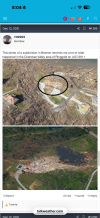
The damage the Kentucky tornado produced in that one subdivision in Bremen still stands to me as the most violent tornado damage on par with Smithville, BridgeCreek, Matador, ect.
The windrowing it did to the cinderblock foundation of that weirdly constructed two story was astonishing to say the least, as it pulverized it to grain sized particles.
What I find equally as impressive is the lack of much debris within the path, the pieces of debris that you did find were no bigger than a two-by-four, at the very largest.
Nothing to say of the debarked, stubbed foliage and ground scouring as well.
I found it impressive back then, I find it even more impressive now, easily a high end EF5.
1784410585489.jpeg1784410780358.png
 
Last edited:
The damage the Kentucky tornado produced in that one subdivision in Bremen still stands to me as the most violent tornado damage on par with Smithville, BridgeCreek, Matador, ect.
The windrowing it did to the cinderblock foundation of that weirdly constructed two story was astonishing to say the least, as it pulverized it to grain sized particles.
What I find equally as impressive is the lack of much debris within the path, the pieces of debris that you did find were no bigger than a two-by-four, at the very largest.
Nothing to say of the debarked, stubbed foliage and ground scouring as well.
I found it impressive back then, I find it even more impressive now, easily a high end EF5.
View attachment 54175View attachment 54177
I've genuinely seen a poll for which tornado was stronger: Mayfield or Brandenburg? Most said Brandenburg.... I think they forget just how violent this thing actually got in Bremen. Plus the EF5 DI in the Presbyterian Church. We will not see the likes of such a tornado in December for a long while.
 
Back
Top