

tornado examiner
Member
Running like the Liquid Metal prototype from terminator 2
Me getting out of here before this bomb goes off again
Follow along with the video below to see how to install our site as a web app on your home screen.
Note: This feature may not be available in some browsers.
Running like the Liquid Metal prototype from terminator 2
Me getting out of here before this bomb goes off again

Me getting out of here before this bomb goes off again
Who wants to show Nick some instances of obvious EF5 at Vilonia? Be nice. I like him. Respond on Twitter if you can

It was bar none the worst damage survey ever. Misplaced engineering pedantry (much of which wouldn't withstand serious scrutiny), disregard of context, and widespread failure to even properly survey the path of destruction.All i’m gonna say is, Vilonia arguably produced damage well on par with a lot of the officially rated EF5s. So I really don’t see why there’s much more need to debate about its rating at this point.
Oh 100%. I was more so implying how I really don’t see how some people still debate on wether it was a high end EF4 or an EF5 when it was very clearly an extremely violent EF5.It was bar none the worst damage survey ever. Misplaced engineering pedantry (much of which wouldn't withstand serious scrutiny), disregard of context, and widespread failure to even properly survey the path of destruction.
We harp on it. But it deserves the criticism. It always will. That dead horse should be kicked now and then.
It was bar none the worst damage survey ever. Misplaced engineering pedantry (much of which wouldn't withstand serious scrutiny), disregard of context, and widespread failure to even properly survey the path of destruction.
We harp on it. But it deserves the criticism. It always will. That dead horse should be kicked now and then.
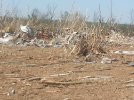
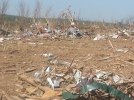
I think it’s very likely this is Saltical’s “work” rubbing off on Nick. His modus operandi is to do a deep dive on ONE house, call it case closed while leaving other potential EF5 DIs unaddressed, and then cue discord minions just brainlessly parroting his position and being dismissive of anyone questioning the rating as a whole and regurgitating his opinion based on, and let me repeat this again…..ONE HOUSE.
He did the same thing with Rochelle, based on a house that was not directly cored by the tornado, and suddenly everyone gets all dismissive of that tornado as a whole (admittedly including me temporarily, until I realized his analysis did not include other EF5 candidate homes in the subdivision). The best EF5 candidate home from Rochelle was on Richard Road, was directly cored by the tornado, was NOT built by the same sketchy construction company that built other ones in the subdivision, and is completely absent from his research. This was proven by another user on this very forum at the end of the last big debate on Rochelle, and I tried to point this out, but I guess nobody wanted to continue the conversation.
I GUARANTEE you that the only deep analysis that he or anyone in that orbit did regarding Vilonia was the Wicker Street home. Nothing on Fish Hooks restaurant, Beryl Road, Coker Road, Cemetery Road, or the fertilizer tank. So let’s play dumb and hypothetically say the Wicker Street house was the only slabbed structure in Vilonia. Even if that was the case, his “takedown” of the Wicker Street home largely came down to bolt placement, “not enough” bolt bending, and “not enough” plate removal, which may indicate a continuous load path issue. Mind you, there STILL WERE some bent bolts and removed plates, but apparently “not enough”.
So is it a fact that ANY inkling of there not being 100% proof of an absolute iron clad, perfect continuous load path within a house automatically takes a tornado out of the running for EF5? No, it isn’t. Is there a written rule somewhere that conclusive evidence of an absolutely perfect continuous load is an absolute non-negotiable requirement for EF5 rated house damage regardless of context? No, there isn’t. Is it true that within the Moore 2013 tornado survey homes of similar construction (straight nailed wall connections) were still rated EF5? Yes, it is. Is it true that the surveyors from Moore 2013 SPECIFICALLY STATED that while extensive sill plate removal and bolt bending was integral to applying EF5 ratings to straight nailed homes in that specific survey, that this was simply the criteria used in that specific survey, and that the definition of EF5 house damage or what constitutes a home as “well-built” is not set in stone and may not apply in other surveys due to differences in rating practices and methodology? Yes, they did. Is tornado damage surveying equivalent to case law, meaning the degree of sill plate removal and bolt bending from Moore 2013 is now the gold standard for every single EF5 candidate event from that point forward? No, it isn’t. Is it true that just last year, Jim LaDue said that a house doesn’t have to be a total fortress for an EF5 rating to be applied? Yes, he did.
And finally, if you refuse to be a little bit lenient about bolt placement/bending and sill plate removal, and refuse to factor in contextual evidence that looks like this below, does that mean that you lack the intuition and pattern recognition skills needed to identify a tornado event of exceptionally rare intensity? Does it also show that you lack the ability to be reasonable enough to take contextual evidence into account and allow it to override some questions about continuous load path at a single house, and not come to an erroneous conclusion about what EF rating is most appropriate given the overall evidence? The answer to both of those questions, is yes.
View attachment 52257
View attachment 52258
Conclusion: anyone who thinks EF4 is appropriate here has completely lost the plot, does not have a good grasp on the relationship between damage and intensity, and is not going to be the person who gets us back on a path to reasonable application of the EF scale that emphasizes reasonable conclusions.
But, I’ll leave you with this little tidbit. These aren’t the only people doing post-analysis of the Vilonia tornado, they haven’t come close to doing any kind of full analysis of the potential DIs it left behind, and the Wicker Street house isn’t even the main point of focus for anyone actually trying to ascertain a provable specific windspeed from this tornado. All I can say on that for now, but whatever Saltical did does not even come close to scratching the surface of what can be done with the Vilonia tornado.

It’s soo extremely frustrating.I think it’s very likely this is Saltical’s “work” rubbing off on Nick. His modus operandi is to do a deep dive on ONE house, call it case closed while leaving other potential EF5 DIs unaddressed, and then cue discord minions just brainlessly parroting his position and being dismissive of anyone questioning the rating as a whole and regurgitating his opinion based on, and let me repeat this again…..ONE HOUSE.
He did the same thing with Rochelle, based on a house that was not directly cored by the tornado, and suddenly everyone gets all dismissive of that tornado as a whole (admittedly including me temporarily, until I realized his analysis did not include other EF5 candidate homes in the subdivision). The best EF5 candidate home from Rochelle was on Richard Road, was directly cored by the tornado, was NOT built by the same sketchy construction company that built other ones in the subdivision, and is completely absent from his research. This was proven by another user on this very forum at the end of the last big debate on Rochelle, and I tried to point this out, but I guess nobody wanted to continue the conversation.
I GUARANTEE you that the only deep analysis that he or anyone in that orbit did regarding Vilonia was the Wicker Street home. Nothing on Fish Hooks restaurant, Beryl Road, Coker Road, Cemetery Road, or the fertilizer tank. So let’s play dumb and hypothetically say the Wicker Street house was the only slabbed structure in Vilonia. Even if that was the case, his “takedown” of the Wicker Street home largely came down to bolt placement, “not enough” bolt bending, and “not enough” plate removal, which may indicate a continuous load path issue. Mind you, there STILL WERE some bent bolts and removed plates, but apparently “not enough”.
So is it a fact that ANY inkling of there not being 100% proof of an absolute iron clad, perfect continuous load path within a house automatically takes a tornado out of the running for EF5? No, it isn’t. Is there a written rule somewhere that conclusive evidence of an absolutely perfect continuous load is an absolute non-negotiable requirement for EF5 rated house damage regardless of context? No, there isn’t. Is it true that within the Moore 2013 tornado survey homes of similar construction (straight nailed wall connections) were still rated EF5? Yes, it is. Is it true that the surveyors from Moore 2013 SPECIFICALLY STATED that while extensive sill plate removal and bolt bending was integral to applying EF5 ratings to straight nailed homes in that specific survey, that this was simply the criteria used in that specific survey, and that the definition of EF5 house damage or what constitutes a home as “well-built” is not set in stone and may not apply in other surveys due to differences in rating practices and methodology? Yes, they did. Is tornado damage surveying equivalent to case law, meaning the degree of sill plate removal and bolt bending from Moore 2013 is now the gold standard for every single EF5 candidate event from that point forward? No, it isn’t. Is it true that just last year, Jim LaDue said that a house doesn’t have to be a total fortress for an EF5 rating to be applied? Yes, he did.
And finally, if you refuse to be a little bit lenient about bolt placement/bending and sill plate removal, and refuse to factor in contextual evidence that looks like this below, does that mean that you lack the intuition and pattern recognition skills needed to identify a tornado event of exceptionally rare intensity? Does it also show that you lack the ability to be reasonable enough to take contextual evidence into account and allow it to override some questions about continuous load path at a single house, and not come to an erroneous conclusion about what EF rating is most appropriate given the overall evidence? The answer to both of those questions, is yes.
View attachment 52257
View attachment 52258
Conclusion: anyone who thinks EF4 is appropriate here has completely lost the plot, does not have a good grasp on the relationship between damage and intensity, and is not going to be the person who gets us back on a path to reasonable application of the EF scale that emphasizes reasonable conclusions.
But, I’ll leave you with this little tidbit. These aren’t the only people doing post-analysis of the Vilonia tornado, they haven’t come close to doing any kind of full analysis of the potential DIs it left behind, and the Wicker Street house isn’t even the main point of focus for anyone actually trying to ascertain a provable specific windspeed from this tornado. All I can say on that for now, but whatever Saltical did does not even come close to scratching the surface of what can be done with the Vilonia tornado.
It’s soo extremely frustrating.
Every “video analysis” I’ve seen done on Vilonia is a half baked, loose summary that completely ghosts every single instance that blatantly points to the tornado being an EF5 (even the contextual damage somehow!?) and ultimately just ends up on that one poorly built subdivision and cased close. Without fail, every time I watch something regarding Vilonia, I have a ray of hope that the commenter is going to finally mention the DIs (including the nonexistent ones) that makes its rating so egregious; just to again for the quintillience time, say “oh well this one sub division was poorly built so no ef5 goodbye”.
It’s like there’s some weird force which just makes any mainstream YouTuber or blog poster that reviews this tornado make ANY and EVERY single potential EF5 damage instance nonexistent to them.

He mentioned in his initial post that he has done a lot more research into Fairdale than he has shared publicly, and also noted "I'll finish this post here and answer any questions about any other EF5 candidates from Rochelle" - nobody took him up on this. I get the point about missing obvious EF5 indicatos but it's not like he's solely dug extensively into one property without evaluating any others.His modus operandi is to do a deep dive on ONE house, call it case closed while leaving other potential EF5 DIs unaddressed, and then cue discord minions just brainlessly parroting his position and being dismissive of anyone questioning the rating as a whole and regurgitating his opinion based on, and let me repeat this again…..ONE HOUSE.

Hi, my "work" done on the Vilonia home was legitimately just a random discord message I sent one day after looking at the house for like thirty minutes. It was never intended to be taken as law, and I never asked anyone to use this random message I typed up in about thirty minutes in a full on debate, especially without asking me. This is still a continuation of a problem I mentioned when I joined the forum. It's a recurring problem where people take screenshots of my messages or just copy-and-paste my point without asking me or understanding what it means. I can assure you, it's just as frustrating for me when I see people getting mad at my "work" when people just copy and paste my message from some time ago and get all defensive about it when the argument is actually challenged (as any anonymous online user's work should be). To clear up my view on the Vilonia home on Wicker Street, by the standards provided in Marshall's survey of Moore, this single residence does not qualify as an EF5 DI by Marshall et al. (2014). Does this mean another expert in the field may disagree? Of course they can. My point in the single message I sent (which was not written with intent to be copied and pasted on forums) was that according to the methodology set by the most recent survey explicitly defining EF5 damage to a slab-on-grade residence, this single damage indicator could not qualify. Does this mean no other site in the tornado's path could get rated EF5? No, and I did not say this. This is again another problem with people regurgitating my work is that my initial point can be skewed and taken out of context. Is the tornado itself an EF5? Absolutely, I don't think anyone disagrees. The tornado was objectively into EF5 intensity for a solid portion of its path in Vilonia.I think it’s very likely this is Saltical’s “work” rubbing off on Nick. His modus operandi is to do a deep dive on ONE house, call it case closed while leaving other potential EF5 DIs unaddressed, and then cue discord minions just brainlessly parroting his position and being dismissive of anyone questioning the rating as a whole and regurgitating his opinion based on, and let me repeat this again…..ONE HOUSE.
He did the same thing with Rochelle, based on a house that was not directly cored by the tornado, and suddenly everyone gets all dismissive of that tornado as a whole (admittedly including me temporarily, until I realized his analysis did not include other EF5 candidate homes in the subdivision). The best EF5 candidate home from Rochelle was on Richard Road, was directly cored by the tornado, was NOT built by the same sketchy construction company that built other ones in the subdivision, and is completely absent from his research. This was proven by another user on this very forum at the end of the last big debate on Rochelle, and I tried to point this out, but I guess nobody wanted to continue the conversation.
I GUARANTEE you that the only deep analysis that he or anyone in that orbit did regarding Vilonia was the Wicker Street home. Nothing on Fish Hooks restaurant, Beryl Road, Coker Road, Cemetery Road, or the fertilizer tank. So let’s play dumb and hypothetically say the Wicker Street house was the only slabbed structure in Vilonia. Even if that was the case, his “takedown” of the Wicker Street home largely came down to bolt placement, “not enough” bolt bending, and “not enough” plate removal, which may indicate a continuous load path issue. Mind you, there STILL WERE some bent bolts and removed plates, but apparently “not enough”.
So is it a fact that ANY inkling of there not being 100% proof of an absolute iron clad, perfect continuous load path within a house automatically takes a tornado out of the running for EF5? No, it isn’t. Is there a written rule somewhere that conclusive evidence of an absolutely perfect continuous load is an absolute non-negotiable requirement for EF5 rated house damage regardless of context? No, there isn’t. Is it true that within the Moore 2013 tornado survey homes of similar construction (straight nailed wall connections) were still rated EF5? Yes, it is. Is it true that the surveyors from Moore 2013 SPECIFICALLY STATED that while extensive sill plate removal and bolt bending was integral to applying EF5 ratings to straight nailed homes in that specific survey, that this was simply the criteria used in that specific survey, and that the definition of EF5 house damage or what constitutes a home as “well-built” is not set in stone and may not apply in other surveys due to differences in rating practices and methodology? Yes, they did. Is tornado damage surveying equivalent to case law, meaning the degree of sill plate removal and bolt bending from Moore 2013 is now the gold standard for every single EF5 candidate event from that point forward? No, it isn’t. Is it true that just last year, Jim LaDue said that a house doesn’t have to be a total fortress for an EF5 rating to be applied? Yes, he did.
And finally, if you refuse to be a little bit lenient about bolt placement/bending and sill plate removal, and refuse to factor in contextual evidence that looks like this below, does that mean that you lack the intuition and pattern recognition skills needed to identify a tornado event of exceptionally rare intensity? Does it also show that you lack the ability to be reasonable enough to take contextual evidence into account and allow it to override some questions about continuous load path at a single house, and not come to an erroneous conclusion about what EF rating is most appropriate given the overall evidence? The answer to both of those questions, is yes.
View attachment 52257
View attachment 52258
Conclusion: anyone who thinks EF4 is appropriate here has completely lost the plot, does not have a good grasp on the relationship between damage and intensity, and is not going to be the person who gets us back on a path to reasonable application of the EF scale that emphasizes reasonable conclusions.
But, I’ll leave you with this little tidbit. These aren’t the only people doing post-analysis of the Vilonia tornado, they haven’t come close to doing any kind of full analysis of the potential DIs it left behind, and the Wicker Street house isn’t even the main point of focus for anyone actually trying to ascertain a provable specific windspeed from this tornado. All I can say on that for now, but whatever Saltical did does not even come close to scratching the surface of what can be done with the Vilonia tornado.
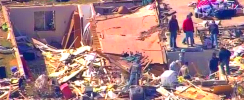
Dare I even say near the level of Smithville:All i’m gonna say is, Vilonia arguably produced damage well on par with a lot of the officially rated EF5s. So I really don’t see why there’s much more need to debate about its rating at this point.
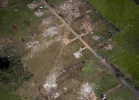
Dare I even say near the level of Smithville:
View attachment 52262
Has anyone done a deep look at Chapman? Not just the bent railroad tracks, but other damage, such as the farmhouse that essentially disappeared.Agreed. Well on par with other rated EF5s. Vilonia (in my opinion) is the strongest post 2013 tornado, and by a fair margin too (probably Bremen and Bassfield following behind it).
Always remarkable how the 2011-2014 period had such an exceptional number of extremely violent tornadoes.
Gotta love that we have tree and vegetation damage that is rivaling some of the highest end 5s we've seen and yet we focus on trees that probably weren't even in the core circulation in the survey.I think it’s very likely this is Saltical’s “work” rubbing off on Nick. His modus operandi is to do a deep dive on ONE house, call it case closed while leaving other potential EF5 DIs unaddressed, and then cue discord minions just brainlessly parroting his position and being dismissive of anyone questioning the rating as a whole and regurgitating his opinion based on, and let me repeat this again…..ONE HOUSE.
He did the same thing with Rochelle, based on a house that was not directly cored by the tornado, and suddenly everyone gets all dismissive of that tornado as a whole (admittedly including me temporarily, until I realized his analysis did not include other EF5 candidate homes in the subdivision). The best EF5 candidate home from Rochelle was on Richard Road, was directly cored by the tornado, was NOT built by the same sketchy construction company that built other ones in the subdivision, and is completely absent from his research. This was proven by another user on this very forum at the end of the last big debate on Rochelle, and I tried to point this out, but I guess nobody wanted to continue the conversation.
I GUARANTEE you that the only deep analysis that he or anyone in that orbit did regarding Vilonia was the Wicker Street home. Nothing on Fish Hooks restaurant, Beryl Road, Coker Road, Cemetery Road, or the fertilizer tank. So let’s play dumb and hypothetically say the Wicker Street house was the only slabbed structure in Vilonia. Even if that was the case, his “takedown” of the Wicker Street home largely came down to bolt placement, “not enough” bolt bending, and “not enough” plate removal, which may indicate a continuous load path issue. Mind you, there STILL WERE some bent bolts and removed plates, but apparently “not enough”.
So is it a fact that ANY inkling of there not being 100% proof of an absolute iron clad, perfect continuous load path within a house automatically takes a tornado out of the running for EF5? No, it isn’t. Is there a written rule somewhere that conclusive evidence of an absolutely perfect continuous load is an absolute non-negotiable requirement for EF5 rated house damage regardless of context? No, there isn’t. Is it true that within the Moore 2013 tornado survey homes of similar construction (straight nailed wall connections) were still rated EF5? Yes, it is. Is it true that the surveyors from Moore 2013 SPECIFICALLY STATED that while extensive sill plate removal and bolt bending was integral to applying EF5 ratings to straight nailed homes in that specific survey, that this was simply the criteria used in that specific survey, and that the definition of EF5 house damage or what constitutes a home as “well-built” is not set in stone and may not apply in other surveys due to differences in rating practices and methodology? Yes, they did. Is tornado damage surveying equivalent to case law, meaning the degree of sill plate removal and bolt bending from Moore 2013 is now the gold standard for every single EF5 candidate event from that point forward? No, it isn’t. Is it true that just last year, Jim LaDue said that a house doesn’t have to be a total fortress for an EF5 rating to be applied? Yes, he did.
And finally, if you refuse to be a little bit lenient about bolt placement/bending and sill plate removal, and refuse to factor in contextual evidence that looks like this below, does that mean that you lack the intuition and pattern recognition skills needed to identify a tornado event of exceptionally rare intensity? Does it also show that you lack the ability to be reasonable enough to take contextual evidence into account and allow it to override some questions about continuous load path at a single house, and not come to an erroneous conclusion about what EF rating is most appropriate given the overall evidence? The answer to both of those questions, is yes.
View attachment 52257
View attachment 52258
Conclusion: anyone who thinks EF4 is appropriate here has completely lost the plot, does not have a good grasp on the relationship between damage and intensity, and is not going to be the person who gets us back on a path to reasonable application of the EF scale that emphasizes reasonable conclusions.
But, I’ll leave you with this little tidbit. These aren’t the only people doing post-analysis of the Vilonia tornado, they haven’t come close to doing any kind of full analysis of the potential DIs it left behind, and the Wicker Street house isn’t even the main point of focus for anyone actually trying to ascertain a provable specific windspeed from this tornado. All I can say on that for now, but whatever Saltical did does not even come close to scratching the surface of what can be done with the Vilonia tornado.
That's a fair assumption. I have Vilonia and Mayfield comfortably above the rest.Agreed. Well on par with other rated EF5s. Vilonia (in my opinion) is the strongest post 2013 tornado, and by a fair margin too (probably Bremen and Bassfield following behind it).
Always remarkable how the 2011-2014 period had such an exceptional number of extremely violent tornadoes.
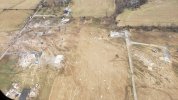
I legitimately thought the two pictures he shared were from Bridge Creek when I first looked at his post. It's identical.Gotta love that we have tree and vegetation damage that is rivaling some of the highest end 5s we've seen and yet we focus on trees that probably weren't even in the core circulation in the survey.


