• Welcome to TalkWeather!
    We see you lurking around TalkWeather! Take the extra step and join us today to view attachments, see less ads and maybe even join the discussion.
    CLICK TO JOIN TALKWEATHER

Enhanced Fujita Ratings Debate Thread

My opinion is the tornadoes on 04/27 are a big reason why EF5s are impossible to achieve today. Like I said, they were so intense they set the bar unreasonably high. So I think saying they wouldn't be rated the same today is circular logic, since they're the reason they wouldn't be rated so high. ie. A is true because of B, and B is true because of A.
I don't think Smithville would be the only EF5 of 4/27 if it happened today. IMO, if it happened today, Smithville would be EF5, Huntsville would likely still give Hackleburg and potentially Rainsville their EF5 ratings, Birmingham would use Enderlin precedent to give Tuscaloosa EF5, and the currently very liberal Peachtree City would give Ringgold EF5. Possibly Barnesville as well.
 
I don't think Smithville would be the only EF5 of 4/27 if it happened today. IMO, if it happened today, Smithville would be EF5, Huntsville would likely still give Hackleburg and potentially Rainsville their EF5 ratings, Birmingham would use Enderlin precedent to give Tuscaloosa EF5, and the currently very liberal Peachtree City would give Ringgold EF5. Possibly Barnesville as well.
What other tornadoes from 4/27 do you think potentially reached EF5 strength? I’ve always thought Cordova, Cullman, Otachee/Shoal Creek, and Flat Rock may have reached EF5 intensity at some point during their lifetimes.
 
apparently the whole hackleburg doesn't deserve EF5 rating talk comes from the fact that the famous oak groove mansion is not a well built brick home base on new info , apparently hearing all the anchor bolts were on the garage part and none on the main home.

there is already a lot of people on discord that say rainsville and philadelphia aren't EF5 , and also a uptick of them saying Smithville isn't the strongest tornado and also that the funeral home is over rated or something like that.
I think what they are saying is that structurally, out of every officially-rated EF5 tornado that day, Smithville is the only one that would’ve been rated EF5 today. And that’s not a completely insane take; both Philadelphia and Rainsville very likely would be rated in the 180-200 range today. Hackleburg’s a weird one as most of the structures it hit were horrendously-constructed, but I do think it would’ve been rated a 5 somewhere in Phil Campbell. The main portion of the Oak Grove mansion was indeed unanchored, and that would max out somewhere in the EF4 range.

Contextually, there are 6+ tornadoes that were into the EF5 range on 4/27.
Correct me if I'm wrong, but I don't recall there being anchoring issues with the Oak Grove home - I thought the issue was that foundation was part-CMU, part poured slab. The CMU part surrounding the basement did have sill plating at the very least.

Also, if there's "a lot of people on discord" saying something about [insert tornado here], believe the opposite.

2025 ended days ago my bro


Surprised you don't mention Cordova and Cullman here as well - you explicitly stated you considered Cordova an EF5 (well, unless that changed) and Cullman appeared to have some N A S T Y contextual damage (also, Barnesville).
Cordova definitely meets the contextual criteria for EF5. Not 100% sure if it meets the structural criteria without ground level photos of the home in Cullman County, but it's definitely plausible since said home was built on a solid poured concrete foundation at least.

I'm honestly ok with EF4 for Cullman, unless somebody shows me something that changes my mind. Barnesville is borderline; I could accept a high end 4 or low end 5 there.
 
Also, if there's "a lot of people on discord" saying something about [insert tornado here], believe the opposite.
This isn't solely based on a discussion; photo evidence basically confirms the home itself was unanchored. On my phone at the moment but can get photos in a bit. The garage was anchored down but obviously a garage door is usually the first thing to go in a tornado, and structural integrity would’ve easily been compromised.
 
Correct me if I'm wrong, but I don't recall there being anchoring issues with the Oak Grove home - I thought the issue was that foundation was part-CMU, part poured slab. The CMU part surrounding the basement did have sill plating at the very least.

Also, if there's "a lot of people on discord" saying something about [insert tornado here], believe the opposite.


Cordova definitely meets the contextual criteria for EF5. Not 100% sure if it meets the structural criteria without ground level photos of the home in Cullman County, but it's definitely plausible since said home was built on a solid poured concrete foundation at least.

I'm honestly ok with EF4 for Cullman, unless somebody shows me something that changes my mind. Barnesville is borderline; I could accept a high end 4 or low end 5 there.
Barnesville was a solid EF4; not sure about EF5 given we don’t have a ton of ground photos. Cordova was contextually a very high 4 to low 5 depending on how you interpret vehicle damage and trenching (the latter I usually discard).
 
See this is a valid thought experiment. And it's been covered in here multiple times, but the recent trend hasn't been about this line of thinking. There are several people legitimately making the argument those tornadoes didn't "deserve" their rating.
As in like at all? Weird.
 
Barnesville was a solid EF4; not sure about EF5 given we don’t have a ton of ground photos. Cordova was contextually a very high 4 to low 5 depending on how you interpret vehicle damage and trenching (the latter I usually discard).
Wasn't just trenching and vehicle damage... it scoured grass from hillsides, completely debarked trees and shrubs, threw and mangled farm equipment and actually caused a partially underground storm shelter to collapse on to its occupant (fortunately they survived with only minor injuries).
 
I know Reddit can be a cesspool, but recently people are creating posts there that Smithville was the only tornado that was an actual EF-5 that day, and that the other three, particularly HPC, should be downgraded. I would argue that it is more likely that there were MORE tornadoes that day that were capable of EF-5 damage at some point.
I tried joining the tornadoes reddit a while ago...it's basically split between people who question the ratings of basically every tornado and people who think that the official ratings can't be questioned because the surveyors are the experts and everyone else isn't.

Personally, I think the most realistic perspective is somewhere in the middle, between being a rating contrarian for the sake of it and saying that nobody should ever question a final rating, but apparently everything on the internet is totally black and white, so what do I know?
 
I tried joining the tornadoes reddit a while ago...it's basically split between people who question the ratings of basically every tornado and people who think that the official ratings can't be questioned because the surveyors are the experts and everyone else isn't.

Personally, I think the most realistic perspective is somewhere in the middle, between being a rating contrarian for the sake of it and saying that nobody should ever question a final rating, but apparently everything on the internet is totally black and white, so what do I know?
I just browse reddit occasionally. Most Reddit Mods are also overzealous and squash any kind of dissension. Including at r/Tornado. I find r/EF5 pretty comical just from a sh1tposting perspective though. The Tim Marshall memes, while it’s obvious everyone is in on the joke, are pretty funny.

Also on the bolded point: nuance is completely gone from the internet now.
 
Sorry for the massive wall of text. But anyway here's my full breakdown and take on everything related to the recent 4/27 debate:

-Smithville: Solid iron-clad, above and beyond (surveyor's actual words) EF5 with plenty of classic "slab and bolts" damage points to prove it. Only thing to nit pick is the apparent lack of anchoring at Pickle Funeral Home, and some of the obvious hyperbole within the Tornado Talk article on Smithville.

-Hackleburg: Solid EF5, but not as many legit EF5 damage points as the official survey suggests. The only proper "slab and bolts" structures were in Hackleburg, Phil Campbell, and Mount Hope. Hackleburg had a few well-anchored condos and homes reduced to slab foundations. Phil Campbell had a slabbed church, a few slabbed homes, and a slabbed one-story apartment building on Stalcup Court that was well-anchored. Mount Hope had a masonry construction restaurant that was obliterated with such force that part of its foundation slab buckled and pulled out of the ground. Now here's where things get controversial. I personally do not believe, and haven’t believed for a while that the Oak Grove damage was the most impressive or representative of this tornado's peak intensity. I have seen close up pics of the brick mansion's foundation (they are now gone from the DAT for some reason), and there was indeed a CMU foundation with a distinct lack of visible anchoring mechanisms. While the contextual damage in that area was impressive, given the construction issues, I don't think that specific area would be given an EF5 rating today. Overall, whoever surveyed the Hackleburg tornado seemed to have a tenuous grasp on what solid construction and anchoring looks like. For example, one of the first EF5 damage points, a large brick veneer home swept away along Hayfield Road as the tornado approached Hackleburg, was CMU foundation with a lack of solid anchoring and a clear weak point (non-concrete walk-out basement wall that failed). In fact, Tim Marshall used this specific house in a presentation as an example of something that was rated EF5 but probably shouldn't have been. Overall, the survey was rather strange, and seemed to glaze over genuine EF5 structures (well anchored with slab foundations), and really put a lot of emphasis on questionable EF5 damage points (CMU foundations with dubious anchoring). So EF5 today, but fewer EF5 damage points.

-Rainsville: I still believe the EF5 rating was appropriate given the storm shelter that was partially unearthed and heaved slightly upward out of the ground, what it did to the "EF5 proof" safe, removal of sidewalk slabs, and possibly the total obliteration of what was reported to be a legitimate stone masonry construction house (need more verification on the actual construction methods there). But, if I was out there now and it was up to me to assign a rating under current standards, I would be very hesitant to give an EF5 rating to a tornado with no clear cut "slab and bolts" foundations being swept clean, and essentially go with EF5 based on Rainsville's contextual evidence alone. The current climate of surveying doesn't really support that approach, and I think many surveyors would feel hesitant too. So while I do agree with the rating, I don't think its likely that Rainsville would be an EF5 if it happened today.

-Philadelphia: I don't think a single EF5 has dropped further in the rankings in my personal list than this one. Trenching has simply happened too many times since then associated with tornadoes that clearly were not of exceptional intensity. The death blow was when an EF1 tornado caused trenching near Mauk, GA in 2022, while only causing minimal damage to trees and structures in the area. Trenching simply is not a reliable EF5 indicator. But I get it, nothing like the Philadelphia trenching had been so clearly documented prior to that event, and I can understand why they did go EF5. Now here's the thing, I still think there's a route for an EF5 rating in Philadelphia, but just not in the way many would expect. Philadelphia produced some incredible root-balling, with massive trees ripped out of the ground, debarked, and thrown long distances to the point where it wasn't clear where some of them even originated. In the proposed updated scale, root balling in some circumstances can be considered an EF5 DI. The problem is I don't know enough about root balling to say what exactly defines EF5-worthy root balling. Philadelphia may indeed be the textbook example, but I would like more info on this relatively new concept and DI before I strongly align myself with an opinion on Philadelphia.

------------------
Other Tornadoes: Now to say that 4/24 would only have one or two EF5 ratings today isn't necessarily true. There were at least a couple others that either have a strong case for EF5, and a few more for which people have at least argued an EF5 rating would have been viable.
------------------

-Tuscaloosa: Following Enderlin, this is probably the best bet. The Hurricane Creek Railroad Bridge has been the subject of at least one academic study that used mathematics to conclude winds of around 220 MPH would have most likely been needed to destroy the bridge and send one of the massive support structures tumbling uphill out of the canyon. If the math says EF5, that is good enough for me, and it was good enough for the people who rated Enderlin. Had Tuscaloosa occurred today paired with that study of the bridge, I think an EF5 rating would be likely.

-New Wren: The more I study this one, the more I am convinced this was a solid, clear-cut EF5. The surveyors simply missed the worst damage. The main EF5 candidate damage point was a large, sturdy, well-anchored brick veneer home that was completely swept clean in the small rural community of Chapel Grove. That by itself puts it at least in the high-end EF4 range. But what puts it into the EF5 range is the contextual damage. Near the empty foundation of the obliterated home in Chapel Grove, a completely crumpled pickup truck was found. It was determined that this truck was lofted from Highway 45, and carried a truly remarkable 1.7 miles through the air, before smashing to the ground and eventually coming to rest near the house foundation. From point A to point B, the truck traveled a total distance of about roughly two miles, which is just insane. The driver, a man named Lynn Davis, unfortunately but not surprisingly did not survive. In addition, extensive grass scouring, strikingly comparable to the grass scouring that occurred in nearby Smithville, occurred along the path of the New Wren tornado. Severe grass scouring is in general one of the most reliable indicators of a truly high-end event. Had MEG not missed this damage, I do think there would have been a shot at another EF5. Unfortunately, MEG today is a survey team I simply do not trust to make good calls, so I can't say New Wren would be an EF5 in 2026, but that simply comes down to a crappy survey team rather than the damage itself.

-Ringgold: Damage comes down to at least one "slab and bolts" home found swept completely clean in the Cherokee Valley area. This would be a marginal EF5 at most, as the contextual damage in this area while definitely impressive, isn't quite as extreme as that left behind by other EF5s. There was quite a bit of vehicle tossing and mangling, but that isn't really a true EF5 indicator. Also, the degree of debarking and scouring was not particularly impressive, and there just wasn't really a standout "holy ****" instance of contextual damage like there was in New Wren that sets Ringgold apart. Now with that said, Peachtree City is a pretty liberal office with surveys, sometimes to a fault. So if Ringgold happened today, I'd say EF5 would have at least been strongly considered. Now I do know that Tony Lyza suggested that additional EF5 candidate damage happened in Apison, but I don't know much about the damage that happened in that area. Few Apison pics I have show CMU foundations.

-Flat Rock: The EF5 candidate reputation with this one seems to largely come down to an anecdote by NWS damage surveyor Chris Darden about how he probably should have gone with EF5. He described how the house in questions was "anchored", and how vehicles and propane tanks were thrown long distances. Knowing how Darden was directly involved in rating EF5 damage points along the Hackleburg path, and was directly involved in upgrading Rainsville to EF5, he seems to have a pretty liberal and largely context-based approach to defining EF5 damage that is currently not in practice. In addition, judging by the other EF5 damage points in Alabama described as "well-anchored", I'm hesitant to believe that Darden's standard for what constitutes as "well-anchored" would be widely accepted today. The pics from Flat Rock that I have seen do not scream EF5. I think EF4 is fine here and would be today as well.

-Cordova: Some pretty crazy contextual damage and it is not at all unlikely that EF5 winds occurred. But there isn't a single area of actual solid EF5 structural damage to back it up fully. I'm not really against context-based EF5s, but I would want to see a little more than what occurred. EF4 works, and I don't think there's any chance we'd see anything higher than that today.

-Barnesville: I know this was a house slabber and an extensive tree debarker that should have been rated higher than EF3, but I don't really know how this one entered the "EF5 candidate" discussion. I admittedly don't know very much about this one, but I have never found anything that absolutely screams EF5. Need more info, but I don't think Barnesville would be an EF5 candidate today either.
 
Last edited:
Sorry for the massive wall of text. But anyway here's my full breakdown and take on everything related to the recent 4/27 debate:

-Smithville: Solid iron-clad, above and beyond (surveyor's actual words) EF5 with plenty of classic "slab and bolts" damage points to prove it. Only thing to nit pick is the apparent lack of anchoring at Pickle Funeral Home, and some of the obvious hyperbole within the Tornado Talk article on Smithville.

-Hackleburg: Solid EF5, but not as many legit EF5 damage points as the official survey suggests. The only proper "slab and bolts" structures were in Hackleburg, Phil Campbell, and Mount Hope. Hackleburg had a few well-anchored condos and homes reduced to slab foundations. Phil Campbell had a slabbed church, a few slabbed homes, and a slabbed one-story apartment building on Stalcup Court that was well-anchored. Mount Hope had a masonry construction restaurant that was obliterated with such force that part of its foundation slab buckled and pulled out of the ground. Now here's where things get controversial. I have personally do not believe, and have not believed for a while that the Oak Grove damage was the most impressive or representative of this tornado's peak intensity. I have seen close up pics of the brick mansion's foundation (they are now gone from the DAT for some reason), and there was indeed a CMU foundation with a distinct lack of visible anchoring mechanisms. While the contextual damage in that area was impressive, given the construction issues, I don't think that specific area would be given an EF5 rating today. Overall, whoever surveyed the Hackleburg tornado seemed to have a tenuous grasp on what solid construction and anchoring looks like. For example, one of the first EF5 damage points, a large brick veneer home swept away along Hayfield Road as the tornado approached Hackleburg, was CMU foundation with a lack of solid anchoring and a clear weak point (non-concrete walk-out basement wall that failed). In fact, Tim Marshall used this specific house in a presentation as an example of something that was rated EF5 but probably shouldn't have been. Overall, the survey was rather strange, and seemed to glaze over genuine EF5 structures (well anchored with slab foundations), and really put a lot of emphasis on questionable EF5 damage points (CMU foundations with dubious anchoring). So EF5 today, but fewer EF5 damage points.

-Rainsville: I still believe the EF5 rating was appropriate given the storm shelter that was partially unearthed and heaved slightly upward out of the ground, what it did to the "EF5 proof" safe, removal of sidewalk slabs, and possibly the total obliteration of what was reported to be a legitimate stone masonry construction house (need more verification on the actual construction methods there). But, if I was out there now and it was up to me to assign a rating under current standards, I would be very hesitant to give an EF5 rating to a tornado with no clear cut "slab and bolts" foundations being swept clean, and essentially go with EF5 based on Rainsville's contextual evidence alone. The current climate of surveying doesn't really support that approach, and I think many surveyors would feel hesitant too. So while I do agree with the rating, I don't think its likely that Rainsville would be an EF5 if it happened today.

-Philadelphia: I don't think a single EF5 has dropped further in the rankings in my personal list than this one. Trenching has simply happened too many times since then associated with tornadoes that clearly were not of exceptional intensity. The death blow was when an EF1 tornado caused trenching near Mauk, GA in 2022, while only causing minimal damage to trees and structures in the area. Trenching simply is not a reliable EF5 indicator. But I get it, nothing like the Philadelphia trenching had been so clearly documented prior to that event, and I can understand why they did go EF5. Now here's the thing, I still think there's a route for an EF5 rating in Philadelphia, but just not in the way many would expect. Philadelphia produced some incredible root-balling, with massive trees ripped out of the ground, debarked, and thrown long distances to the point where it wasn't clear where some of them even originated. In the proposed updated scale, root balling in some circumstances can be considered an EF5 DI. The problem is I don't know enough about root balling to say what exactly defines EF5-worthy root balling. Philadelphia may indeed be the textbook example, but I would like more info on this relatively new concept and DI before I strongly align myself with an opinion on Philadelphia.
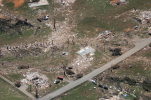
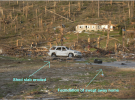
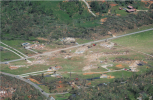
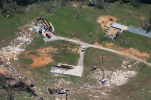
Apologies for derailing the thread a bit but what's your take on New Harmony? It's one of those weird tornadoes that I feel has been memory-holed from discussion for a while despite, IIRC, doing some legitimately borderline ef5 damage to a well built home.

The 2011 New Harmony EF4 tornado was an extremely violent tornado. Probably the strongest tornado in TN from 4/27/2011.
222314_1829155122990_2051024_n.png

248105_224670977558717_6498805_n.png

231191_224670950892053_7316428_n.png

225479_1829154642978_2665483_n.png

228689_1829153442948_3382505_n.png

unknown.png

unknown.png

300747_169734853102513_6634880_n.png

229579_217218431622875_6500207_n.png

View attachment 12165
@MNTornadoGuy Do you have the images from this post saved? They're all toast...
 
@buckeye05 Great post! Agree with most of your assessments. In regards to Philadelphia, doesn't the depth of the trenching play a factor? Sure, you can remove sod in some areas with low winds, but digging, what was it, 16 inches or something? I'm not sure that's been done before or since, but correct me if i'm wrong. I agree that it's likely no tornado would be rated purely on context like that today (a trend Enderlin hopefully changed).

In regards to Barnesville. It is my number one EF5 upgrade candidate from 2011, and it has the strongest case structurally. Here's my write up on it. I've bolded the most important part.

Barnesville, GA EF3 - April 28, 2011
Path length: 30.82
Fatalities: 2
Injuries: 22

The tornado produced EF2-EF3 damage for most of its path but as it crossed Old Milner Road it became tremendously powerful. A forest was razed to the ground, and trunks were mashed together in a convergent pattern. A small core of suction vortices tore much of the bark from trees and left cycloidal markings in the grass. The article explicitly prohibits sharing images from certain contributors so I had to find Truman Boyle's aerial imagery myself. All images from the video were screenshotted myself. Here's the link:


View attachment 45784View attachment 45783
View attachment 45794

Damage around the Grove street area was especially intense. A family sheltered in a bathroom as the tornado hit. They laid flat in the tub, and the home was ripped away around them. The sizable frame house was shredded away until only a tattered bathroom was left. There a more images I can't share, but multiple homes in this area were flattened entirely other than just a few small interior rooms.


View attachment 45793

Patty and Marty Gunter experienced the tornado in their home. They ran downstairs, but couldn't make it to their safe place in time. They were in the kitchen and Pattie recalls the pressure being so strong it felt like her feet were nailed to the floor. Patti crouched down on the floor covering her head and the next thing she remembers is sitting on the ground in the foundation of the house. "There was no floor. Just dirt." Marty had a similar experience . In the blink of an eye the couple's home was ripped out from under them and they both survived, standing on bare dirt where the house had been. The only thing remaining was a few foundation blocks. One of their cars was found upside down 50 feet away, and the other was upside down in the woods 100 feet away.

Here's their house:

View attachment 45796

The home had a CMU foundation with grout and rebar. The house was secured to the foundation with "big bolts and washers every so often", which Tornado Talk has confirmed with photographic evidence. No substantial remains were deposited anywhere, only small pieces scattered in the forest hundreds of yards away. Damage patterns indicated a suction vortex completed a trochoidal loop over this spot. A stone tree ring planter filled with mulch and a medium sized tree inside took a direct hit, and disappeared with only some disturbed dirt and a few splinters left.

About 110 yards SE the most impressive structural damage occurred (pictured below). The house was less than two years old, and it was built to hurricane specifications. The foundation was built of firmly reinforced and fully filled/sealed concrete masonry, encased on the outside by brick veneer. It rose a little less than a foot above the ground. Some additional reinforced masonry columns were located in the open space inside the foundation. The house disappeared, with only a few remaining pieces of plumbing and brick inside the foundation. The rest of the house was granulated with tiny fragments scattered into the forest.

View attachment 45797View attachment 45792

Before and After imagery of the area from Google maps

View attachment 45788
View attachment 45787


Another home further in the path was completely swept clean aside from a small corner of the house


View attachment 45795


There are many many more images in the article that I can't share and they're all mind-blowing. Including a screwdriver, old photo, and paper stuck into fully debarked trees.


New rating: F5

Reasons: Strong framed homes swept clean, trees completely debarked, incredible phenomena.


Now here's the most interesting part. The house I've bolded was built to hurricane specifications, and there's concrete proof.

1767674042042.png

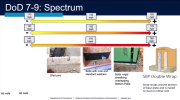
Here's an excerpt from Jim Ladue's recent presentation about build quality and ratings. Look at the top indicator. You can see the straps are exactly the same. There was also severe debarking and grass scouring in the area.

1767674214749.png
1767674326626.png1767674400916.png

Ringgold is just behind Barnesville for me, because even though it's not as rock solid of a case structurally, it has "the look" of an extraordinarily powerful tornado. The well built home is center of the first pic. The concrete foundation of a shed in their yard was eroded and displaced and can be seen on the left. A substantial hardwood tree was also ripped out of the ground and thrown 40 yards. There was also significant debarking.

1767674560537.png
1767674779751.png
1767674569739.png
1767674729216.png
 
Here are my more detailed write ups of Barnesville and Flat Rock. I actually agree Flat Rock wouldn't be rated EF5 today. The most impressive damage from that tornado was contextual (which absolutely had "the look"), but there's not enough solid evidence structurally. I'd even argue the contextual damage is inarguably EF5 level, and even historic, but that's not the point lol.

Ringgold, Georgia EF4 - 04/27/2011
Path Length: 54.75 miles
Deaths: 20
Injuries: 335

The tornado became extremely violent near the intersection of Friendship and Cherokee Valley. 20 homes were destroyed in this neighborhood, with over half either mostly or entirely vanishing. It was absolute and complete devastation.
View attachment 45850
View attachment 45840

One anchored home (surrounded by debarked hardwood trees and grass scouring) had the concrete slab picked clean of all debris, with only one large sill plate remaining. All fixtures and plumbing were shredded from the foundation, along with ceramic tiling, and the debris was windrowed away from the base of the slab. Unanchored homes were tossed whole well away from their foundations. 10 yards from the anchored home was the concrete slab of a shed, which rose several inches above the ground, and the southern and eastern sides were smashed, gouged, and flayed off.

(The home and shed slab are centered in this pictures)
View attachment 45841
View attachment 45846

There was intense grass scouring, and hundreds of impact craters pockmarked the landscape from high velocity projectiles. Trees and low-lying shrubbery were also entirely stripped of their bark and branches. Despite the 60 mph forward motion a large pickup truck was thrown roughly 40 yards in the opposite direction towards the southwest. This indicates extreme winds, especially considering the the most powerful winds would only have lasted a few seconds.

View attachment 45842
View attachment 45849
View attachment 45844
View attachment 45845

Cars were also tossed from every residence with some traveling at least 110 yards. And granulated debris was slammed into the ground with such force it was buried upright. A large section of wooden subflooring from one house was sliced vertically deep into the earth.

View attachment 45847
View attachment 45848


New Rating: F5
Reasons: This is absolute textbook F5 and EF5 damage from any era. It requires no explanation, but regardless, strong framed houses tossed, automobile sized missiles, trees and shrubs entirely debarked, incredible phenomena.

Flat Rock, Alabama - Trenton, Georgia EF4 04/27/2011
Path length: 45 miles
Fatalities: 17 (3 were indirect)
Injuries: 125

The tornado began by rapidly intensifying in uninhabited forest and flattened wide swaths of trees. It drug one 30 foot chunk leaving an etch in the ground over 100 yards long. Less than five minutes after formation it was extremely formidable. It annihilated a small brick house leaving barely a trace. The remnants were accelerated to such high speeds that it broke and shattered asphalt on a road 60 yards away.

View attachment 45855

Across the street it hit Camp ToKnowHim and two very large RVs, leaving virtually no identifiable traces. It also tossed a shipping container full of equipment. Violent impact marks were left across the area, along with debarking of trees and severe low-lying shrub damage. Acres of forest were demolished and ground scoured.

Further along the path an F350 truck was rolled 20 yards, and RV was thrown 90 yards, and a single wide trailer was thrown 50 yards before touching the ground. A frame house was also swept clean and a 45 foot tall hardwood tree was ripped out of the ground and dragged 30 yards. Here's the before and after of the property.
View attachment 45856View attachment 45857

A mile later the tornado was even stronger and it bounced a pickup truck 300 yards, and lofted two cars through the air for 100 yards, transported substantial trees significant distances, and obliterated every structure it touched.

View attachment 45858

The tornado continued to strengthen in uninhabited land for 6 and a half miles, destroying a huge swath of forest and spraying dirt across rocky outcroppings and broken trunks. It hit a large downslope with an 800 foot elevation drop and became its most extreme. A vast chunk of old, thick forest was completely mulched. Despite having no structural debris loading there was extreme debarking, and all signs of greenery were almost entirely erased. Many felled trunks were split further into two or three chunks. Years later, aerial imagery revealed there wasn't a single tree that survived in the direct path.

View attachment 45859 View attachment 45860

It finally hit a populated area again and two homes were smeared across the ground from their foundations. One of the NWS surveyors for this tornado, Chris Darden, said all day they had seen "nothing but carnage". He described the second home below as "pretty well built" that was swept away down to the flooring. nearby trees were denuded and debarked. Even most of the carpeting had been stripped. The washer, dryer, and fridge all had disappeared and still weren't located three days later when Chris revisited the site.

View attachment 45861View attachment 45862


With a forward speed of 50 mph, the .85 mile wide tornado crossed from this region into a field where it continued to flatten and debark large swaths of forest. Unfortunately, on the other side of that field were dozens of residences. Many were obliterated along with everything else in the tornado's path.

View attachment 45863View attachment 45864

Some seriously incredible contextual damage occurred here with exclusive pictures that Tornado Talk explicitly forbids from being shared. This includes a concrete porch slab of a double wide that was knocked 10 yards from its original location, A huge hardwood ripped out of the ground (leaving a deep crater) and carried 50 yards, the foundation of a double wide that was ripped out of the ground concrete and all.

I've summarized barely over half the article, and posted maybe 5% of the pictures. It goes seriously in depth showing the nonstop carnage this tornado caused. I now agree with other user's claims that this was close to Smithville in strength. Highly recommend subscribing and checking it out.


New rating: F5

Reasons: Dozens of instances of incredible phenomena, strong framed houses obliterated, unbelievable vegetation damage, and countless huge projectiles and vehicles carried over 100 yards.

 
-Ringgold: Damage comes down to at least one "slab and bolts" home found swept completely clean in the Cherokee Valley area. This would be a marginal EF5 at most, as the contextual damage in this area while definitely impressive, isn't quite as extreme as that left behind by other EF5s. There was quite a bit of vehicle tossing and mangling, but that isn't really a true EF5 indicator. Also, the degree of debarking and scouring was not particularly impressive, and there just wasn't really a standout "holy ****" instance of contextual damage like there was in New Wren that sets Ringgold apart. Now with that said, Peachtree City is a pretty liberal office with surveys, sometimes to a fault. So if Ringgold happened today, I'd say EF5 would have at least been strongly considered. Now I do know that Tony Lyza suggested that additional EF5 candidate damage happened in Apison, but I don't know much about the damage that happened in that area. Few Apison pics I have show CMU foundations.
I would argue that the office wasn't overly conservative back then. Sure, there were a few guys on retirements doorstep that were ultra conservative, but Lans and Steve were very logical and detailed with most of the tornadoes on 4/27. So much research went into the Ringgold tornado in particular. Interviews, speaking with builders, structural analysis, etc. Lans, the MIC at the time, pushed hard for it to be considered for EF-5/200+ but the national 'experts' saw it differently. Now, I think a case can be made for the Apison, TN side of the track that's pretty clear cut. But I may be on an island there. Did Ringgold likely have winds over 200 mph, yes, but it will remain EF-4/175 mph for the foreseeable future.
-Barnesville: I know this was a house slabber and an extensive tree debarker that should have been rated higher than EF3, but I don't really know how this one entered the "EF5 candidate" discussion. I admittedly don't know very much about this one, but I have never found anything that absolutely screams EF5. Need more info, but I don't think Barnesville would be an EF5 candidate today either.
Agreed. The only tornado that frustrates me from an underrated perspective is the Suches/Clayton track in NE GA. Some very impressive tree damage through portions of the Chattahoochee National Forest. I'm quite confident that tornado was capable of high-end EF-4 damage if it would've hit something substantial enough during those ramp ups. Some of the most impressive tree damage, especially in that terrain, I've witnessed on a survey.
 
@buckeye05 Great post! Agree with most of your assessments. In regards to Philadelphia, doesn't the depth of the trenching play a factor? Sure, you can remove sod in some areas with low winds, but digging, what was it, 16 inches or something? I'm not sure that's been done before or since, but correct me if i'm wrong. I agree that it's likely no tornado would be rated purely on context like that today (a trend Enderlin hopefully changed).

In regards to Barnesville. It is my number one EF5 upgrade candidate from 2011, and it has the strongest case structurally. Here's my write up on it. I've bolded the most important part.


Now here's the most interesting part. The house I've bolded was built to hurricane specifications, and there's concrete proof.

View attachment 49648

Here's an excerpt from Jim Ladue's recent presentation about build quality and ratings. Look at the top indicator. You can see the straps are exactly the same. There was also severe debarking and grass scouring in the area.

View attachment 49649
View attachment 49650View attachment 49651

Ringgold is just behind Barnesville for me, because even though it's not as rock solid of a case structurally, it has "the look" of an extraordinarily powerful tornado. The well built home is center of the first pic. The concrete foundation of a shed in their yard was eroded and displaced and can be seen on the left. A substantial hardwood tree was also ripped out of the ground and thrown 40 yards. There was also significant debarking.

View attachment 49652
View attachment 49655
View attachment 49653
View attachment 49654
Wow, good stuff here! A few replies to your points:

-When it comes to the depth of the Philadelphia trenching, it is indeed pretty remarkable. I’m just still not fully confident that I can call it slam dunk EF5 based on trench depth alone, especially after Mauk 2022.

-Barnesville, well um holy crap. That contextual damage genuinely has “the look” that I’ve mentioned and you rarely ever see, and that is honestly comparable with some of the most violent tree damage I’ve seen. Clearly a very high-end tornado, and far more impressive than I gave it credit for. My biggest reservation is that even with all the extra strapping, grouting, and reinforcement, it’s still a masonry foundation home at the end of the day, which tend to still have some legitimate continuous load path issues due to blocks shifting or cracking underneath the actual anchoring mechanisms. But on the other hand, I will say this is probably as strong as a masonry foundation can possibly get, and I’d be stupid to brush that off, especially when combined with the extreme contextual damage. So at least high-end EF4, and when it comes to EF5, I’d move it from “nah” to “maybe”.

Edit: TH says this one actually wasn’t on a masonry foundation, but on the other hand, the tree damage immediately nearby isn’t nearly as crazy as those other Barnesville pics. I also have questions about whether this is true scouring or bare dirt exposed via removal of forest leaf litter. I’m hoping @NorthGaWeather can give us some more first-hand info on this.

-Now with Ringgold, my opinion hasn’t really changed. I disagree that it has “the look”, while Barnesville clearly does with completely annihilated wooded areas and extreme debarking. There are lot of references to severe grass scouring in the Ringgold TornadoTalk writeup, but none of the actual photos support this claim. Debarking could be a lot worse too. When it comes to the shed slab, I worry this is a “TornadoTalk-ism”. The photo shows an ambiguous spot of concrete in the distance, with no clear evidence of warping, eroding, or dislodging. I just don’t see it. BUT…..with all that said, there’s juuuust enough there to make that one slab foundation home a possible marginal EF5 candidate, especially with Peachtree City and their liberal current surveying practices.

-I see that Flat Rock has fairly impressive contextuals, including at least one instance of a massive hardwood being root-balled (need more info on what kind of root balling qualifies as EF5). But I’d stop short of calling “the look”. To call it that, I’d need to see close up conclusive ground level imagery that has that totally shredded, muddy, extreme “bare soil exposed” ground scouring, with multiple 100% debarked trees, and structures wind-rowed and granulated. The Flat Rock pics don’t show any clear evidence of any of that, and the vague description of “pretty well built” doesn’t really inspire confidence. While it very well may have contained EF5 winds, I think high-end EF4 still works in Flat Rock given the damage imagery and lack of fully conclusive structural damage.

So basically I’ve shifted my view on Barnesville, but my take on Philadelphia, Ringgold, and Flat Rock remain the same.
 
Last edited:
I would argue that the office wasn't overly conservative back then. Sure, there were a few guys on retirements doorstep that were ultra conservative, but Lans and Steve were very logical and detailed with most of the tornadoes on 4/27. So much research went into the Ringgold tornado in particular. Interviews, speaking with builders, structural analysis, etc. Lans, the MIC at the time, pushed hard for it to be considered for EF-5/200+ but the national 'experts' saw it differently. Now, I think a case can be made for the Apison, TN side of the track that's pretty clear cut. But I may be on an island there. Did Ringgold likely have winds over 200 mph, yes, but it will remain EF-4/175 mph for the foreseeable future.

Agreed. The only tornado that frustrates me from an underrated perspective is the Suches/Clayton track in NE GA. Some very impressive tree damage through portions of the Chattahoochee National Forest. I'm quite confident that tornado was capable of high-end EF-4 damage if it would've hit something substantial enough during those ramp ups. Some of the most impressive tree damage, especially in that terrain, I've witnessed on a survey.
Oh you’re a NWS FFC surveyor! I had no idea, let alone that you were on these specific surveys. Can you tell me a little more about the Barnesville home that had the extra strapping, especially in light of Jim LaDue’s recent presentation? It does seem like a case where one could potentially assign a high-end rating. That tree damage and scouring from Barnesville is absolutely vicious too, but it seems like it happened farther away from the house in question. The tree damage in the pic of the house TH posted isn’t that crazy.
 
Last edited:
-Barnesville, well um holy crap. That contextual damage genuinely has “the look” that I’ve mentioned and you rarely ever see, and that is honestly comparable with some of the most violent tree damage I’ve seen. Clearly a very high-end tornado, and far more impressive than I gave it credit for. My biggest reservation is that even with all the extra strapping, grouting, and reinforcement, it’s still a masonry foundation home at the end of the day, which tend to still have some legitimate continuous load path issues due to blocks shifting or cracking underneath the actual anchoring mechanisms. But on the other hand, I will say this is probably as strong as a masonry foundation can possibly get, and I’d be stupid to brush that off, especially when combined with the extreme contextual damage. So at least high-end EF4, and when it comes to EF5, I’d move it from “nah” to “maybe”.
It wasn't. Poured concrete with brick veneer like the home in Chapman, albeit with a crawlspace instead of a basement:
Fig-59-Becky.png
 
I would argue that the office wasn't overly conservative back then. Sure, there were a few guys on retirements doorstep that were ultra conservative, but Lans and Steve were very logical and detailed with most of the tornadoes on 4/27. So much research went into the Ringgold tornado in particular. Interviews, speaking with builders, structural analysis, etc. Lans, the MIC at the time, pushed hard for it to be considered for EF-5/200+ but the national 'experts' saw it differently. Now, I think a case can be made for the Apison, TN side of the track that's pretty clear cut. But I may be on an island there. Did Ringgold likely have winds over 200 mph, yes, but it will remain EF-4/175 mph for the foreseeable future.

Agreed. The only tornado that frustrates me from an underrated perspective is the Suches/Clayton track in NE GA. Some very impressive tree damage through portions of the Chattahoochee National Forest. I'm quite confident that tornado was capable of high-end EF-4 damage if it would've hit something substantial enough during those ramp ups. Some of the most impressive tree damage, especially in that terrain, I've witnessed on a survey.
Also sorry to bombard you with questions, but what kept the single slab foundation home in the Cherokee Valley area at 175 MPH? It had a stronger foundation type than the others, and I have heard it was well-anchored. Is this untrue? Genuinely curious because I’ve heard claims it was “poorly anchored” and “well anchored” at this stage. Also what happened in Apison that was more impressive than the Cherokee Valley damage? I can’t find specifics on that area for the life of me.
.
It wasn't. Poured concrete with brick veneer like the home in Chapman, albeit with a crawlspace instead of a basement:
Fig-59-Becky.png
Oh well never mind then! The writeup made me think this was a masonry foundation. That’s more impressive construction wise than I thought. I will say the tree and grass damage here isn’t even close in intensity to the pics @Grand Poo Bah posted. I was under the impression that the crazy vegetation damage happened within the immediate vicinity of this house. Some of those trees aren’t even defoliated. Contextually not quite as impressive as I was thinking a moment ago.
 
Last edited:
Back
Top