• Welcome to TalkWeather!
    We see you lurking around TalkWeather! Take the extra step and join us today to view attachments, see less ads and maybe even join the discussion.
    CLICK TO JOIN TALKWEATHER

Enhanced Fujita Ratings Debate Thread

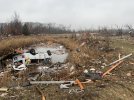
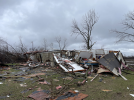
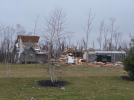
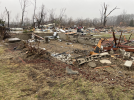
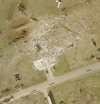
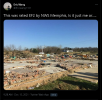
NWS Chicago couldve atleast slapped it with an HE EF-3 and I would have been entirely fine with it. Rating borderline EF-4 damage at high end EF-2, with THESE contextuals, is absolutley wild to me:

View attachment 51675

^^
To add more salt to the wound, the "EF-2" DI had debarked shrubbery via the image @Central Ohio Wx posted
When those photos of the home first happened during the event, first thought was eF4 upon initial look.
 
In before the sh!tstorm of reactions to Lake Village's rating...

"Manufactured home" is literally just the post-6/15/1976 HUD term for a mobile home.

One of the homes destroyed in that vicinity was definitely a mobile home, but the two in question under scrutiny were modular homes bolted to concrete block foundations.

Mobile/manufactured homes and modular homes are both considered prefabs, so a violent rating is pretty much out of the question, but I'm gonna be honest when I say idk if modular homes are supposed to be classified as FR12, MHSW or MHDW.

But with that said, ignoring the severe debarking and debris patterns and rating the entire scene 130MPH EF2 is completely nuts.
 
In before the sh!tstorm of reactions to Lake Village's rating...

"Manufactured home" is literally just the post-6/15/1976 HUD term for a mobile home.

One of the homes destroyed in that vicinity was definitely a mobile home, but the two in question under scrutiny were modular homes bolted to concrete block foundations.

Mobile/manufactured homes and modular homes are both considered prefabs, so a violent rating is pretty much out of the question, but I'm gonna be honest when I say idk if modular homes are supposed to be classified as FR12, MHSW or MHDW.

But with that said, ignoring the severe debarking and debris patterns and rating the entire scene 130MPH EF2 is completely nuts.

Hey lets give them some credit! they didn't rate everything EF2. They rated the tossed van and debris granulation EFU. As in, "Eyyyy Fvck U! It's not like any of this actually matters!" We can't even defend these ratings as a lack of experienced WFOs, or poor standardization. It's the QRT's deciding these things. People with more wind damage experience than all of us are looking at this and saying, "Yeah, this looks like 3 seconds of category 3 hurricane wind speeds to me!"

1773367473533.jpeg
 
Based on everything we know about tornado wind speeds at this point I think it's safe to say the EF3 rating encompasses basically all tornadoes from 125-240 MPH. There is no discrepancy or categorization anymore. It's a 3 point scale that sometimes accidentally goes to 4, but not enough to be statistically significant. EF3 covers everything from a few walls down, to complete atomization.
 
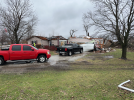
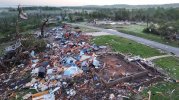
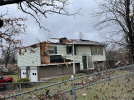
All of these houses were given the same rating btw

1773369139040.png
1773370009307.jpeg
(Edit: this pic is from Barnsdale because Twitter is a cesspool with no shame. It looks similar to Lake View)


1773369246377.png

1773369415493.jpeg
1773369982730.png
1773369973602.jpeg
 

Attachments

  • 1773369568411.png
    1773369568411.png
    10.4 MB · Views: 0
  • 1773369661714.png
    1773369661714.png
    23.7 MB · Views: 0
Last edited:
I Can't believe I'm saying this but even MEG wouldve probably given some of these homes a better rating.

Regardless, atleast MOST other offices won't do this. And I don't think we will get anything as egrigious for the rest of the season (hopefully)

Nah, MEG is the worst of the worst. They rated this brick frame home EF2, and Lake City EF3. They are the Michael Jordan, Tom Brady, and Wayne Gretzky of underrating.

IMG_1592.pngunknown_2.png
 
Nah, MEG is the worst of the worst. They rated this brick frame home EF2, and Lake City EF3. They are the Michael Jordan, Tom Brady, and Wayne Gretzky of underrating.

View attachment 51691View attachment 51692
It was actually NWS Louisville that surveyed and rated Bowling Green. They are absolutely up there with the worst offices when it comes to ratings as well. Louisville, Memphis, Springfield, Nashville, Lubbock, Goodland, and sometimes Dallas/Fort Worth are the ones you really gotta watch out for. They all tend to follow the “how low can we go” mindset and ignore contextual evidence.

Regarding Lake Village, I honestly wasn’t expecting them to go with EF4 after taking a closer look at the construction quality, but EF2 is kind of a slap in the face. The contextual damage simply was not consistent with an EF2 tornado, and they could have at least gone with EF3 based on the tree/vegetation damage alone. At least the tornado itself is in the books as an EF3 though which is fair given the awful construction quality, but I personally would have gone with high-end EF3 given the contextual evidence.
 
Last edited:
It was actually NWS Louisville that surveyed and rated Bowling Green. They are absolutely up there with the worst offices when it comes to ratings as well. Louisville, Memphis, Springfield, Nashville, Lubbock, Goodland, and sometimes Dallas/Fort Worth are the ones you really gotta watch out for. They all tend to follow the “how low can we go” mindset and ignore contextual evidence.

Regarding Lake Village, I honestly wasn’t expecting them to go with EF4 after taking a closer look at the construction quality, but EF2 is kind of a slap in the face. The contextual damage simply was not consistent with an EF2 tornado, and they could have at least gone with EF3 based on the tree/vegetation damage alone. At least the tornado itself is in the books as an EF3 though which is fair given the awful construction quality, but I personally would have gone with high-end EF3 given the contextual evidence.
I agree after a little analysis. ef3 would've just done fine under these circumstances, combined with contextual damage. I don't think the shitstorm on X was necessary over it, but a very conservative choice of rating to say the least.
 
I agree after a little analysis. ef3 would've just done fine under these circumstances, combined with contextual damage. I don't think the shitstorm on X was necessary over it, but a very conservative choice of rating to say the least.
This objectively looks like a completely lazy and slipshod job that warrants some anger. Not so much the EF2, although that is indeed a slap in the face, but the fact of very distinctly different damages being rated the same. That's ridiculous. And what pisses me off is, this wasn't a major outbreak like 2011 with dozens of tornadoes to quickly review.
 
This objectively looks like a completely lazy and slipshod job that warrants some anger. Not so much the EF2, although that is indeed a slap in the face, but the fact of very distinctly different damages being rated the same. That's ridiculous. And what pisses me off is, this wasn't a major outbreak like 2011 with dozens of tornadoes to quickly review.

Respectfully, getting upset at the varying degrees of house damage being slapped with one rating is not the right takeaway here. That’s not inherently problematic, and the EF scale is actually specifically designed to allow for that to happen. The biggest issue here was the failure to consider or factor in tree and contextual damage that was not consistent with an EF2 tornado. This contextual evidence could have been used to justify a higher rating in Lake Village despite poor construction, but it wasn’t. But significant variance in destruction levels to multiple homes being classified under a single rating is something very commonly seen in tornadoes, and when it’s reasonably linked to variance in house type/construction quality, it is absolutely valid. EF2 damage can accurately encompass total destruction of modular/manufactored homes, and simultaneously accurately encompass well-built frame homes that have lost portions of their roofs (both types were hit by this particular tornado). On top of that, you have the difference between high-end and low-end EF2 damage, which are objectively two quite different types of damage in terms of physical appearance and should in no way be considered being “rated the same”. What I’m trying to say is that EF2 damage isn’t only valid if it’s the stereotypical house with its entire roof completely removed, nothing more nothing less. Same thing with EF3; a house with full hurricane code construction being left mostly intact, versus a largely unanchored old farm home being swept from its foundation are both totally valid under the same rating of EF3, but are totally different in appearance.

When it comes to rating house damage, the scale is specifically designed to NOT work on a “Just rate every home that is destroyed to a similar degree the same way every single time, based purely on the physical appearance of the damage” basis, and for good reason. In fact, this is exactly why the scale has established upper and lower bounds for each DOD.

Now where we start to have problems is when surveyors go way outside of those bounds without any reasonable justification, when they remain within the bounds but assign an inappropriate rating given the construction quality, and when contextual evidence is not taken into account. In this particular case, it’s more the latter.
 
Last edited:
Respectfully, getting upset at the varying degrees of house damage being slapped with one rating is not the right takeaway here. That’s not inherently problematic, and the EF scale is actually specifically designed to allow for that to happen. The biggest issue here was the failure to consider or factor in tree and contextual damage that was not consistent with an EF2 tornado. This contextual evidence could have been used to justify a higher rating in Lake Village despite poor construction, but it wasn’t. But significant variance in destruction levels to multiple homes being classified under a single rating is something very commonly seen in tornadoes, and when it’s reasonably linked to variance in house type/construction quality, it is absolutely valid. EF2 damage can accurately encompass total destruction of modular/manufactored homes, and simultaneously accurately encompass well-built frame homes that have lost portions of their roofs (both types were hit by this particular tornado). On top of that, you have the difference between high-end and low-end EF2 damage, which are objectively two quite different types of damage in terms of physical appearance and should in no way be considered being “rated the same”. What I’m trying to say is that EF2 damage isn’t only valid if it’s the stereotypical house with its entire roof completely removed, nothing more nothing less. Same thing with EF3; a house with full hurricane code construction being left mostly intact, versus a largely unanchored old farm home being swept from its foundation are both totally valid under the same rating of EF3, but are totally different in appearance.

When it comes to rating house damage, the scale is specifically designed to NOT work on a “Just rate every home that is destroyed to a similar degree the same way every single time, based purely on the physical appearance of the damage” basis, and for good reason. In fact, this is exactly why the scale has established upper and lower bounds for each DOD.

Now where we start to have problems is when surveyors go way outside of those bounds without any reasonable justification, or when contextual evidence is not taken into account. In this particular case, it’s more the latter.

Thanks for educating me! I appreciate it.
 
Thanks for educating me! I appreciate it.
No problem, happy to help. And at the end of the day, ironically Lake Village is a case where the damage at that location actually should have been rated EF3 regardless of house type. I know, rich after what I just told you right? Basically, the construction there is a bit of an unusual situation that’s equivalent to taking a mobile home, replacing the metal undercarriage with a regular floor, and bolting it to cinder block foundation like a regular house. So do you consider that a manufactured home or a frame home? It’s basically kind of both. The survey team went ahead and considered it a manufactured home, which has caused some debate and controversy. The scale’s bounds allow for a swept away manufactured home to be rated as low as EF2, while it only allows swept away frame homes to be rated as low as EF3.

But anyway, to explain my point above, the damage in Lake Village was clear cut EF3 regardless of which type of home you consider it and here’s why. Well first off and most obviously, if it’s surveyed as a frame home, the lowest you can rate that degree of damage is EF3 to begin with, even though the construction type and weak unreinforced CMU foundation rule out EF4. Now if you survey it as a manufactured home, you have the option of going with EF2, but generally when manufactured homes are absolutely obliterated, totally swept away, and surrounded by debarking snd impressive contextual damage, you can rate them EF3 and many offices do in that type of situation. In fact, the recent Beggs, OK tornado from the previous outbreak was rated EF3 based entirely on one manufactured home that was completely obliterated, and I don’t even know if the contextual damage there was particularly impressive. However the contextual damage and total obliteration in Lake Village was consistent with past EF3-rated damage to manufactured homes. So especially with Beggs just prior, that’s why either way you slice it, EF2 doesn’t make sense in Lake Village regardless of house type.
 
Last edited:
Back
Top