• Welcome to TalkWeather!
    We see you lurking around TalkWeather! Take the extra step and join us today to view attachments, see less ads and maybe even join the discussion.
    CLICK TO JOIN TALKWEATHER

Severe WX Severe Weather Threat June 6-14

Last year, we got to 200 pages.

Now, we're going for 15. We can do this!
season 4 fear of the krabby patty GIF by SpongeBob SquarePants
 
I can only imagine how bad 2017 was. This year has had 3 moderate risks significantly underperform (so far...). 2017 had that but instead of Moderate they were HIGH.
2017 was probably the most boring year for severe weather and tornadoes since 2009 (I've heard some people say 2009 was worse but I only started following severe weather around January/February 2014 so I can't confirm). I wouldn't even say this year is as bad as 2017.
 
Late spring thermos are no joke, especially when there’s a strong LLJ involved, temps have already climbed to the 80s immediately southwest of the MCS.
Something tells me surface scraping LFC limiting updraft size won’t verify so easily.
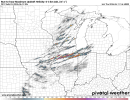
View attachment 53229
If there happens to be many favorable mergers that grow into one healthy supercell, then that LCL/updraft size won't matter. All we need is one supercell to utilise that intense tornado threat. I feel like that scenario is the most likely. If I'm correct, temps rising higher create a better cap/inversion of sorts to prevent crapvection, right?
 
If there happens to be many favorable mergers that grow into one healthy supercell, then that LCL/updraft size won't matter. All we need is one supercell to utilise that intense tornado threat. I feel like that scenario is the most likely. If I'm correct, temps rising higher create a better cap/inversion of sorts to prevent crapvection, right?
That’s the thing though, when your individual updraft size is too small, combine with extremely high shear, it’s very difficult to get a descent sized storm even with mergers.
But alas, at this point im really not seeing a surface scraping LFC verifying anymore.
The latest hrrr run reflects this as it has multiple beefy updrafts which are actually able to take advantage of the parameter space, and well… it speaks for itself.
1781192230827.png
 
That’s the thing though, when your individual updraft size is too small, combine with extremely high shear, it’s very difficult to get a descent sized storm even with mergers.
But alas, at this point im really not seeing a surface scraping LFC verifying anymore.
The latest hrrr run reflects this as it has multiple beefy updrafts which are actually able to take advantage of the parameter space, and well… it speaks for itself.
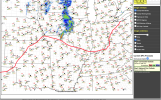
View attachment 53230
I don't like taking these runs as gospel but considering the HRRR is modeling the MCS better in recent runs, this isn't a great sig now that it's modeling convection better. Peak intensity is 140-160 on my method,for today
 
2017 was probably the most boring year for severe weather and tornadoes since 2009 (I've heard some people say 2009 was worse but I only started following severe weather around January/February 2014 so I can't confirm). I wouldn't even say this year is as bad as 2017.
The crazy thing about 2017 is that the 1/22/2017 set-up checked just about every box you’d want to see checked for a major outbreak. That wasn’t the case with the other two high risk days that year (still have no idea what they were thinking with the 4/5 high risk specifically). Yet, we really only saw one supercell do anything of note that day which was the very long-track EF-3 that impacted Albany, GA.

That year, though, still had some memorable days that this season has not had. February 7th, 2017 produced an unexpected significant localized outbreak in Louisiana, including a high-end EF-3 in New Orleans and an EF-2 near Killian that had a very-high end signature suggestive of an EF-4+ tornado.

2/28/2017 also produced the very long-tracked, violent tornado that impacted Perryville, MO and was one of the higher-end cold season outbreaks we’ve had in the past 15 years.
 
Back
Top