KakashiHatake2000
Member
yuck? how so sorry i dont understand with what you mean
Follow along with the video below to see how to install our site as a web app on your home screen.
Note: This feature may not be available in some browsers.

yuck? how so sorry i dont understand with what you mean

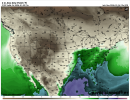
I like Webb’s posts, but I’ve noticed he can be very hit or miss when it comes to his prognostications on teleconnections. Admittedly, I’m not very well versed with them outside of the standard neutral, La Niña, and El Niño.In the winter of 2013-14, the eastern and Midwest U.S. were gripped by an extended period of much below normal temperatures (brutally cold for nearly eight weeks straight here in southern Wisconsin, which as you can see from this map had some of the most pronounced negative anomalies of anywhere), which persisted well into the spring of 2014.
This contributed to a relatively quiet tornado season, although surprisingly intense when activity did occur (the two-day sequence in late April that produced Vilonia and Louisville, and the three-day sequence in mid-June that included Pilger). However I was champing at the bit to get in some nice local chases in May and that just didn't happen, as every trough that tried to eject out of the Rockies would plow into the cold air still lingering over southeastern Canada and shear out.
Of course, I'd feel quite differently about that season had I not botched my chase on the Pilger day in such a frustrating fashion.

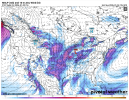
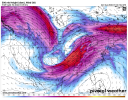
Absolutely agree. I just don't buy the low instability. With such strong moisture return, we noted two weeks ago we were lucky nothing was taking advantage of it. If we get up to 1k with shear like this given the intense LLJ, or just below that, that would set the stage for quite a opener to 2026. Didn't see this comment either but great deep dive on the setup!Which is why I really don’t buy the low instability yet that the long range models are depicting. You don’t get a trough and jet presentation like what is being modeled with this more low amplitude and zonal look without some appreciable instability somewhere. If it trends into a more negative tilt, which can make surface cyclogenesis more intense and deepen, that would only serve for a better CAA and WAA response.
Still a ton of model disagreement though as the SPC noted. Model disagreement seems to be the rule now and not the exception lol. I’ve almost gotten to the point where I like the trough and attendant system to come onshore before locking in on geometry and presentation, but the models can still get it right/give clues.
Now, with it being January, there is an instability “ceiling” somewhat due to the sun angles. However, even 1000 k/j of CAPE is sufficient this time of year due to the overwhelming kinematics. We can’t really draw many conclusions on some of the smaller scale details until the medium range models come into view, but this synoptic look is definitely “setting the table”. Which is why MEG mentioned “extreme event”, some of these trough depictions are pretty significant in my opinion.


Couldn’t agree more. It’s really hard, and almost nearly impossible, to try and gauge how a season is going to go overall because of sooo many different factors.2013 and 2014 still were notable severe weather seasons, even if their peak activity was confined to a select number of days (e.g. 2014).
If we have a may like 2013, that would be ideal (aside from all of the destruction that month)
I still don’t hinge my bets too much on analogs in the pacific. Some of the most recent seasons have not turned out the way they were being projected as, mostly in favor of more active years than quiet. I think we will know, by the time may rolls around and we start seeing long range signals, if this season really has something in store.

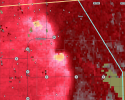
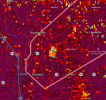

View attachment 49758
something might already be ready to happen...
There's a thread @joshoctober16View attachment 49762
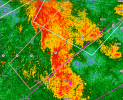
Tornado on the ground.


I'm really hoping we at least have a better overall season than 2013-2014. To be totally honest, that was a pretty boring period with a few horrific tornadoes in there and not much in between (6/16-18/14 was really the only impressive significant outbreak without major loss of life).Yuck.