WeathermanLeprechaun
Member
This thread is for the purpose of something I've found extremely intriguing the last few months. We know the usual characteristics of tornado outbreak with strong low level shear. But what about those surprise, photogenic tornadoes nobody expected? Like Wellfleet, Floyd, Chapman. Why do these tornadoes happen? Their environments are unusual
I plan to use this thread as a case study of such environments and to detail the trend I've noticed. These events typically favor big time, surprise, photogenic tornado events but they rarely ever work out. The recurrence interval is sporadic.
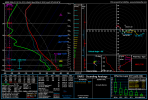
The environments typically consist of
Large amounts of vertical instability
0-3km shear of 25+ adequate for supercells.
SE moving supercells, stationary or anchored along boundaries
Often impressive yet dry PBLs that don't force excess production
Every time a environment such as this comes around, i will note it in this thread
One of these environments happened in SE MT months back, and didn't produce. Why do these same environments produce, yet other times they don't work. So many variables and subtle differences in these cases that I want to find out. That's why this thread is made.
I plan to use this thread as a case study of such environments and to detail the trend I've noticed. These events typically favor big time, surprise, photogenic tornado events but they rarely ever work out. The recurrence interval is sporadic.
The environments typically consist of
Large amounts of vertical instability
0-3km shear of 25+ adequate for supercells.
SE moving supercells, stationary or anchored along boundaries
Often impressive yet dry PBLs that don't force excess production
Every time a environment such as this comes around, i will note it in this thread
One of these environments happened in SE MT months back, and didn't produce. Why do these same environments produce, yet other times they don't work. So many variables and subtle differences in these cases that I want to find out. That's why this thread is made.