• Welcome to TalkWeather!
    We see you lurking around TalkWeather! Take the extra step and join us today to view attachments, see less ads and maybe even join the discussion.
    CLICK TO JOIN TALKWEATHER

Severe WX Severe Weather Thread - 6/15/26 - 6/18/26

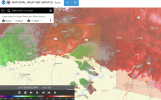
I'm gonna take the risk here but the writings on the wall here. A lot of us probably think it but I don't see a reason or possible outcome that leads to any of these cold undercut supercells doing anything. The OFB limited instability a bit and was another big failure mode on top of things here. This reflectivity picture is like a 5% hail risk and if you showed me it, i would believe you. This is a situation where I fee confident enough to say this and I don't usually throw in the towel early at all.
Yes, but as a reminder, long track violent tornadoes are a given even if vertical instability is close to non existent if you have high enough shear and forward momentum.
What tornadoes don’t tolerate, is a layer of dry cool air near the surface as that acts effectively like a banana peel for vertical stretching, or a lid that cuts off any chance for these storms to actually get energy from the surface.
 
The writing was on the wall at 7:00 local time this morning. People tried to write off the MCS but it was so obvious that was going to severely limit the ceiling.
No, imo, the MCS wasn't going to fully limit the event. Like @jharris0220 said, it was about how far north we would get that warm front but the elevated junk left over in the warm sector shot out a boundary and even stunted instability return more. Stability plaguing these storms all over right now.

If these were mature storms in low instability (as in a long lived storm like Cookeville 2020), we'd still be on edge because the storm developed before the inversion. These storms developed within the inversion, and as a result has fully set any opportunities for a robust tor event off. I just don't see it anymore, and I'm not a guy to throw the towel in this early like I've said.
 
Statistically speaking this year is a complete anomaly for the amount of events we've had that looked so good on days leading up to them, only for them to pretty much fall flat on their face when it came time to perform. Additionally, it feels like there's always been some tornado well outside the main risk area that is way more impressive than anything occurring in the "main show" this year, like Union City, Enid, etc. Just super unusual.
 
Yes, but as a reminder, long track violent tornadoes are a given even if vertical instability is close to non existent if you have high enough shear and forward momentum.
What tornadoes don’t tolerate, is a layer of dry cool air near the surface as that acts effectively like a banana peel for vertical stretching.
Yes, but there's a lot more that goes into getting viotors in low instability. It isn't just shear. Cookeville was the result of a vorticity max/shortwave and a supercell that already previously matured in the warm sector BEFORE going into that lower regime of stable air. Storms need t develop before inversions settle in, in those rare cases


About the inversion, are you saying that a profile of 69/68 with a inversion would be more favorable for this scenario, than 69/59 with this dry cool air near the surface?
 
No, imo, the MCS wasn't going to fully limit the event. Like @jharris0220 said, it was about how far north we would get that warm front but the elevated junk left over in the warm sector shot out a boundary and even stunted instability return more. Stability plaguing these storms all over right now.

If these were mature storms in low instability (as in a long lived storm like Cookeville 2020), we'd still be on edge because the storm developed before the inversion. These storms developed within the inversion, and as a result has fully set any opportunities for a robust tor event off. I just don't see it anymore, and I'm not a guy to throw the towel in this early like I've said.
I think the elevated junk storms had a lot to do with the mcs though.
 
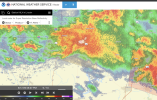
Take this supercell for example, it has the look on radar, and it even has a convergence signature on velocity
In most cases, we would be looking at an eminent long tracker.
In this case, for reasons already explained previously, it has little chance to actually root and turn that 99% streamwise vorticity into the vertical.
Surface inversions are absolutely fatal for tornadoes. You would actually need extremely high cape to over come them but it still would’ve been far from guaranteed.
At least we had at least one sig tor from Iowa.
1781737779484.png1781737834724.png
 
Maybe I'll look like an idiot in a few hours (and I will not delete this post even if I do look dumb) but this is likely a bust at this point.
Nah, I'm with you. 2026 did give us a red herring after all. Good thing. A good bust! No lives affected except the unfortunate sigtor in Iowa but we dodged a major bullet with this MCS coming thru. Otherwise that high end environment could've came to fruition.
 
Nah, I'm with you. 2026 did give us a red herring after all. Good thing. A good bust! No lives affected except the unfortunate sigtor in Iowa but we dodged a major bullet with this MCS coming thru. Otherwise that high end environment could've came to fruition.
Given how the models have been behaving this year (often tempting us with potentially significant events only to greatly downtrend at practically the last minute), I cannot help but imagine people looking at models showing a potentially significant event and wondering what will cause them to backpedal at the last minute...

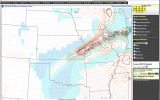
Whew, these are violent tornado parameters and even they are atrocious. High LFCs will do that.
View attachment 53563
Which reminds me: I would like to see some modifications to the Significant Tornado Parameters and related parameters that incorporates the effects of LFC height. Perhaps that could offer at least some improvement in overall accuracy?
 
Models in 2026 be like:
Hot Take Try Again GIF by Awkward Daytime TV
 
Another lesson in short term forecasting. When things start downtrending last minute across multiple runs, the appropriate response is to take it at face value. It’s almost always a poor decision to start dismissing it as a fluke or one off, or start concocting a rationale in which a high-end outcome is somehow still likely. When the models do this, pay attention, because they are probably picking up on something. 3/15 was a learning experience, and this just reinforces it. The takeaway from both of those events is don’t cope-cast when things downtrend.
 
Just a reminder about post etiquette. This is not a warning to anyone and I am not talking about anyone specific regarding this post. It is just a gentle reminder.

4. "It is a Bust" policy (updated 24MAR21)
Bust posts during severe weather events will not be tolerated.
Just because it is sunny and clear at your house, doesn't mean other members aren't under the gun. Be respectful before you go into an active severe weather thread and declare a bust. This is the type of discussion we expect in post-storm analysis. Furthermore, disrespectful bust posts that specifically call out someone who made a prediction that didn't pan out are highly discouraged. Science is hard, things change and Mother Nature doesn't like us knowing her intentions.
There should probably also be a rule about comparing events to super outbreaks / Palm Sunday the day before. It seems to happen many times per year here and it never pans out.

That said there is still a decent severe thunderstorm outbreak going on, and the tornado threat should increase a bit over the next couple hours.
 
I still think the main window is 7-9, and the storms can easily work through whatever is holding them back and ramp up significantly. Very risky to call bust with isolated, mature supercells still firmly within 70 kt shear and 600 m2s2. Not offended at all, but just don't want you guys to look like weenies if something changes.
 
Another lesson in short term forecasting. When things start downtrending last minute across multiple runs, the appropriate response is to take it at face value. It’s almost always a poor decision to start dismissing it as a fluke or one off, or start concocting a rationale in which a high-end outcome is somehow still likely. When the models do this, pay attention, because they are probably picking up on something. 3/15 was a learning experience, and this just reinforces it. The takeaway from both of those events is don’t cope-cast when things downtrend.
Though that makes me wonder about cases where the models tend not to show much happening, only to start uptrending the day before/of. Perhaps start taking them at their word in that case...?
 
Given how the models have been behaving this year (often tempting us with potentially significant events only to greatly downtrend at practically the last minute), I cannot help but imagine people looking at models showing a potentially significant event and wondering what will cause them to backpedal at the last minute...


Which reminds me: I would like to see some modifications to the Significant Tornado Parameters and related parameters that incorporates the effects of LFC height. Perhaps that could offer at least some improvement in overall accuracy?
STP and VTP are actually reliant on LFC height. If LFC is high enough, both parameters will show up as 0, regardless of how good the kinematics are, usually because LFC height is closely correlated to how volatile the kinematics are anyways.
 
Back
Top