• Welcome to TalkWeather!
    We see you lurking around TalkWeather! Take the extra step and join us today to view attachments, see less ads and maybe even join the discussion.
    CLICK TO JOIN TALKWEATHER

Severe WX Severe Weather Thread - 6/15/26 - 6/18/26

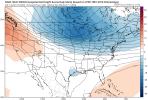
Here’s the cam spread showcasing helicity streaks.
Again, with a consensus like this, it’s merely spatial uncertainty holding back an upgrade.
View attachment 53468View attachment 53469View attachment 53470
View attachment 53471View attachment 53472View attachment 53473
View attachment 53474View attachment 53475View attachment 53476
The general trend i'm taking note of here, is the further North you get helicity streaks, the stronger they are. It basically looks like if there is any instability in play in the Chicago area a storm will take root and wreak havoc. It is very interesting that all the models have an intense streak going across central illinois. And your NW to SE storm motion is 100% locked in by the looks of it.
 
I mean Palm Sunday is a good analog bc it didn't have a ton of nadoes but like all of em were intense-vio long lived tors so it evens out
One thing to keep in mind is that in '65 they were very likely incapable of keeping track of many of the weak tornadoes that touched down for that event. There were too many strong-violent tornadoes that touched down, and radar imagery was in supreme infancy at the time. Palm Sunday definitely had many more tornadoes than the official number of 55.
 
I think the details of these events may differ enough that it’s not apples-to-apples, but the closest analog I can think of for a June event like this in the region would be June 2, 1990. That was day that produced several long-lived discrete tornadic supercells which resulted in seven violent tornadoes. Indiana was particularly hit hard that day with 37 tornadoes occurring, the most the state had experienced since the 1974 Super Outbreak.

May 26th, 1917 is also a similar analog for tomorrow, its the most Synoptically similar as well.
That day produced 5 VI tors.
1781626161572.png
 
Last edited:
EHI takes into account north vertical instability and shear. This is just model variability with CAPE, which is why you will see these values go up and down. Overall it matters none.
But at face value, you can have cape as low as 200 and still have a long track VI tor. As long as shear is high enough.
Thanks! Makes sense to me. Reason I ask is I am curious how east and south the higher risks and storms will make it later into the evening and night tomorrow

Sorry, looks like this posted twice. lol
 
With this event, the first storm of the day will tell a story. If it lights up and produces quickly, that's an omen of things to come. IMO the biggest "failure mode" if you can even call it that is storms lining out very fast, but again, you're going to get multiple strong tornadoes out of said line anyways.
Models show a lot of discrete storms suddenly dissipating after initiation, so I suppose that could be a failure mode. Perhaps that's because of too much shear and not enough instability, but it's most likely a model quirk and not what will actually happen.


I think that would come into play if the morning round is more pervasive than expected and overturns the warm sector. Updrafts might get shredded if instability isn’t robust enough. Also would be an issue if we had just isolated updrafts; we’ll probably need some clustering tomorrow to aid in updraft maturation in the face of massive shear
^^^ His full tweet in case people don't want to be redirected to Twitter lol.
 
Last edited:
Models show a lot of discrete storms suddenly dissipating after initiation, so I suppose that could be a failure mode. Perhaps that's because of too much shear and not enough instability, but it's most likely a model quirk and not what will actually happen.
Yeah I find it exceptionally difficult to see the "too much shear rips apart the updrafts" solution playing out with the massive jet streak punching straight into the warm sector in this case. It may happen initially but storms are likely to weather that negative and use it as a steroid when they mature. It could be a failure mode, but lining out is the most likely one IMO.
 
Yeah I find it exceptionally difficult to see the "too much shear rips apart the updrafts" solution playing out with the massive jet streak punching straight into the warm sector in this case. It may happen initially but storms are likely to weather that negative and use it as a steroid when they mature. It could be a failure mode, but lining out is the most likely one IMO.
Anyone that comes with the “storms may be shredded by shear solution” just show them this.
But in all seriousness, its a legit possibility for the southern most dryline convection, as they are most far removed from these height falls.
1781626895154.png
 
Good freaking goly miss molly. Taking a closer look at the spatial extent of the threat on the HRRR is alarming to say the least

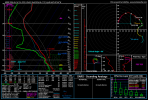
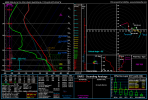
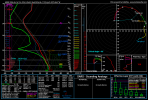
Here's the main threat area, but this second sounding is all the way down in the St. Louis area. And the third is a cherry picked sounding from Indiana, but it's hard to believe it's even real. I think the ceiling for OWS convection ahead of the line is a little hard to even imagine.

1781628565882.png

1781628854246.png

1781629106843.png
 
This one dictates when I’m going to sleep tonight, so I’d say yeah.
May The Fourth Be With You Star Wars GIF
 
Back
Top