Difficult to get information out of there, but I've seen video of at least one tornado in eastern Saudi Arabia.@andyhb Any update on the potential severe weather threat in parts of the Middle East today?
Navigation
Install the app
How to install the app on iOS
Follow along with the video below to see how to install our site as a web app on your home screen.
Note: This feature may not be available in some browsers.
More options
-
Welcome to TalkWeather! We see you lurking around TalkWeather! Take the extra step and join us today to view attachments, see less ads and maybe even join the discussion. CLICK TO JOIN TALKWEATHER
You are using an out of date browser. It may not display this or other websites correctly.
You should upgrade or use an alternative browser.
You should upgrade or use an alternative browser.
Severe Weather 2026
- Thread starter KevinH
- Start date
Aaron Rider
Member
Don't be surprised if we don't see much video period from that region. Multiple governments, notably UAE, have instituted extremely harsh (I'm talking death sentence!! Seriously) videotaping regulations stemming from the recent war so I imagine many people aren't taking chances.

Don't be surprised if we don't see much video period from that region. Multiple governments, notably UAE, have instituted extremely harsh (I'm talking death sentence!! Seriously) videotaping regulations stemming from the recent war so I imagine many people aren't taking chances.
Pecos Hank will find a way!
Lol in all seriousness it'll be a bummer if there's no video. I bet those would be some photogenic tornadoes.

Eoline
Member
Long-term GFS has a large line going through the midwest on April 1 although it's way too far out for anything reliable.
Question for the experts here. When you're looking at frontal boundaries and storm motions to see whether the storms are firing perpendicular or parallel with the line what tools are you using to see that? It looked like Trey was using surface Dew Points (for the dry line) and the wind barbs from MU CAPE. Is that correct?
Are the height falls from deep low pressure systems another element? Like if the first two elements are parallel, but height falls are perpendicular can that also aid isolated development?
Are the height falls from deep low pressure systems another element? Like if the first two elements are parallel, but height falls are perpendicular can that also aid isolated development?
0-6 KM deep layer shear vector. More goes into it than that though, including the initiation mechanism.Question for the experts here. When you're looking at frontal boundaries and storm motions to see whether the storms are firing perpendicular or parallel with the line what tools are you using to see that? It looked like Trey was using surface Dew Points (for the dry line) and the wind barbs from MU CAPE. Is that correct?
Are the height falls from deep low pressure systems another element? Like if the first two elements are parallel, but height falls are perpendicular can that also aid isolated development?
This will go into detail:
Eoline
Member
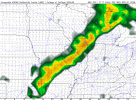
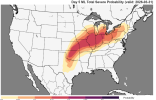
ML is in agreement about this as well; I think we may see an event in the 31st-1st timeframe. Probably one of those severe late-night wind events that happen in this region all-so-often.Long-term GFS has a large line going through the midwest on April 1 although it's way too far out for anything reliable.
View attachment 52310

CheeselandSkies
Member
Model consistency/agreement hasn't been all that good for the mid-next week threat. Latest operational GFS suggests something similar to yesterday in OH/IN, kind of cold-fronty with boundary-parallel flow and a likely conditional, limited tornado threat, and not much of interest further west than that. Chief met at my work is already talking "strong storms" for next Tuesday and Wednesday on air, which I think is premature.
tennessee storm chaser
Member
- Messages
- 1,916
- Reaction score
- 4,396
- Location
- jackson tennessee
- Special Affiliations
- SKYWARN® Volunteer
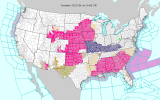
Yeah. Ridge blocking stuff mostly for Dixie n Mid south areas …. Looks hold a little longer than thoughtThis year so far is really reminding me of 2024. With these consistent severe set ups over Illinois/Indiana/Ohio early in the season.


WeathermanLeprechaun
Member
a bit of disagreement currently regarding the 30th but a marginal severe threat wouldn't surprise me going by the GFS. Cells could be more mini in nature with some ventilation to allow for more LP-eque supercells perhaps, and a 74/59 at the surface would favor somewhat a marginal damaging wind threat. Things could uptrend but the NAM isn't currently catching on to this scenario and many events have recently uptrended out of nowhere due to the unusual upper air pattern with NW flow regime, so if the next few runs of the NAM become more favorable, the 31st will be the first opportunity for a rather sporadic early April. Not too potent just yet but....
The 31st is essentially the same, more of a mini, compact supercell day and admittedly shear vectors aren't bad. The issue would probably be the forcing in this case since the warm sector is slightly departed from the main jet. 500mb flow isn't bad but I would expect very compact storms with pretty poor ventilation, given very slack mid levels. There would be a better opportunity for a isolated tornado threat here in Indiana. Towards the NW part of the state, I'd say that we remain relatively the same in terms of SRI and moreso mixed mini sups, but ventilation is better here (albeit it could still be better) and that's because you have a stronger jet aloft meaning stronger shear at play, 50 kts of effective shear whereas central IN is 30. Don't see much else that screams interesting to me
The 31st is essentially the same, more of a mini, compact supercell day and admittedly shear vectors aren't bad. The issue would probably be the forcing in this case since the warm sector is slightly departed from the main jet. 500mb flow isn't bad but I would expect very compact storms with pretty poor ventilation, given very slack mid levels. There would be a better opportunity for a isolated tornado threat here in Indiana. Towards the NW part of the state, I'd say that we remain relatively the same in terms of SRI and moreso mixed mini sups, but ventilation is better here (albeit it could still be better) and that's because you have a stronger jet aloft meaning stronger shear at play, 50 kts of effective shear whereas central IN is 30. Don't see much else that screams interesting to me
Last edited:

Cyclonic Paracosm
Member
Where? I'd like no more storms all my creeks and rivers are all high atm and the water table is in a bad spot rna bit of disagreement currently regarding the 30th but a marginal severe threat wouldn't surprise me going by the GFS. Cells could be more mini in nature with some ventilation to allow for more LP-eque supercells perhaps, and a 74/59 at the surface would favor somewhat a marginal damaging wind threat. Things could uptrend but the NAM isn't currently catching on to this scenario and many events have recently uptrended out of nowhere due to the unusual upper air pattern with NW flow regime, so if the next few runs of the NAM become more favorable, the 31st will be the first opportunity for a rather sporadic early April. Not too potent just yet but....
The 31st is essentially the same, more of a mini, compact supercell day and admittedly shear vectors aren't bad. The issue would probably be the forcing in this case since the warm sector is slightly departed from the main jet. 500mb flow isn't bad but I would expect very compact storms with pretty poor ventilation, given very slack mid levels. There would be a better opportunity for a isolated tornado threat here in Indiana. Towards the NW part of the state, I'd say that we remain relatively the same in terms of SRI and moreso mixed mini sups, but ventilation is better here (albeit it could still be better) and that's because you have a stronger jet aloft meaning stronger shear at play, 50 kts of effective shear whereas central IN is 30. Don't see much else that screams interesting to me
WeathermanLeprechaun
Member
The 30th is more centred in Iowa but the 31st could conditionally support isolated svr in Ohio. Models struggling to resolve currentlyWhere? I'd like no more storms all my creeks and rivers are all high atm and the water table is in a bad spot rn

slenker
Member
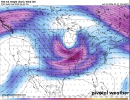
The recent run of the 18z AIGFS has this at 500 mb for 4/4, seems like a classic zonal flow event in the OH valley, amongst other areas. The 18z operational GFS has a similar look, but far more progressive and less conducive to severe weather as a result. Moisture may be an issue but it's too far out to really tell with globals. This is catching my eye a bit because both the GFS models are displaying this type of trough, however the 18z ECMWF-AIFS shows a less robust look. Also, this is still very far out. But if this holds together it looks pretty good for a severe setup, at least from the 500 mb map.

US_Highway15
Member
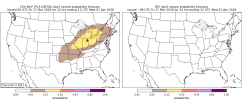
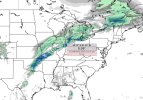
CSU MLP seems to be in agreement of a severe threat of some sort. Looks like based off models your basic IL/IN/OH squall line, with an isolated tornado or two possible. Surprised tbh to see the SPC not issue a Day 4+ outlook off it.
WeathermanLeprechaun
Member
Could even be a more isolated aspect of strung out cells with low end svr potential which is what the Euro depicts. Along with a weak squall well down into OK/MOView attachment 52328
CSU MLP seems to be in agreement of a severe threat of some sort. Looks like based off models your basic IL/IN/OH squall line, with an isolated tornado or two possible. Surprised tbh to see the SPC not issue a Day 4+ outlook off it.
CheeselandSkies
Member
Seems the outlook for my chase tour has become a little less optimistic. While still certainly could be worse, I'm seeing a lot of split-flow and cutoff low monkey business and little signal for a coherent, negatively-tilted trough ejection with the energy focused and overspreading a robust warm/moist sector at peak heating. IIRC it seems like when those do occur, such as 3/31/23 and 4/26/24, there's usually a pretty decent signal at fairly long range, although of course they can always uptrend or downtrend with time (look at 4/4/23, which was thought to have the potential to eclipse 3/31 even as 3/31 was ongoing).
US_Highway15
Member
Yeah thats fair.Could even be a more isolated aspect of strung out cells with low end svr potential which is what the Euro depicts. Along with a weak squall well down into OK/MO
View attachment 52329
NWS SPC discussion:
...D5/Tuesday - Lake Michigan Vicinity...
Confidence is gradually increasing in a regional severe weather
threat across parts of the upper Great Lakes for D5/Tuesday. Over
the past 24 hours, model guidance has come into somewhat better
agreement regarding the timing and evolution of the northern Plains
surface low through as it translates east and intensifies across the
Great Lakes region Tuesday into early Wednesday. Above-seasonal
moisture return northward into the Great Lakes region is anticipated
by late Tuesday, which should support adequate buoyancy for deep
convection. Thunderstorm development appears likely along a trailing
cold front as it pushes southeast into the Midwest and MS Valley.
Based on ensemble guidance, the best convective environment may
reside across the Lake Michigan vicinity where mid/upper-level flow
should be stronger in vicinity to the upper jet and may be more
orthogonal to the front and supportive of more robust convection
compared to locations further south.
Despite the trend towards a more consolidated solution, notable
discrepancies remain pertaining to the propagation speed of the
upper wave and surface low, which introduces uncertainty in how
favorably timed the strongest ascent will be with peak
heating/destabilization and potential storm modes. These
uncertainties preclude probabilities at this time, but highlights
will likely be introduced as model consensus improves.

If you are looking for severe weather threats, here's your signs: