• Welcome to TalkWeather!
    We see you lurking around TalkWeather! Take the extra step and join us today to view attachments, see less ads and maybe even join the discussion.
    CLICK TO JOIN TALKWEATHER

Enhanced Fujita Ratings Debate Thread

The other thing I want to address (and I can’t believe I’m having to address this on this forum), the whole “The EF Scale is a damage scale though” is an immediate red flag that someone doesn’t know what they’re talking about.

I have to stamp this out because it’s not a matter of opinion: the EF Scale is meant to measure intensity, not damage. It is however, derived from damage.

I think people hear “damage scale” scale and assume that it means “The EF scale measures how thoroughly destroyed a structure is and that’s all there is to it, and anything beyond that is a perversion of the scale at the hands of out of touch engineers”. Obviously, that is a load of BS, and the fact that multiple EF ratings can be applied to a single DOD shows that the EF scale is specifically an intensity scale, not a damage scale. If it was a damage scale, one DOD would have one invariably applied EF rating.

In a nutshell:

-The EF scale is a damage-DERIVED scale that MEASURES intensity. If you don’t understand that, you don’t understand the scale at its most basic fundamental level.
 
Last edited:
Terrence Ross Wow GIF


Looking at these couple forums… Lol


I think it’s important for people to take a step back with some of these ratings. Nothing is completely set in stone. There’s been tornadoes before that have had their ratings changed well after the event. Enderlin went from an EF3 to an EF5, and Robinson still looks like something could potentially change there too, and that’s been over 3 years now. The same thing could happen with Enid or any of these more controversial ratings we’ve had the past few years. We just need to be patient and keep an open mind. There could easily be damage that was undocumented initially or something surveyors take a deeper look into later on.
Seriously.

Since WBB isn’t on the board anymore, is there another doctor here? We need a crap load of prescriptions for Xanax and Valium, stat.

Also, kudos to JAN for their work. Looks like another former TW member was a part of that survey. TW alums make us all proud.
 
I appreciate you backing me up on this. I still have strong opinions about certain contextual phenomenon (particularly grass scouring), as I’ve studied it long enough to know there’s a strong statistical correlation between it and high-end violent tornado events. But I have to acknowledge at the same time that I can’t cite anything (besides a single brief anecdote from a Tim Marshall PowerPoint that was used as a visual aid at a conference many years ago) or show you a specific number/percentage from a study to prove my point. It remains one of those things I know, but cannot scientifically prove. Hopefully that changes at some point (I’d do it myself if I was better at math).

But yes, there are a lot of people in this hobby who are super into EF scale stuff, but are clueless about the science that goes into it, and when they can’t wrap their heads around it, they just dismiss it and act like they’re above it or label it nonsense. I do think the EF scale needs work and I do acknowledge that we see a lot of botched ratings. But we also see a lot of people who offer such asinine counterpoints and display such poor comprehension of how science works, they make the crowd pushing for EF scale reforms look terrible by association.
I’d argue that you do have a strongly quantitative leg to stand on - no super rigorous math required to support it. There is clearly and obviously a very strong positive correlation between the type of grass scouring you talk about when compared to higher end events, particularly upper echelon 4 and straight 5 caliber storms. The imagery all throughout this thread and the Significant Tornadoes thread when displaying and covering EF4-5 tornadoes straight-up proves this.

It would be very nice to somehow attach numbers to this, but I think the problem becomes how you would manage to make a “spectrum” of values that describe the strength of grass/ground scouring generated by any given tornado. If I could think of one way to do it, perhaps you could outline a portion of a tornado’s core path and assign a number from 0-1 that characterizes the intensity of browning of vegetation, or something. Of course, this would be strongly dependent on soil and vegetation type, the tree species, etc… there would be too many caveats for it to ever be an effective tracer of tornadic intensity by itself. But an event like Jarrell could register as something like a 0.95+ (just pulling these numbers out of thin air for the sake of plausibility) whereas a tornado with zero scouring would just be a 0 or 0.01. I don’t know, just an idea. Again, despite it being a poor descriptor of intensity alone, it could display at least some positive correlation to the EF rating when plotting as many tornadoes on it as possible. I’m sure there is a better way to do it, though.
 
I’d argue that you do have a strongly quantitative leg to stand on - no super rigorous math required to support it. There is clearly and obviously a very strong positive correlation between the type of grass scouring you talk about when compared to higher end events, particularly upper echelon 4 and straight 5 caliber storms. The imagery all throughout this thread and the Significant Tornadoes thread when displaying and covering EF4-5 tornadoes straight-up proves this.

It would be very nice to somehow attach numbers to this, but I think the problem becomes how you would manage to make a “spectrum” of values that describe the strength of grass/ground scouring generated by any given tornado. If I could think of one way to do it, perhaps you could outline a portion of a tornado’s core path and assign a number from 0-1 that characterizes the intensity of browning of vegetation, or something. Of course, this would be strongly dependent on soil and vegetation type, the tree species, etc… there would be too many caveats for it to ever be an effective tracer of tornadic intensity by itself. But an event like Jarrell could register as something like a 0.95+ (just pulling these numbers out of thin air for the sake of plausibility) whereas a tornado with zero scouring would just be a 0 or 0.01. I don’t know, just an idea. Again, despite it being a poor descriptor of intensity alone, it could display at least some positive correlation to the EF rating when plotting as many tornadoes on it as possible. I’m sure there is a better way to do it, though.
Oh it’s undeniable for sure. I just wish there was an official academic paper, statistical study, or exact percentage I could cite when the topic comes up. Me saying “I’ve been studying it for 15 years and I just know it to be true” doesn’t usually convince people, and can come off as arrogant to boot. If I had a real scientific document or figure I could point to, it would go over a lot better.

Ideally, I’d love if there was a three-pronged statistical study that showed deep grass scouring’s correlation with:

-Slabbed homes

-Official and suspected high-end F4/EF4 and F5/EF5 events

-Co-occurrence with other extreme contextual phenomenon

It would be painstaking work gathering all the data, and brutal work for someone as mathematically disabled as I am, but it is doable.


Happy 20th anniversary to one of the worst tornado surveys of all time.


One of if not the only significant Plains tornado of the generally slow May 2006 (dominated by a Plains ridge and Great Lakes trough, somewhat similar to the way this one has transpired thus far, as the analogs suggested) AND peak La Plata Syndrome. Kind of sad how rapidly the EF-scale, after initial promise in the ensuing few years, was brought to a similar place.
 
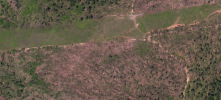
Possible tree granulation from Cordova 2011 (the afternoon EF4).
1778510855826.png
There are zero structures anywhere near here; the only other thing this could be is dust from the road but the coloring contradicts that. Absolutely incredible damage regardless, especially since it was not debris-loaded at this time.
 
So we all know that both chickasha and goldsby likely should have been rated EF5. But isn’t it weirder that there are ZERO publicly available aerial photographs of either of their damage tracks, Even though NWS Norman conducted full CAP aerial surveys for both with likely hundreds of images taken?
How is there not one aerial photo online for public viewing? Not even a flyover video from a helicopter or plane.
And If there is one I haven’t been able to find it.
I think they’re the only pair of tornadoes of that caliber to be lacking completely in public aerial images in the 21st century.
If anybody has some let me know cause they’d be wild to finally see.
 
So we all know that both chickasha and goldsby likely should have been rated EF5. But isn’t it weirder that there are ZERO publicly available aerial photographs of either of their damage tracks, Even though NWS Norman conducted full CAP aerial surveys for both with likely hundreds of images taken?
How is there not one aerial photo online for public viewing? Not even a flyover video from a helicopter or plane.
And If there is one I haven’t been able to find it.
I think they’re the only pair of tornadoes of that caliber to be lacking completely in public aerial images in the 21st century.
If anybody has some let me know cause they’d be wild to finally see.
After 4/27/11 there was a huge amount of info publicly available and I went through all of it so I know it existed. Over time much of it has disappeared. Maybe it's a space or bandwith issue, maybe someone though tit wasn't relevant anymore, maybe it's archived somewhere which I cannot find. I don't think any of the loss was an intentional effort to cover something up or to give weight to someone's opinion by removing the opinions of others. I Remember Mayfield and disappearing damage surveys happening rather quickly there which have never resurfaced. About all you can do is save anything you might want to have later yourself.

Just the way things go sometimes.
 
So we all know that both chickasha and goldsby likely should have been rated EF5. But isn’t it weirder that there are ZERO publicly available aerial photographs of either of their damage tracks, Even though NWS Norman conducted full CAP aerial surveys for both with likely hundreds of images taken?
How is there not one aerial photo online for public viewing? Not even a flyover video from a helicopter or plane.
And If there is one I haven’t been able to find it.
I think they’re the only pair of tornadoes of that caliber to be lacking completely in public aerial images in the 21st century.
If anybody has some let me know cause they’d be wild to finally see.
It’s because CAP does not make much of their imagery public; I should have access to it if I do a bit of digging as I am a volunteer there.

Nothing conspiratorial; CAP is just not a government agency (for some reason that's a very common misconception) and can choose whether or whether not to release aerial imagery.
 
Last edited:
It’s because CAP does not make much of their imagery public; I should have access to it if I do a bit of digging as I am a volunteer there.

Nothing conspiratorial; CAP is just not a government agency (for some reason that's a very common misconception) and can choose whether or whether not to release aerial imagery.
I wasn’t trying to be conspiratorial myself I was just surprised and curious cause of how weird it is. Oh well.
 
Back
Top