• Welcome to TalkWeather!
    We see you lurking around TalkWeather! Take the extra step and join us today to view attachments, see less ads and maybe even join the discussion.
    CLICK TO JOIN TALKWEATHER

Severe WX Severe Weather Threat June 6-14

Anyways, so about low level lapse rates. They are often only a major problem when a) there is not enough forcing for ascent and b) capping is too strong. Neither of those is the case today.

You also always need to factor in that 0-3 km lapse rates often include the base of the inversion, which is by definition going to decrease the lapse rate because it is warm air aloft.
 
Today really reminds me of the April 2, 2025 Tornado Outbreak, as both of them really were make or break and relied solely upon the fact that their would be OWS supercells just out ahead of a powerful QLCS.
Both of those days had a very strong forcing mechanism impinging on little to no inversion layer, a very moist vertical profile and low LFCs.
What makes today different however is that the LLLR were very meager and upper level ventilation is weak, so there was even more uncertainty with this event verifying.
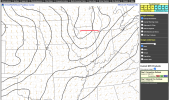
Most importantly, the boundary left behind from the afternoon MCS is what likely pulled today off. It’s pretty obvious the OWS supercells that managed to produce latched onto this boundary were there’s enhanced streamwiseness and backed surface winds. Only then could those storms sufficiently vertically stretch the low levels into usable vorticity.
1781222050339.png
 
Today really reminds me of the April 2, 2025 Tornado Outbreak, as both of them really were make or break and relied solely upon the fact that their would be OWS supercells just out ahead of a powerful QLCS.
Both of those days had a very strong forcing mechanism impinging on little to no inversion layer, a very moist vertical profile and low LFCs.
What makes today different however is that the LLLR were very meager and upper level ventilation is weak, so there was even more uncertainty with this event verifying.
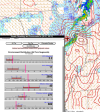
Most importantly, the boundary left behind from the afternoon MCS is what likely pulled today off. It’s pretty obvious the OWS supercells that managed to produce latched onto this boundary were there’s enhanced streamwiseness and backed surface winds. Only then could those storms sufficiently vertically stretch the low levels into usable vorticity.
View attachment 53277
Also, smaller updrafts meant better ventilation for supercells. Had we got grungy HP messes like to the west, this event wouldn't have performed at all.
 
Also, smaller updrafts meant better ventilation for supercells. Had we got grungy HP messes like to the west, this event wouldn't have performed at all.
Nine times out of ten, the smaller updrafts wouldn’t have worked out. (Especially with how high the shear is)
The low LFC is responsible for the skinny updrafts, even if laspe rates were higher, it wouldn’t have solved that specific problem.
In this case, the very strong forcing mechanism, (the 500mb jet max) combined with the lack of an inversion layer really came in handy.
And again, the left over boundary most certainly was the final nail in the coffin for a b#st scenario.
Good example of just how important it is to have favorable Synoptics and a lucky mesoscale setting.
 
Back
Top