• Welcome to TalkWeather!
    We see you lurking around TalkWeather! Take the extra step and join us today to view attachments, see less ads and maybe even join the discussion.
    CLICK TO JOIN TALKWEATHER

Severe Weather 3/15 - 3/16

Personal question (also plugging in a weather question so it technically stays on topic), what period of history do you specialize in?

Also, what’s the temp/dew there right now? Any cloud cover?
I work on the Holocaust.

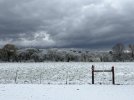
It’s still cloudy, 65/59, so the dew point has actually dropped a bit. Winds are blowing 20+ mph out of the south now. Slightly ominous view here as I was leaving the office. Those flags are basically ironed flat.
 

Attachments

  • IMG_5285.jpeg
    IMG_5285.jpeg
    1 MB · Views: 0
I'm *very* amateurish but I'll just say I'll believe a major or significant Mid-Atlantic tornado outbreak (especially north of North Carolina, which has more history) east of the Appalachians when I see it. The history speaks for itself. The last Mid-Atlantic outbreak with more than 4 F3 intensity tornadoes north of NC was most likely 5/2/1929. https://en.wikipedia.org/wiki/1929_Rye_Cove_tornado_outbreak

I asked Trey @ Convective Chronicles about this. It's less to do with the Appalachians and more to do with how far east this region is. "Troughs tend to be past maturity or don’t have the right geometry by the time they get there, and instability is often weak." Of course, in this case, I suppose it was more the lack of any early capping plus the fast progression of the cold front towards the OWS?

I'm not complaining. You guys can keep the tornado outbreaks if you have them. Obviously I'll continue to be vigilant about severe weather and I don't discount the possibility of another La Plata event: not an outbreak but a freak strong tornado well into the East.
 
Maybe Trey will do a post event analysis to help point out the ultimate flaws if we end up not seeing much today.
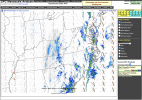
The flaws with this event really was the storm mode, which is easily explained with these skew Ts and trough orientation.
1773685270706.png
As y’all can notice, the vertical profiles are all almost completely saturated and thermodynamically flat, (little change in temp with height).
This explains the low CAPE values and very messy storm mode as the inversion layer which helps build vertical instability is simply nonexistent, therefore utterly no resistance to the very strong forcing mechanism. Thus creating a cascade effect of the instability in the OWS crashing so all you get is anemic convection.
1773685601715.png
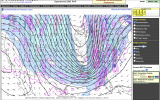
Looking at the trough orientation, it becomes even more obvious why theres so much upscale growth other than the strong forcing mechanism (the trough). It’s quite positively tilted, with the winds in the right exit region being parallel with the PBL winds. I couldn’t draw up a more unfavorable set up for discrete storms.

The lower than expected helicity values can likely be attributed to the fact that the PBL wind profiles are not veered at all, they’re mostly directional, which lowers the tendency for updrafts to rotate. This is despite the fact the surface low is below 990mb in intensity, but again, it’s parent trough is positively tilted.

Lastly, this system just ended being much more progressive than modeled, not like it would’ve mattered much, but just an extra nail in the coffin.

These red flags came into view as late as 2 days ago across all models, obviously though it would’ve been irresponsible to call this event off that early, and the SPC can’t just undo a forecast until it’s staring them in the face that it won’t happen. Unfortunately, they will probably catch some flak for this even though the moderate risk was absolutely justifiable at the time they issued it.
 
So I would not clog up this thread while active weather is still going on, I started a discussion question about the Alabama Weather Network’s first high end severe weather coverage last night in the thread that was started last August.

 
Maybe Trey will do a post event analysis to help point out the ultimate flaws if we end up not seeing much today.

Props to Trey, he always seemed a bit skeptical on the discrete supercell tornado potential with this two-day event, but I could tell he was reluctant to outright contradict SPC (which to their credit, held back on some of the even more bullish forecasts some Xweenies were advocating for).
 
Unfortunately, they will probably catch some flak for this even though the moderate risk was absolutely justifiable at the time they issued it.
It really is quite unfortunate that you're gonna get so many people saying stuff like, "Not sure what they were thinking with a moderate risk" when they aren't SPC forecasters themselves and also hindsight is 20/20. People need to understand that it's called a risk for a reason, it's never guaranteed to happen where you are, even on high end days.

For people who get angry about meteorologists being incorrect from time to time and taking away from their favorite shows or whatever it is, they need to understand that meteorologists are just trying to keep people safe, and they would prefer to be incorrect over being correct if it means less human impact. It's annoying but almost impossible to shut those types up. It is what it is. The SPC has some of the brightest minds in the world and they've been very good about risk verifications in the past year overall.
 
I would be really surprised if they don't get rid of the MDT at 2000z; this is probably their last chance to change it before the "severe weather outbreak" later.
 
When I got home last night from the storm chase, I looked at the models and the hrr didn’t seem impressive at all on today’s threat. Hrr been doing really well lately. When spc issues a day 2 moderate and it doesn’t look as great the night before, they will always stick to their guns. Glad it hasn’t lived up to what it could of been
 
Back
Top