• Welcome to TalkWeather!
    We see you lurking around TalkWeather! Take the extra step and join us today to view attachments, see less ads and maybe even join the discussion.
    CLICK TO JOIN TALKWEATHER

Severe Weather 3/15 - 3/16

How you know it's gonna be a bigger threat that will include tornadoes:
MEG: Long term model solutions indicate a northern stream mid-level
trough will drop southeast across the Middle and Lower
Mississippi Valleys Sunday afternoon into Sunday night. Model
soundings indicate a modest capping inversion will initially be
present. However, impressive 500 mb height falls will overspread
the region with a strongly forced line of showers and
thunderstorms developing and moving across the Mid-South Sunday
evening. LREF model probabilities indicate a medium chance (30 to
50%) for sufficient instability and shear favorable for strong to
severe thunderstorms along and east of the Mississippi River.
Early indications suggest the main hazards will be large hail and
damaging winds.
Wow impressed with Meg lol. Bullish for them this far out
 
FFC expecting a nothing burger clearly. 2:05pm discussion:

Expect showers and
thunderstorms to spread out of the south through the day Sunday
becoming widespread by Monday morning. Showers clear out quickly
Monday afternoon ushering in significant cold air.
 
How you know it's gonna be a bigger threat that will include tornadoes:
MEG: Long term model solutions indicate a northern stream mid-level
trough will drop southeast across the Middle and Lower
Mississippi Valleys Sunday afternoon into Sunday night. Model
soundings indicate a modest capping inversion will initially be
present. However, impressive 500 mb height falls will overspread
the region with a strongly forced line of showers and
thunderstorms developing and moving across the Mid-South Sunday
evening. LREF model probabilities indicate a medium chance (30 to
50%) for sufficient instability and shear favorable for strong to
severe thunderstorms along and east of the Mississippi River.
Early indications suggest the main hazards will be large hail and
damaging winds.

Isn't one of the only times they were really bullish was in the lead-up to 4/27/11 (which of course said something about the ceiling of that setup, which unfortunately it hit)?

In my earlier years of severe weather tracking I started to notice how the preference to use bullish/ominous wording about severe setups varied between offices. JAN was particularly good for some doozies back in those days (not sure if they still are). On the morning of 4/24/10 (Yazoo City long-tracker and a few others) they headlined their AFD with "Supercell Saturday underway...tornadoes likely through mid afternoon." Ironically their discussion for a year and three days later wasn't quite that memorable.
 
This post isn’t referring to Sunday, just thought I should list out the factors in determining a substantial tornado outbreak.

Upper levels
1. Jet translation speed of 40+knots.
2. A Neutral to Negative tilt trough which oftentimes leads to a jet streak orientation that’s close to perpendicular relative to the PBL winds, as this largely prevents upscale growth and promotes a discrete storm mode.
3. A large area of bulk shear of at least 50knots as to get anything to produce long trackers, storms need to be well ventilated to keep their mesocyclones healthy.

Mid levels
4. Storm relative winds of at least 35+knots, anything lower will likely cause a storm to be high precip, not often a big problem for a tornado, but definitely lower the chances of one being long tracked since rain cooled air usually cuts off the warm inflow towards the FFU of the supercell.
5. Deep height falls that lead to a surface low pressure of at least 990-mb. This needs to be the case, especially in winter/early spring months as anything weaker more often than not leads to insufficient moisture returns and directional shear.
6. Cyclonic vorticity streamer of at least 40^-5 S^-1 riding the back edge of the dryline or cold font; which produces strong forcing/QG ascent over the warm sector. This by itself would usually cause upscale growth, which is why jet orientation is a big deal.

Low levels
7. LLJ of at least 50+knots as this provides sufficient shear magnitudes (large curved hodographs) for storms to more easily tap into streamwise vorticity even when critical angles are far below 90degrees.
8. Dew points of at least 55-60 with temps in the low 70s or higher, this obviously produces high thermos (CAPE >1000mb) for storms to use.
9. A stout inversion layer; without one, even if storm mode is discrete, you most certainly will end up with an over crowded warm sector and just overall a less unstable environment.
10. A large open warm sector, this much is obvious as the more room there is, the more time storms have to organize and continuously drop tornadoes.

11. This last ingredient is arguably the final piece of the puzzle that almost everyone doesn’t factor in, and yet determines if an event becomes a super outbreak or not; and that is the degree of PBL mixing.
If the PBL is too moist, like for example the March 15th outbreak last year, even if every other parameter is pristine, you will likely end up with an overcrowded, messy storm mode that prevents an outbreak from reaching its full potential. Instead, you need a well mixed PBL where it’s dry enough to prevent junk convection, but plenty moist enough to support powerful supercells. This is an incredibly difficult thing to balance, not even accounting for all of the 10 other conditions mentioned above that need to be met, which is why super outbreaks almost never happen.

Again, this is just a simplified guide of what to look for in identifying substantial tornado outbreaks, not noting any specific future event.
 
This post isn’t referring to Sunday, just thought I should list out the factors in determining a substantial tornado outbreak.

Upper levels
1. Jet translation speed of 40+knots.
2. A Neutral to Negative tilt through which oftentimes leads to a jet streak orientation that’s close to perpendicular relative to the PBL winds, as this largely prevents upscale growth and promotes a discrete storm mode.
3. A large area of bulk shear of at least 50knots as to get anything to produce long trackers, storms need to be well ventilated to keep their mesocyclones healthy.

Mid levels
4. Storm relative winds of at least 35+knots, anything lower will likely cause a storm to be high precip, not often a big problem for a tornado, but definitely lower the chances of one being long tracked since rain cooled air usually cuts off the warm inflow towards the FFU of the supercell.
5. Deep height falls that lead to a surface low pressure of at least 990-mb. This needs to be the case, especially in winter/early spring months as anything weaker more often than not leads insufficient moisture returns and directional shear.
6. Cyclonic vorticity streamer of at least 40^-5 S^-1 riding the back edge of the dryline or cold font; which produces strong forcing/QG ascent over the warm sector. This by itself would usually cause upscale growth, which is why jet orientation is a big deal.

Low levels
7. LLJ of at least 50+knots as this provides sufficient shear magnitudes (large curved hodographs) for storms to more easily tap in to streamwise vorticity even when critical angles are far below 90degrees.
8. Dew points of at least 55-60 with temps in the low 70s or higher, this obviously produces high thermos (CAPE >1000mb) for storms to use.
9. A stout inversion layer; without one, even if storm mode is discrete, you most certainly will end up with an over crowded warm sector and just overall a less unstable environment.
10. A large open warm sector, this much is obvious as the more room there is, the more time storms have to organize and continuously drop tornadoes.

11. This last ingredient is arguably the final piece of the puzzle that almost everyone doesn’t factor in, and yet determines if an event becomes a super outbreak or not; and that is the degree of PBL mixing.
If the PBL is too moist, like for example the March 15th outbreak last year, even if every other parameter is pristine, you will likely end up with an overcrowded, messy storm mode that prevents an outbreak from reaching its full potential. Instead, you need a well mixed PBL where it’s dry enough to prevent junk convection, but plenty moist enough to support powerful supercells. This is an incredibly difficult thing to balance, not even accounting for all of the 10 other conditions mentioned above that need to be met, which is why super outbreaks almost never happen.

Again, this is just a simplified guide of what to look for in identifying substantial tornado outbreaks, not noting any specific future event.
I'm going to put this into a checkbox list and use it from now on. Very detailed.
 
Isn't one of the only times they were really bullish was in the lead-up to 4/27/11 (which of course said something about the ceiling of that setup, which unfortunately it hit)?

In my earlier years of severe weather tracking I started to notice how the preference to use bullish/ominous wording about severe setups varied between offices. JAN was particularly good for some doozies back in those days (not sure if they still are). On the morning of 4/24/10 (Yazoo City long-tracker and a few others) they headlined their AFD with "Supercell Saturday underway...tornadoes likely through mid afternoon." Ironically their discussion for a year and three days later wasn't quite that memorable.
Yes. Both NWS JAN and MEG were hitting it hard and were on the same page leading up. After that, it's like there's been a disconnect between offices. The other thing was both of their discussions went into a lot more detail than they do now.
 
FFC expecting a nothing burger clearly. 2:05pm discussion:

Expect showers and
thunderstorms to spread out of the south through the day Sunday
becoming widespread by Monday morning. Showers clear out quickly
Monday afternoon ushering in significant cold air.
I've noticed they do this if they feel uncertain. Sometimes they just say "will monitor severe potential" but other times they just won't say anything at all other than just generally mentioning thunder.
 
This post isn’t referring to Sunday, just thought I should list out the factors in determining a substantial tornado outbreak.

Upper levels
1. Jet translation speed of 40+knots.
2. A Neutral to Negative tilt trough which oftentimes leads to a jet streak orientation that’s close to perpendicular relative to the PBL winds, as this largely prevents upscale growth and promotes a discrete storm mode.
3. A large area of bulk shear of at least 50knots as to get anything to produce long trackers, storms need to be well ventilated to keep their mesocyclones healthy.

Mid levels
4. Storm relative winds of at least 35+knots, anything lower will likely cause a storm to be high precip, not often a big problem for a tornado, but definitely lower the chances of one being long tracked since rain cooled air usually cuts off the warm inflow towards the FFU of the supercell.
5. Deep height falls that lead to a surface low pressure of at least 990-mb. This needs to be the case, especially in winter/early spring months as anything weaker more often than not leads to insufficient moisture returns and directional shear.
6. Cyclonic vorticity streamer of at least 40^-5 S^-1 riding the back edge of the dryline or cold font; which produces strong forcing/QG ascent over the warm sector. This by itself would usually cause upscale growth, which is why jet orientation is a big deal.

Low levels
7. LLJ of at least 50+knots as this provides sufficient shear magnitudes (large curved hodographs) for storms to more easily tap into streamwise vorticity even when critical angles are far below 90degrees.
8. Dew points of at least 55-60 with temps in the low 70s or higher, this obviously produces high thermos (CAPE >1000mb) for storms to use.
9. A stout inversion layer; without one, even if storm mode is discrete, you most certainly will end up with an over crowded warm sector and just overall a less unstable environment.
10. A large open warm sector, this much is obvious as the more room there is, the more time storms have to organize and continuously drop tornadoes.

11. This last ingredient is arguably the final piece of the puzzle that almost everyone doesn’t factor in, and yet determines if an event becomes a super outbreak or not; and that is the degree of PBL mixing.
If the PBL is too moist, like for example the March 15th outbreak last year, even if every other parameter is pristine, you will likely end up with an overcrowded, messy storm mode that prevents an outbreak from reaching its full potential. Instead, you need a well mixed PBL where it’s dry enough to prevent junk convection, but plenty moist enough to support powerful supercells. This is an incredibly difficult thing to balance, not even accounting for all of the 10 other conditions mentioned above that need to be met, which is why super outbreaks almost never happen.

Again, this is just a simplified guide of what to look for in identifying substantial tornado outbreaks, not noting any specific future event.

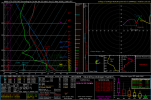
Where would you see the PBL on a sounding and what are you looking for? Here's a good one from the Ark-La-Tex region. Interesting top analog too.

1773342962679.png
 
By the way does anybody know the reason as to why huntsville only issues their near term short term and long term than say Meg or ohx or mrx being two times a day
It basically comes down to whose in charge and how they do things. I frankly like the short term and long term discussions. Every office is different. I just wish that when there's a threat of severe storms, they would be on the same page. By that I mean, one mentions potential for tornadoes and the other doesn't.
 
Where would you see the PBL on a sounding and what are you looking for? Here's a good one from the Ark-La-Tex region. Interesting top analog too.

View attachment 51663
I refer the PBL as anything within the lowest 850mb of the atmosphere. Or simply speaking from the surface up to 850mb.

That’s the layer of the atmosphere where you get your surface heating, surface cooling (which causes a nocturnal surface inversion), SBCAPE, LLJ, ect.

This sounding in particular has substantial surface mixing, a relatively shallow effective inflow layer, (the cyan bar) which terminates at the LFC and where humidity reaches almost 100%; and overall looking at the other parameters, promotes extreme vertical stretching in the low levels. Shear magnitude is meh though, directional as well.
 
It basically comes down to who’s in charge and how they do things. I frankly like the short term and long term discussions. Every office is different. I just wish that when there's a threat of severe storms, they would be on the same page. By that I mean, one mentions potential for tornadoes and the other doesn't.
Oh I see gotcha and agreed also thank you
 
Where would you see the PBL on a sounding and what are you looking for? Here's a good one from the Ark-La-Tex region. Interesting top analog too.

View attachment 51663

The PBL (planetary boundary layer) is the layer of the atmosphere that is "coupled" with Earth's surface. In that sounding it runs to about 850mb and is well mixed (the layer where the lapse rate is close to the dry adiabatic lapse rate)

EDIT: Just saw I wasn't quick enough.
 
Where would you see the PBL on a sounding and what are you looking for? Here's a good one from the Ark-La-Tex region. Interesting top analog too.
I'm aware you shouldn't really pay attention to analogs until it's closer to the event, but seeing that analog as the top one is a little alarming to me with that sounding.
 
11. This last ingredient is arguably the final piece of the puzzle that almost everyone doesn’t factor in, and yet determines if an event becomes a super outbreak or not; and that is the degree of PBL mixing.
If the PBL is too moist, like for example the March 15th outbreak last year, even if every other parameter is pristine, you will likely end up with an overcrowded, messy storm mode that prevents an outbreak from reaching its full potential. Instead, you need a well mixed PBL where it’s dry enough to prevent junk convection, but plenty moist enough to support powerful supercells. This is an incredibly difficult thing to balance, not even accounting for all of the 10 other conditions mentioned above that need to be met, which is why super outbreaks almost never happen.

Again, this is just a simplified guide of what to look for in identifying substantial tornado outbreaks, not noting any specific future event.
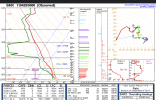
Couldn’t have said this part better myself. After 3/15 last year, I went through many archived and observed soundings from notorious events. That’s the thing that jumped out at me. You had a moist layer in every event, but it’s not saturated halfway up through the atmosphere. You almost want to have a fish-fin look for your moisture profile, like in this sounding from BMX the evening of 4/27/11.

Dry air and a stout EML is absolutely vital for large scale tornado outbreaks. Like you said, it has to be a balance though. Too much dry air and updrafts struggle, too little and you end up with a warm sector filled with weedy showers.

1773344431600.png


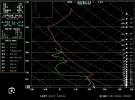
For good measure, here is Nashville’s observed sounding from the morning of 4/3/74.

1773344589945.png
 
Back
Top