

CheeselandSkies
Member
Plenty of chatter already about this one already in the seasonal thread and SPC has Day 4/5 contours outlined, so event thread time. Discuss the coming Sunday-Monday system here.
Follow along with the video below to see how to install our site as a web app on your home screen.
Note: This feature may not be available in some browsers.
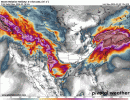


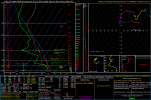
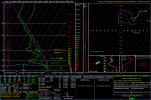

the NAM has a known bias for underestimating temperature and dew points, especially in the cool season, so you shouldn't take whatever it's showing in terms of thermodynamics verbatim.Taken in Northern MS
12z NAM is in, and I'd like to point out that literally the only problem I can find with my limited knowledge of soundings is the dew points and, by extension, CAPE.
View attachment 51616
View attachment 51617
Taken in Northern MS
12z NAM is in, and I'd like to point out that literally the only problem I can find with my limited knowledge of soundings is the dew points and, by extension, CAPE.
GFS has depicted at least a small tongue of 500+ j/kg instability making it well into Georgia in the middle of the night, which is unusual as far as the depiction of instability on globals goes, so I don't think it'll be an issue either.Thermos really shouldn't be an issue either. the GFS is already showing 1000-1500 J/kg CAPE over the ArkLaMiss on Sunday afternoon/evening even with the likely-underestimated moisture return and dews hovering in the low 60s. lapse rates look really good for the south in March.
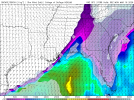


It makes sense. Potential QLCS event with more than adequate instability.Im quite interested in the day 5 15% from SC to most of Maryland. This, along with yesterday, Is not something I expect from Marches around here
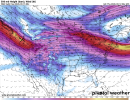
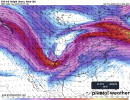
I could ask Broyles what he thinks of this event, given the jet translation speed and is it going to hold much concern for the SPC in the following days. Wonderful analysisI ran a very rough analysis on the jet translation speed from 00z to 18z on the 15th with the 06z GFS. I determined the location of the jet core at 00z to be in the far northeast quadrant of Oregon and the location of the jet core to be in northwest Texas below the panhandle at 18z:View attachment 51619View attachment 51620
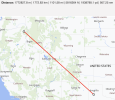
The distance is just over 1100 miles according to this website. It's worth noting that the trough also doesn't take a straight line path to this location due to it digging in, meaning it may technically be an even further distance than what is shown here:
View attachment 51621
Nevertheless, I crunched the numbers - and staying conservative with the distance I calculated it with 1050 miles instead of 1100. Doing so yields a jet translation speed over 18 hours of about 58 miles per hour, or ~50 knots. This is a very similar number to 3/14-3/15 last year, and just so happens that the distance is the exact number Trey used to calculate the jet translation speed for said day as well, when he got a distance between the two of over 1100 miles too. I'm not saying it will be the same event but this is undoubtedly similar in some ways.
EDIT: It's worth noting that the jet core at 00z could definitely be shifted a bit further to the southeast from where I located it, but doing so would still definitely yield a jet translation speed north of the 40 kt threshold, just slightly less than 50 kts.
Ask him where he’s been lol.. no outlooks by him. Jk thoughI could ask Broyles what he thinks of this event, given the jet translation speed and is it going to hold much concern for the SPC in the following days. Wonderful analysis

