• Welcome to TalkWeather!
    We see you lurking around TalkWeather! Take the extra step and join us today to view attachments, see less ads and maybe even join the discussion.
    CLICK TO JOIN TALKWEATHER

Significant Tornado Events - Global Edition

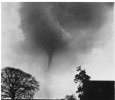
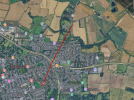
I recently embarked on a project of digging through newspaper archives to map out the path of the 1931 Birmingham, UK tornado.

It took about a week, but I’ve come up with a map of every location mentioned in the newspapers (there was a very significant amount of coverage).

The tornado was a major disaster in the city and made headlines nationwide, even featuring in the New York Times, and in rural American newspapers.

TORRO gave this tornado a rating of T6-7 or F3, and by the damage I have seen photographed and described, I would say this is a fair assessment.

I’ll be making a visit to Birmingham’s City Archive soon to see more photographs and documents and hopefully plot out a more thorough map.

I’ll attach links to the current map and my writeup of the event so please do have a look :)


Birmingham 1931 - https://www.google.com/maps/d/viewer?mid=1bt-01GoOk-WRYQrsTLn9rnsIQqgr7Uc&usp=sharing
 
I recently embarked on a project of digging through newspaper archives to map out the path of the 1931 Birmingham, UK tornado.

It took about a week, but I’ve come up with a map of every location mentioned in the newspapers (there was a very significant amount of coverage).

The tornado was a major disaster in the city and made headlines nationwide, even featuring in the New York Times, and in rural American newspapers.

TORRO gave this tornado a rating of T6-7 or F3, and by the damage I have seen photographed and described, I would say this is a fair assessment.

I’ll be making a visit to Birmingham’s City Archive soon to see more photographs and documents and hopefully plot out a more thorough map.

I’ll attach links to the current map and my writeup of the event so please do have a look :)


Birmingham 1931 - https://www.google.com/maps/d/viewer?mid=1bt-01GoOk-WRYQrsTLn9rnsIQqgr7Uc&usp=sharing
Quite the well written article! With some pics placed where they're relevant this would be top-level publishing.
I do have to wonder if the storm might have cycled at Bordesley Green, which might explain some thinking it was one and some thinking two tornadoes. I did have to look up "Chimney pot" as that term isn't used here in the USA.
Cheers!
 
Quite the well written article! With some pics placed where they're relevant this would be top-level publishing.
I do have to wonder if the storm might have cycled at Bordesley Green, which might explain some thinking it was one and some thinking two tornadoes. I did have to look up "Chimney pot" as that term isn't used here in the USA.
Cheers!
Thank you very much for your kind words.

I myself am also questioning whether a cycle may have taken place in Bordesley Green. The next damage spot is slightly to the left of where you’d think it’d be. Either that or the tornado dramatically weakened on passing Bordesley.

I’ve decided to take your advice and add a few photographs, 3 or 4. My full collection of photographs is in a separate google doc, I’ll link below.

 
I actually recently did a “big dig” into this tornado. I agree that it probably reached IF4 intensity. I’ll attach my summary of findings.

https://docs.google.com/document/d/1-hhwe4Zyrfzp0wN7KlBoMSpwCUDy39Ki-SlYwLJCQL4/edit?usp=drivesdk
IMO it doesn't sound quite that intense, with the descriptions mainly limited to roof loss and partial collapse. Photos I can find in a quick search (such as here or here) look consistent with damage in the F2 to minimal F3 range.
 
IMO it doesn't sound quite that intense, with the descriptions mainly limited to roof loss and partial collapse. Photos I can find in a quick search (such as here or here) look consistent with damage in the F2 to minimal F3 range.
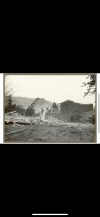
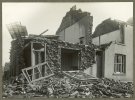
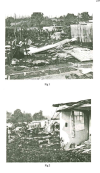
The worst structural damage of the tornado at Fairview Terrace could warrant IF4 using the international fujita scale- a stone-built terrace with double or triple wythe walls, 3 of the loadbearing walls on the upper storey collapsed with the stronger party wall remaining, and a partial wall collapse on the lower storey. This *could* warrant damage indicator BS:E DoD 1B.

Also the near total destruction of Beechgrove Chapel, although contextual damage in this area is lacklustre.

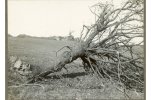
Another incredible feat of this tornado was the lofting of mature trees. In one case a mature tree was lofted 80 yards, in another case a 4 ton section of oak tree was lofted 1/4 mile, and a large section of ash tree was reportedly thrown 2.5 miles (dubious on that particular instance). Numerous trees in the area surrounding Abercynon were “stripped of their bark”.

In another instance, a “massive” wooden-truss bridge was struck, snapping the baulks and rotating the entire bridge body several feet out of place.

Definitely at the very least high-end F3 (which is the official rating per TORRO)
 

Attachments

  • IMG_7337.png
    IMG_7337.png
    803.2 KB · Views: 11
  • IMG_6370.jpeg
    IMG_6370.jpeg
    187 KB · Views: 9
  • 36_Cyclones_13220a_0.jpeg
    36_Cyclones_13220a_0.jpeg
    799.9 KB · Views: 12
IMO it doesn't sound quite that intense, with the descriptions mainly limited to roof loss and partial collapse. Photos I can find in a quick search (such as here or here) look consistent with damage in the F2 to minimal F3 range.
You have to remember that European masonry structures are much more resistant to tornadic winds than wooden-framed structures often seen in North America, Japan and some other countries (I don't know what the situation is in Australia).

The damage to Fairview Terrace alone is well into the F3 range... definitely not F2. While I think high-end F3 is fine, I could see an argument for low-end F4 given the sturdiness of the structure.
 
I’ve been continuing my research into tornadoes in the United Kingdom.
I came across a cluster of tornado events that occurred in the spring and early summer of 1968.

Earlier that year, in January, had come the devastating “Hurricane Low Q”, an extratropical cyclone that struck the Central Belt of Scotland, and had hit Glasgow particularly hard. 250,000 buildings were damaged by the storm.

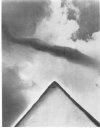
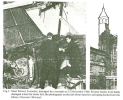
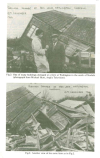
In April, the first tornado event, in Coventry and surrounding villages. A small thunderstorm produced a damaging tornado which struck the Potters Green district, before moving onto the village of Barnacle. I’ll photographs of this tornado in particular.

The next event came on June 28, 25 miles west of Coventry in Birmingham, and it’s surrounding Black Country, located in Worcestershire.

First a tornado (or series of tornadoes) tracked 14 miles from Bewdley, through Kidderminster, and into Halesowen, causing pockets of moderate damage.

The storm then likely cycled, meanwhile producing flash flooding in Birmingham, and at around 3:30, a second tornado developed in the California neighbourhood of western Birmingham, tearing off roofs and uprooting trees, before moving through Weoley Castle into Selly Oak, where it tossed around cars at the University of Birmingham, before dissipating.

A third brief tornado associated with a second thunderstorm occurred north of tornado 1’s path.

You can read more about it here: https://docs.google.com/document/d/1Cuq1FsjkHzCfcMnoBzoPmTmQLQPuIFEA_iFbu_XNW7M/edit?usp=drivesdk

Otherwise, hope you enjoyed the read, and the Coventry tornado photos.
 

Attachments

  • IMG_1369.jpeg
    IMG_1369.jpeg
    69.9 KB · Views: 5
  • IMG_1389.jpeg
    IMG_1389.jpeg
    125.5 KB · Views: 5
  • IMG_1391.jpeg
    IMG_1391.jpeg
    126.2 KB · Views: 5
I’ve been continuing my research into tornadoes in the United Kingdom.
I came across a cluster of tornado events that occurred in the spring and early summer of 1968.

Earlier that year, in January, had come the devastating “Hurricane Low Q”, an extratropical cyclone that struck the Central Belt of Scotland, and had hit Glasgow particularly hard. 250,000 buildings were damaged by the storm.

In April, the first tornado event, in Coventry and surrounding villages. A small thunderstorm produced a damaging tornado which struck the Potters Green district, before moving onto the village of Barnacle. I’ll photographs of this tornado in particular.

The next event came on June 28, 25 miles west of Coventry in Birmingham, and it’s surrounding Black Country, located in Worcestershire.

First a tornado (or series of tornadoes) tracked 14 miles from Bewdley, through Kidderminster, and into Halesowen, causing pockets of moderate damage.

The storm then likely cycled, meanwhile producing flash flooding in Birmingham, and at around 3:30, a second tornado developed in the California neighbourhood of western Birmingham, tearing off roofs and uprooting trees, before moving through Weoley Castle into Selly Oak, where it tossed around cars at the University of Birmingham, before dissipating.

A third brief tornado associated with a second thunderstorm occurred north of tornado 1’s path.

You can read more about it here: https://docs.google.com/document/d/1Cuq1FsjkHzCfcMnoBzoPmTmQLQPuIFEA_iFbu_XNW7M/edit?usp=drivesdk

Otherwise, hope you enjoyed the read, and the Coventry tornado photos.
There were also strong tornadic events in England in 1966.

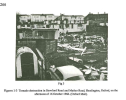
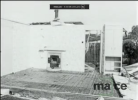
On 16 October, a T4-5 (Mid range F2) tornado struck north-eastern suburbs of Oxford, England. It started off weak, causing minor tile/garage damage, before reaching a prefab-housing estate. Here, around 6 prefabs were destroyed/thrown and 2 people were injured.1779463358472.png1779463579050.png1779463594318.png1779463686195.png

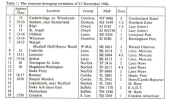
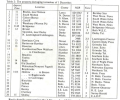
Later on in the year, 2 large (for the UK) tornado outbreaks struck across large regions of England. On 15th November 1966, around 19 tornadoes struck various regions of England, two of which were particularly strong.
1779464213302.png

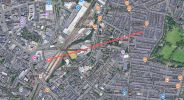
The worst event was a brief tornado that struck near Leicester City Centre, it formed near the railway station and tracked towards the Highfields area. The tornado quickly strengthened to F2 intensity just as it hit a secondary school, where a large portion of the church tower + roof collapsed in on students and teachers, resulting in 29 injuries including 24 students. Afterwards, the tornado weakened significantly to around low end F1 intensity, causing minor damage to surrounding residential areas. 1779464122444.png1779464143103.png

Another F2 tornado that day hit Watlington, Norfolk
1779464187090.png
A larger but weaker outbreak also occurred on 1 December 1966:
1779464272041.png
 
There were also strong tornadic events in England in 1966.

On 16 October, a T4-5 (Mid range F2) tornado struck north-eastern suburbs of Oxford, England. It started off weak, causing minor tile/garage damage, before reaching a prefab-housing estate. Here, around 6 prefabs were destroyed/thrown and 2 people were injured.View attachment 53020View attachment 53022View attachment 53023View attachment 53024

Later on in the year, 2 large (for the UK) tornado outbreaks struck across large regions of England. On 15th November 1966, around 19 tornadoes struck various regions of England, two of which were particularly strong.
View attachment 53030

The worst event was a brief tornado that struck near Leicester City Centre, it formed near the railway station and tracked towards the Highfields area. The tornado quickly strengthened to F2 intensity just as it hit a secondary school, where a large portion of the church tower + roof collapsed in on students and teachers, resulting in 29 injuries including 24 students. Afterwards, the tornado weakened significantly to around low end F1 intensity, causing minor damage to surrounding residential areas. View attachment 53027View attachment 53028

Another F2 tornado that day hit Watlington, Norfolk
View attachment 53029
A larger but weaker outbreak also occurred on 1 December 1966:
View attachment 53031
very interesting! I’ll have to take a look at the newspaper reports of these events.
 
Back
Top